Murang’a County Government is set to roll out a subsidised
school meals programme for more than 200,000 learners from January 2027.
The new programme will cover about 512 learning institutions, from Early Childhood Development Education (ECDE) centres to all public primary and Junior Secondary Schools (JSS).
The move follows a pilot programme conducted over the past one-and-a-half years to assess whether parents could afford to contribute towards school meals.
Under the pilot, parents have been paying Sh20 per day. This will be reduced to Sh15 when the programme is expanded, with the county government shouldering part of the cost.
Governor Irungu Kang’ata said the pilot, which was initially undertaken in about 50 schools, showed that the majority of parents were willing and able to pay for the meals, paving the way for a county-wide rollout.
“Those who have been taking the meals are between 70 per cent and 92 per cent, meaning Murang’a parents can afford it. The further reduction means more parents will afford it,” Kang’ata said.
The county will also cater for learners from vulnerable households who may not afford even the subsidised contribution.
Each school will be allocated a number of beneficiaries whose meals will be fully paid for by the county government.
The beneficiaries will include orphans, learners with disabilities, children from vulnerable households, those with disabled parents and vulnerable children from single-parent families.
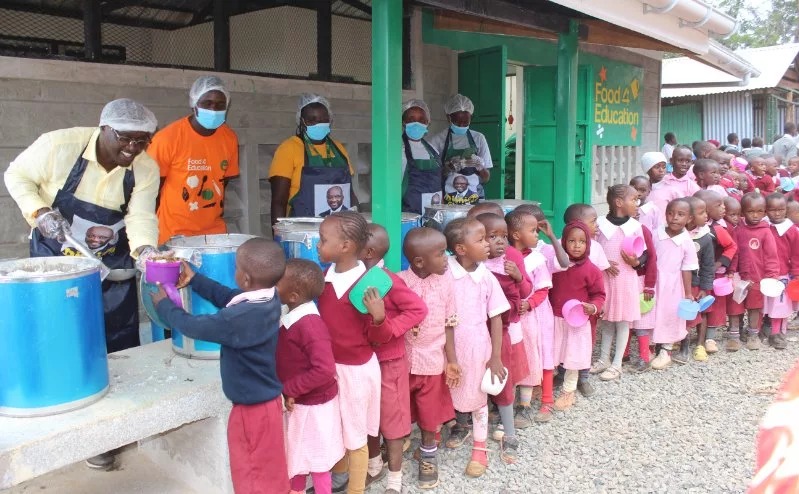
The expansion builds on the county’s Uji Programme, which was introduced in 2023 to provide free fortified porridge to ECDE learners.
The programme currently benefits more than 42,000 children in ECDE centres and was developed in partnership with Food4Education.
Kang’ata said the Uji initiative had helped improve school attendance and enrolment by ensuring children receive a nutritious meal while in school.
It has also created employment opportunities through the preparation and distribution of the porridge.
Kang’ata said the expanded programme would go beyond addressing hunger in schools by creating a reliable market for agricultural produce from local farmers.
The county has engaged Food4Education to purchase about one million mangoes every month during the January-March mango season. This translates to about three million mangoes during the season, at an estimated Sh6 per fruit.
“We have been selling our mangoes to juicing factories. Now we will shift them to this programme to serve the entire country,” Kang’ata said.
The programme will also provide a market for milk produced in the county, with learners receiving it at least once every month through Murang’a County Creameries Union.
The governor said the initiative would create a link between school feeding, local agriculture and employment, allowing farmers to access a guaranteed market while keeping more money within the county economy.
It is also expected to create jobs at the school level, with at least two people set to be engaged in each participating school to handle meal preparation and serving.
Kang’ata said parents would have a role in identifying people to take up the positions.
He also revealed that the county had signed an Intergovernmental Partnership Agreement with the national government to provide the legal framework for extending the feeding programme to schools managed by the national government.
The agreement is intended to facilitate cooperation between the two levels of government in implementing the programme in primary schools and JSS, whose management falls under the national government.
Food4Education, which has partnered with Murang’a in the feeding initiative, has been implementing school meals programmes in Kenya since 2012 and currently operates across several counties.
The organisation says its partnerships with county governments include co-funding arrangements aimed at making meals more affordable for learners.
Murang’a government is expected to commit resources towards the programme, while Food4Education will continue providing the infrastructure and systems needed to deliver meals to learners.
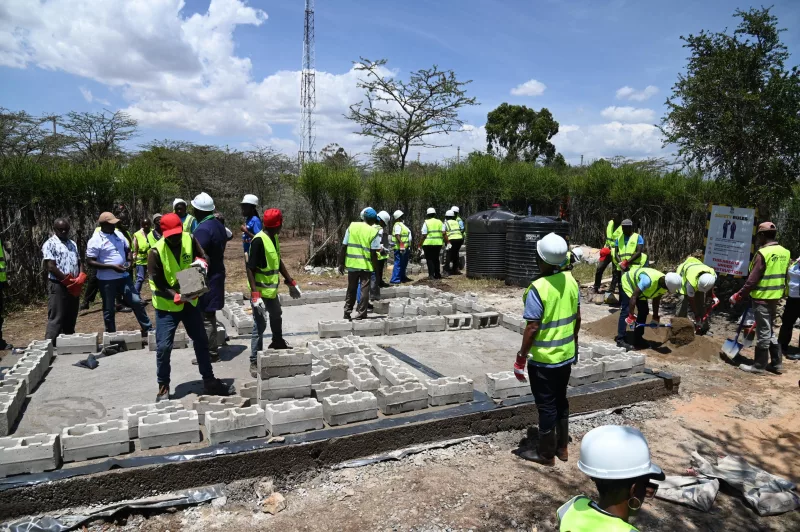
The expanded programme will build on infrastructure established under the Uji Programme, which uses centralised and semi-centralised kitchens to prepare meals before distributing them to schools.
The county has separately begun integrating organically produced food into school meals through a partnership with agroecology organisations.
The initiative aims to improve children’s nutrition while creating a reliable market for local farmers.
The rollout from January 2027 will make Murang’a one of the counties seeking to use school feeding not only as a social protection intervention, but also as a tool for improving learning, supporting vulnerable families and creating markets for local farmers.
INSTANT ANALYSIS
The move follows a pilot programme conducted over the past one-and-a-half years to assess whether parents could afford to contribute towards school meals. Under the pilot, parents have been paying Sh20 per day. This will be reduced to Sh15 when the programme is expanded, with the county government shouldering part of the cost.