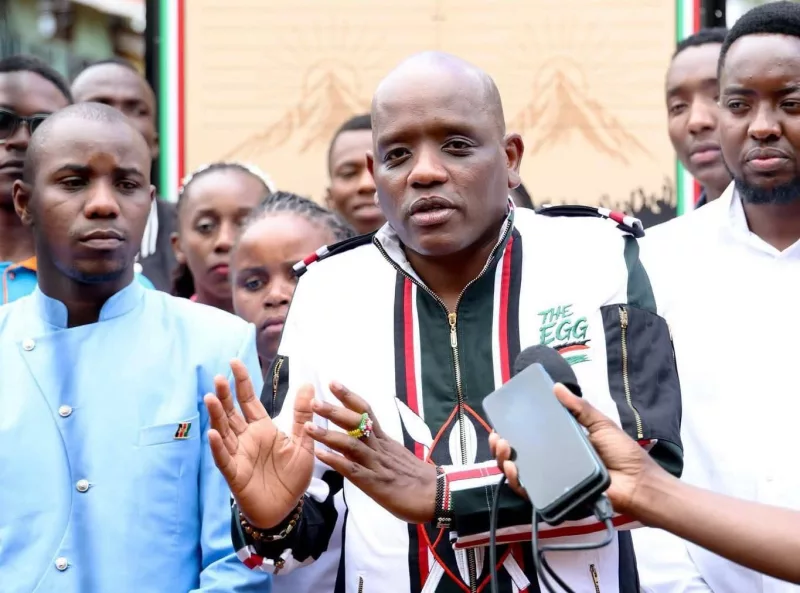
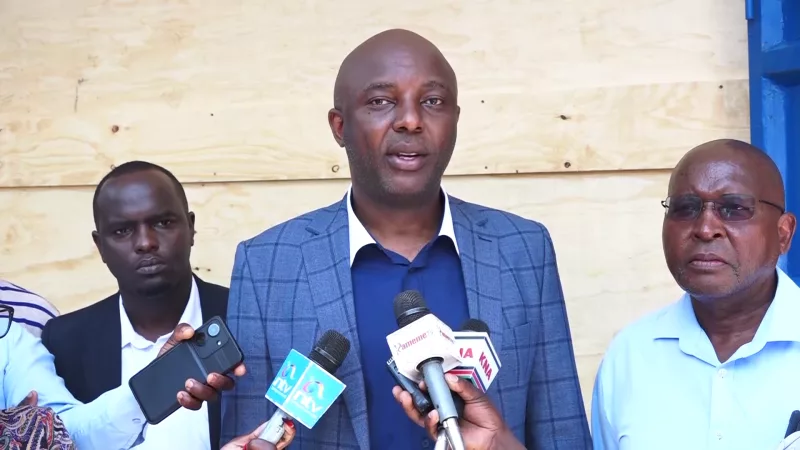
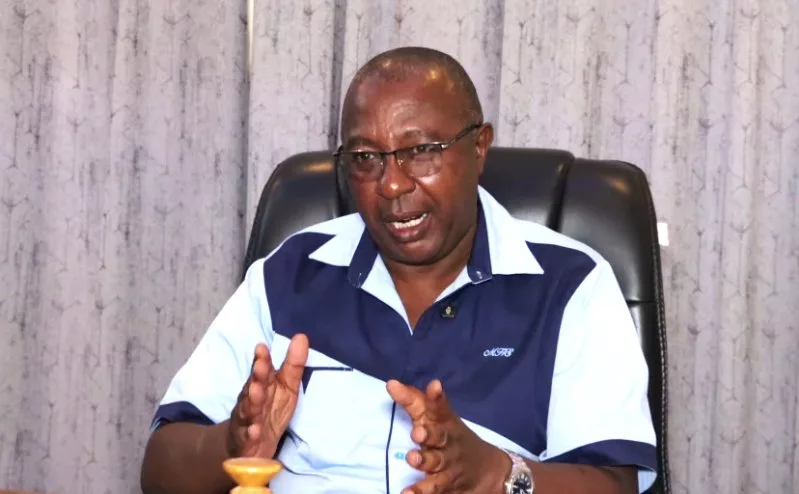
 Kessha chairperson and Murang'a high school principal Willie Kuria in his office in Murang'a on August 31, 2026
School heads have renewed calls for the government to release the full secondary school capitation, warning that incomplete disbursements are undermining the running of public institutions.
Last week, President William Ruto announced the disbursement of Sh18 billion as schools opened for the third term. Two months earlier, he had announced that schools will be receiving capitation funds before the start of every term under a new funding model.
But Kenya Secondary School Heads Association (Kessha) chairperson Willie Kuria maintains that schools are yet to receive the full allocation, with part of the money announced by the government being retained at the Ministry of Education.
Kuria revealed that only Sh14,050 per learner has so far landed in school accounts this year, against an approved annual allocation of Sh22,244, though the government has released Sh16,141 per learner.
“The ministry has retained Sh2,000 per learner for textbooks, co-curricular activities and other programmes,” he said.
The funding gap has persisted for years, with schools also carrying deficits from previous financial years without a clear mechanism for recovering the money.
Last year, the government released Sh15,383 per learner, but Sh811 was retained by the ministry, leaving Sh14,572 in school accounts. This resulted in a Sh6,560 shortfall per learner against the approved allocation.
“Last year’s deficit totalled over Sh22 billion for all students but now that that year passed, there has been no conversation over the money that was not remitted,” he said.
The chairperson had last year revealed that the government owes schools Sh64 billion accrued from previous years.
Kuria, also Murang’a High School principal, said that the funding pressure has been compounded by rising costs of commodities and essential services.
He said that the capitation rate has not been reviewed since 2017 despite a sharp increase in the cost of running schools, leaving institutions with allocations that no longer match their financial needs.
“The prices of commodities have almost doubled. A ream of paper was costing about Sh400 then. Today, it is Sh940,” Kuria said.
Schools are also grappling with higher electricity and water bills, salaries and learning materials, with some institutions unable to pay support staff and suppliers for months.
Kuria added that principals are increasingly forced to negotiate with suppliers and utility companies to keep essential services running as they wait for capitation.
The financial constraints have also affected participation in sports, music, drama and other co-curricular activities, with schools forced to limit the number of activities they enter because of the costs involved.
Kuria also criticised attempts to restrict the number of learners admitted to Grade 10, arguing that schools should be allowed to respond naturally to demand.
He said that the movement of about one million learners from secondary schools to primary schools during the transition to the competency-based curriculum had already reduced enrolment in secondary institutions, creating another financial challenge.
“When a school has more learners, it’s easier to operate because it will enjoy the economies of scale,” he said, noting that many expenses remain almost the same regardless of whether a school has a small or large number of learners.
Kessha had previously proposed that Grade 9 be domiciled in secondary schools, arguing that curriculum reforms could have been implemented without fundamentally changing the existing structure of education.
Kuria warned that the funding crisis was especially severe in day schools, where parents are increasingly reluctant or unable to make additional contributions after being led to believe that secondary education is entirely free.
He maintained that this has left principals with few options when government funding fails to meet the actual cost of running schools.
“A child is given Sh14,000 from capitation and the parents don’t add anything. At least boarding schools parents have accepted to add some money,” Kuria said.
He cautioned that the financial difficulties could have wider implications for learning outcomes especially for day schools, linking it to a significant proportion of candidates recording dismal grades in national examinations.
“Over 70 percent of the E grades we get in KCSE come from day schools. Some don’t record even one university grade”.
Instant analysis
Last week, President William Ruto announced the disbursement of Sh18 billion as schools opened for the third term.Kessha chairperson Willie Kuria said principals are forced to negotiate with suppliers and utility companies to keep essential services running as they wait for capitation.