Empty shelves at a Naivas supermarket tell the story, as shoppers face limited supplies of fresh milk. A notice at the outlet restricts customers to a maximum of six packets per customer, highlighting growing concerns over milk availability across the country. Photo/John Chesoli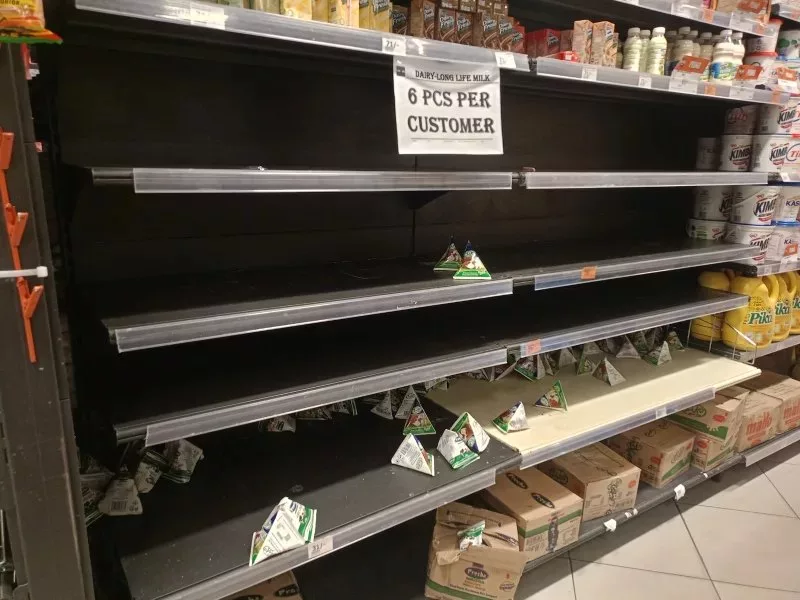
The government has reassured Kenyans that the current milk supply constraints being experienced in parts of the country are temporary and are expected to ease once rains improve pasture and fodder availability.
In a statement, the Kenya Dairy Board (KDB) said milk remains available in the market despite reduced supplies in some areas, attributing the situation largely to seasonal production conditions caused by dry and cold weather in key milk-producing regions.
KDB Managing Director William Maritim said formal milk deliveries to processors declined by 3.7 per cent between June and July 2026, from 84.4 million litres to 81.3 million litres.
The Board is still compiling formal milk intake data for August, but preliminary indications point to a further decline in deliveries.
“Pasteurised milk has generally been more affected, while long-life milk (ESL and UHT) remains comparatively more available,” Maritim said.
The decline has resulted in varying levels of supply constraints across the country, with the board reporting low stock levels, reduced availability of some brands and pack sizes and delays in replenishing some retail outlets.
Despite the disruptions, KDB said retail milk prices have generally remained stable, although some upward price movements have been recorded in areas facing tighter supplies.
Maritim attributed the dry and cold conditions in key milk-producing areas to affected pasture and fodder availability, leading to lower milk production.
The board expects the situation to improve during the projected rainfall season, which is forecast to support the recovery of pasture and fodder.
"The outlook for the October- November-December 2026 rainfall season is expected to support recovery in pasture and fodder availability, leading to improved milk production and supply as conditions become more favourable," the board stated.
The reassurance comes amid reports of milk shortages in some retail outlets, particularly affecting pasteurised milk.
Some supermarkets began rationing purchases as drought cuts dairy production and processors struggle to secure adequate raw milk.
A spot check at several supermarkets and retail outlets in Nairobi found empty or sparsely stocked shelves, with some retailers limiting the amount of milk customers can buy amid concerns over declining supplies.
At some outlets, consumers were being limited to as little as one litre of milk from dispensers, while some wholesalers were restricting purchases of packaged milk to fewer than five packets per customer instead of a carton.
The government is also implementing measures aimed at strengthening production and improving the resilience of the dairy value chain.
According to KDB, these include the procurement and distribution of milk coolers to improve milk aggregation and preservation, as well as support for dairy herd improvement through subsidised sexed semen.
The interventions are intended to increase productivity while reducing losses and helping stabilise milk supplies over the longer term.
“Consumers and stakeholders are therefore reassured that the current situation is temporary,” Maritim said.
He added that the board would continue monitoring milk production, formal deliveries to processors, market availability and retail prices while working with industry stakeholders to maintain continuity of supply.
The current supply constraints come against a backdrop of longer-term efforts to expand dairy production and formalise the sector.