For nearly two years, 69-year-old J O had learnt to measure his nights by trips to the bathroom.
The Migori Municipality resident would wake several times to urinate, sometimes three a night.
What initially appeared to be a minor change gradually became a disruption that affected his sleep, confidence and social life.
During the day, J O could manage the urge. At night, however, it was different. Sometimes the urge came so suddenly he could not reach the toilet in time.
“It used to come even when you are sitting somewhere. Sometimes you can still wet your trousers,” he says.
His symptoms began around 2022. After seeking medical attention, he was diagnosed with an enlarged prostate and started medication to manage the condition.
For about two years, the medication helped him cope with the symptoms. But J O wanted a more lasting solution, even as he remained afraid of surgery.
He had seen other patients undergoing conventional prostate procedures and the experience left him apprehensive about what awaited him if he eventually needed an operation. “When I saw the way the operation was done for other people in this ward, I felt like I was going to die,” he says.
His fears went beyond pain and the prospect of surgery.
At 69, J O says he remains sexually active, making the possible impact of prostate treatment on his sexual function an important consideration.
Then he learnt about another option. Through social media, he came across information about Rezūm Water Vapor Therapy, a minimally invasive procedure used to treat urinary symptoms caused by an enlarged prostate.
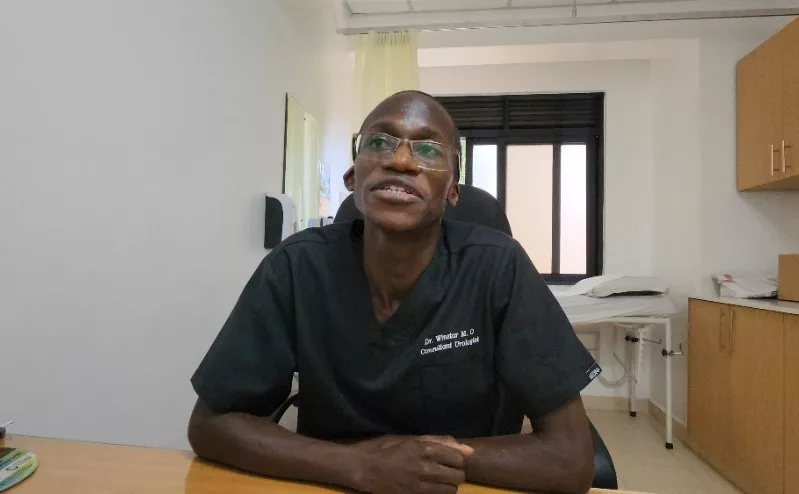
He contacted his doctor, Dr Winstar Mokua, a consultant urologist at Aga Khan Hospital Kisumu. After assessing him, Mokua confirmed he was suitable for the procedure.
The treatment was initially scheduled for August 21 but had to be postponed while the required equipment was brought from Nairobi.
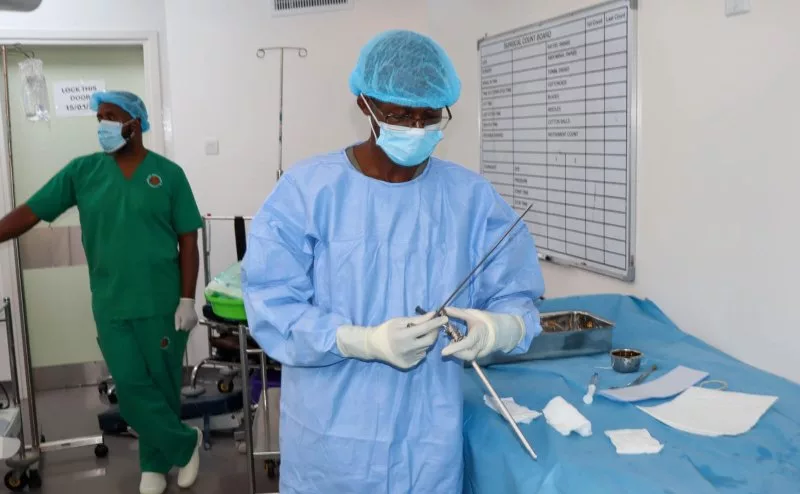
J O eventually underwent the procedure this week.
His experience was markedly different from the surgery he had feared. “When they took me to the procedure room, after that, I didn’t feel it,” he says.
He currently has a catheter, which he has been told will remain in place for several days.
For J O, however, the procedure represents more than a new medical technology. It offers the possibility of sleeping through the night, travelling and visiting friends without constantly worrying about finding a toilet.
His experience reflects a health problem affecting millions of men worldwide.
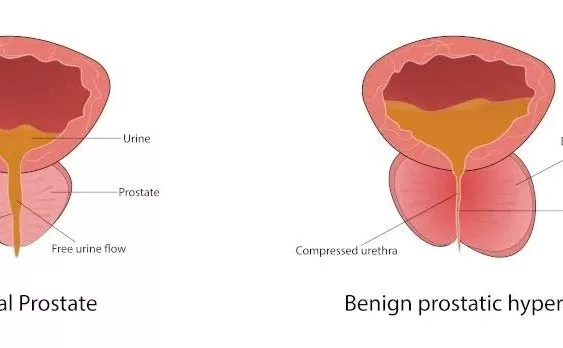
Benign prostatic hyperplasia, commonly known as BPH, is a non-cancerous enlargement of the prostate that becomes increasingly common as men age.
The prostate is a small gland located below the bladder and surrounding part of the urethra, the tube through which urine leaves the body. As the prostate grows, it can press against the urethra and interfere with normal flow.
Men may experience a weak or interrupted urine stream, difficulty starting urination, frequent urination, increased night-time urination, urgency, or a feeling that the bladder has not emptied completely. Some may also experience urinary incontinence.
A Global Burden of Disease analysis estimated that about 94 million men aged 40 years and older were living with BPH globally in 2019, compared with about 51.1 million in 2000.
In Kenya, the same analysis estimated about 126,000 men were living with BPH in 2019, compared with about 64,600 in 2000.
For men with BPH, something as routine as peeing can gradually become a source of anxiety.
J O says the problem affected his social life, making visits uncomfortable because he was never certain when the urge would come.
“When you go and visit somebody, you fear because when you are in your house you know you are comfortable,” he says.
Repeated night-time sessions can also affect sleep and quality of life. Yet many men delay seeking treatment because they assume such symptoms are simply part of ageing.
Dr Mokua says persistent symptoms should be assessed by a health professional because they can have different causes.
He also stresses that an enlarged prostate should not automatically be confused with prostate cancer.
“BPH is a benign condition. Prostate cancer is a separate disease that requires its own assessment,” he says.
For men whose symptoms require intervention, treatment options have traditionally included procedures such as transurethral resection of the prostate, commonly known as TURP.
Rezūm takes a different approach.
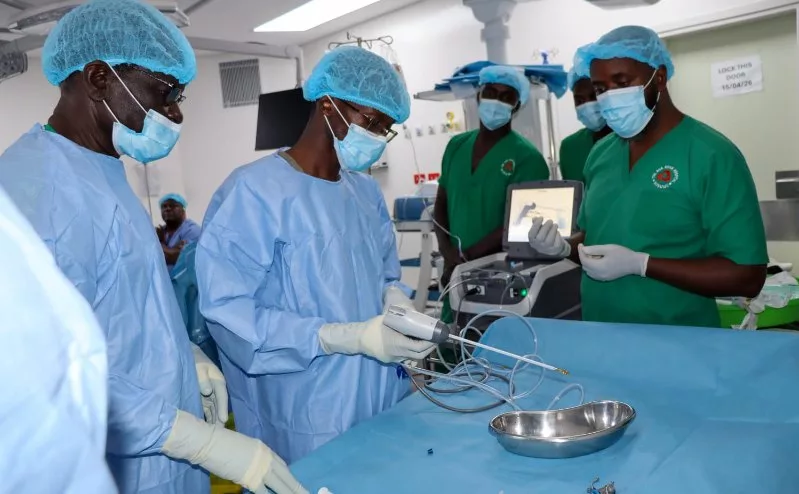
Dr Mokua says the procedure uses a small delivery device passed through the urethra to reach the enlarged prostate.
Controlled doses of water vapour are then injected into targeted areas of prostate tissue, damaging selected cells.
The body subsequently breaks down and absorbs the treated tissue. As it shrinks, more space is created for urine to flow through the urethra.
The treatment has no external incision and is minimally invasive. However, Dr Mokua cautions that improvement is not immediate because the body needs time to process the treated tissue.
Patients may begin noticing improvement from around two weeks, while the full benefit can take several weeks and, in some cases, up to three months.
For J O, the question of sexual function was particularly important.
Dr Mokua explains that Turp does not necessarily cause erectile dysfunction, but it can affect ejaculation, including retrograde ejaculation, where semen travels backwards into the bladder.
Rezūm is designed to preserve antegrade ejaculation in many appropriately selected patients, although individual outcomes can differ.
Dr Mokua says treatment decisions should therefore follow discussions between patients and doctors about expected benefits, risks, and alternatives.
Not every man with an enlarged prostate needs an operation. Treatment can begin with medication and monitoring, depending on the severity of symptoms. Intervention becomes an option when symptoms remain severe despite medication or when complications develop.
These can include urinary retention, recurrent urinary tract infections, bladder stones, bleeding and damage to kidney function.
Doctors also caution that prostate size alone does not determine the severity of symptoms. A relatively small prostate can cause significant obstruction, while a larger one may produce milder symptoms.
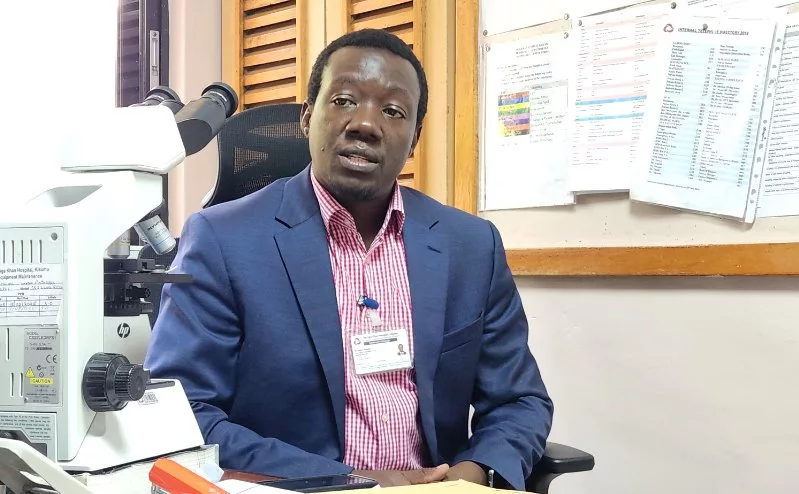
Dr Simon Onsongo, director of Aga Khan Hospital Kisumu, says the availability of minimally invasive prostate treatment gives patients another option and could help bring specialised urological care closer to Western Kenya.
“If we can get them locally in Kisumu and in this part of the world, that is a plus for us,” he says.
For J O, the journey has been about reclaiming a part of life that illness had gradually taken away.
His family encouraged him to seek a more permanent solution, while his son, an engineer, repeatedly reminded him about the procedure. Eventually, his personal medical insurance covered the treatment.
Now recovering at Aga Khan Hospital, J O hopes to regain the freedom to sleep, travel and visit friends without constantly planning around the nearest toilet.
His message to other men is simple: “Take charge of your health. It is very, very important to take charge of your health. Don’t fear. Come to the doctor.”
For men experiencing frequent night-time urination, urgency, weak urine flow, difficulty starting urination, or leakage, his advice is clear: do not simply dismiss the symptoms as part of growing older.
The first step may be as simple as breaking the silence and talking to a doctor.