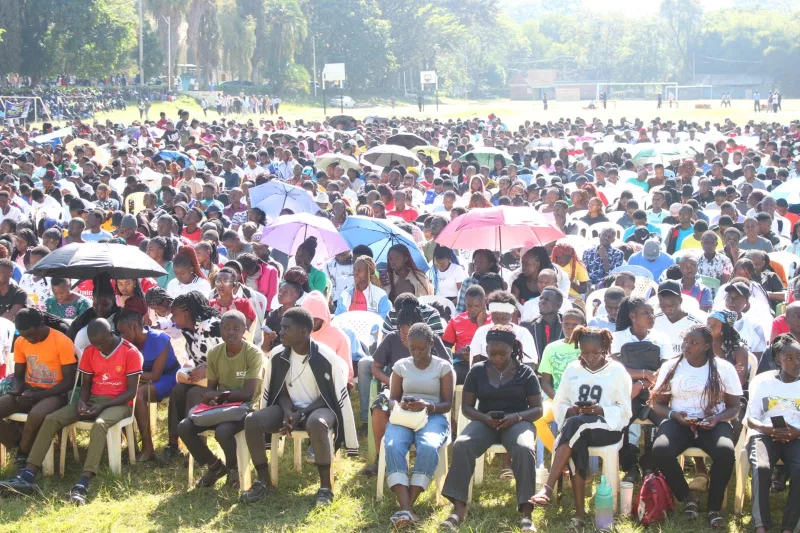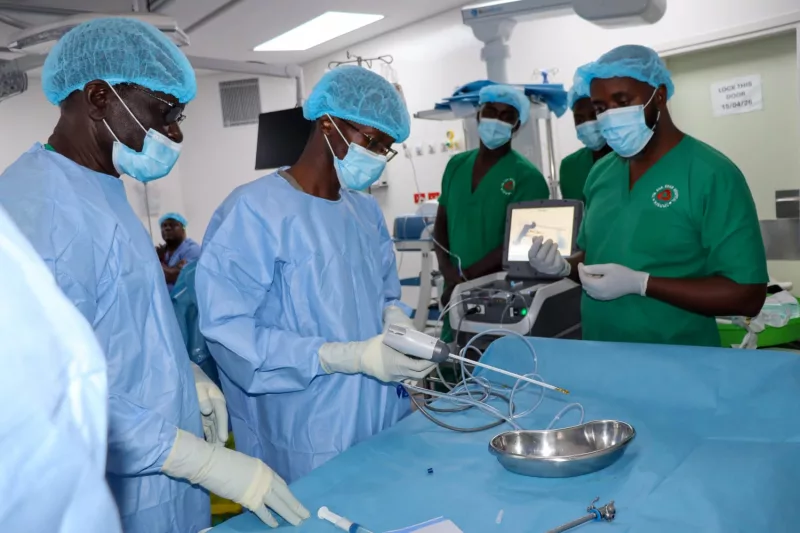

Patients in Nyanza continue to bear the brunt of a prolonged nurses’ strike that has now entered its second month.
In Siaya, residents seeking treatment at public hospitals have been affected by the reduced workforce, with patients calling for a quick resolution to the standoff between the county government and healthcare workers.
The disruption has particularly affected those who rely on public facilities for affordable medical care.
In Kisumu, patients have also been forced to contend with delays and reduced services as nurses remain away from their workplaces.
Some patients have had to wait longer for attention, while others have been referred to or opted for private facilities to access services.
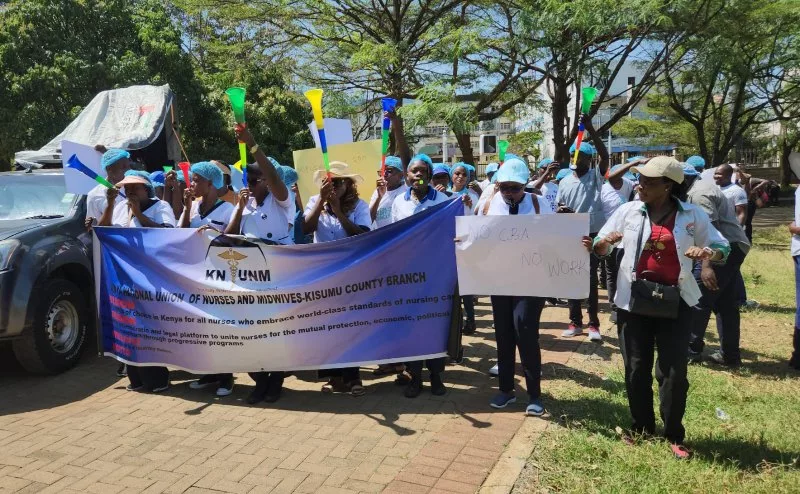
Nurses from Kisumu, Siaya, Homa Bay and Migori counties held a joint demonstration in Kisumu on Thursday, demanding their grievances be addressed before they return to work.
The demonstrations started in the morning, with the nurses proceeding in a procession to press the national and county governments to intervene.
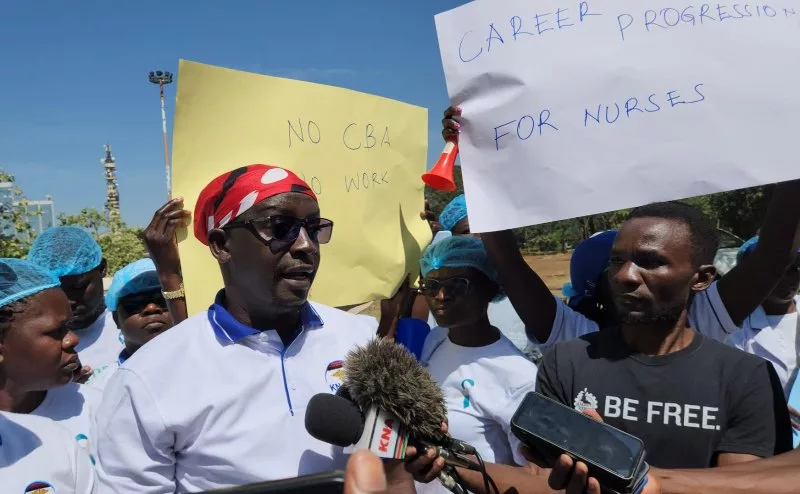
Kenya National Union of Nurses (KNUN) Kisumu branch secretary Andrew Otieno said the strike had entered its 30th day after the union issued a seven-day strike notice to employers without receiving a satisfactory response.
“We raised issues almost 45 days ago, informing our employers that we shall go on strike. After giving them a one-week strike notice, they failed to respond to our demands,” he said.
Otieno said nurses were demanding the implementation of a Collective Bargaining Agreement (CBA) agreed upon in 2017, as well as a return-to-work agreement signed the same year.
He said the agreements had remained unimplemented for nearly nine years despite efforts by nurses to engage the Council of Governors and county governments.
“We are saying that they must implement our return-to-work agreement of 2017, and we want to say they have to implement it in totality,” Otieno said.
The union official also raised concerns over nurses employed on contract under the universal health coverage programme, saying some had served county governments since the Covid-19 pandemic but remained uncertain about their employment status.
He said although the national government had indicated the nurses could be absorbed on permanent and pensionable terms, questions remained over who their employer would be.
“These nurses must know their employer and they must be issued with letters of permanent and pensionable employment. Without that, we are not going back to work,” Otieno said.
He further called for intervention over 45 nurses who he said had been dismissed by the Kisii government, accusing the administration of using force against nurses demanding their rights.
Otieno also warned that nurses would remain on strike until all their grievances were fully addressed, despite threats of salary stoppage or disciplinary action.
“Our strike is legal and we shall remain out until our issues are addressed,” he said.
The prolonged industrial action has raised concerns over the ability of public health facilities to provide uninterrupted services, leaving patients seeking treatment facing uncertainty and delays.
Otieno appealed to President William Ruto, the Health Cabinet Secretary, governors and elected leaders from the region to intervene and help end the standoff.
“As nurses, we are willing to go back to work. But we are asking you to help us talk to the governors so they can implement what we want, so we can go back to work and serve you,” he said.
However, Otieno also issued threats against nurses who had continued reporting to work during the strike, saying the union had their names and contacts and would pursue them.
“We have your names, we have your contacts... We shall come for you,” he said.
Otieno urged political leaders from Kisumu and the wider region to take a more active role in resolving the dispute, saying the public was suffering as the strike continued.
He said nurses would remain out of health facilities until their demands were addressed and an agreement reached to end the strike.
The prolonged industrial action has raised concerns over the ability of public health facilities to provide uninterrupted services, leaving patients seeking treatment facing delays and limited access to care.
Retired Anglican Bishop Joseph Wasonga has separately urged the Siaya government and healthcare workers to return to the negotiating table and resolve the dispute.
He said residents were suffering because public hospitals were not operating at full capacity following the nurses’ industrial action.
Wasonga urged the county government and healthcare workers to agree on a return-to-work formula, saying the dispute could be resolved if both sides negotiated in good faith.
“The county government should listen to healthcare workers, sit with them and find ways of agreeing on a back-to-work formula so that the people may not continue to suffer,” he said.