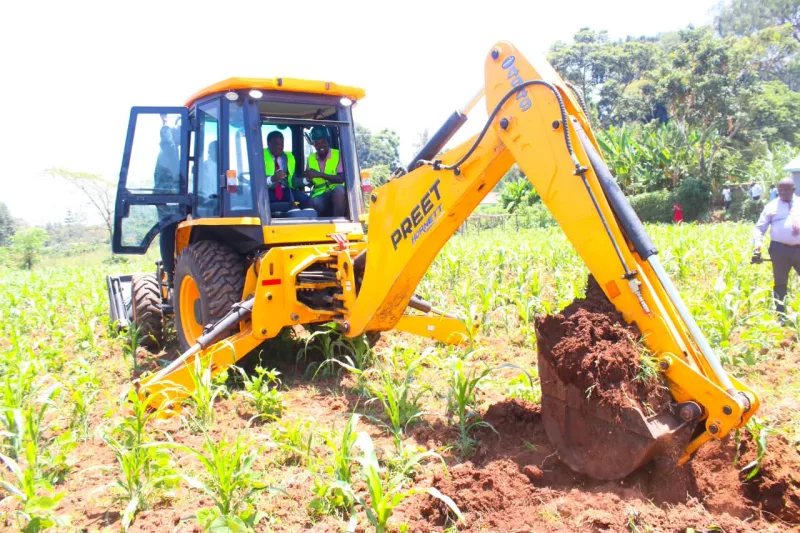
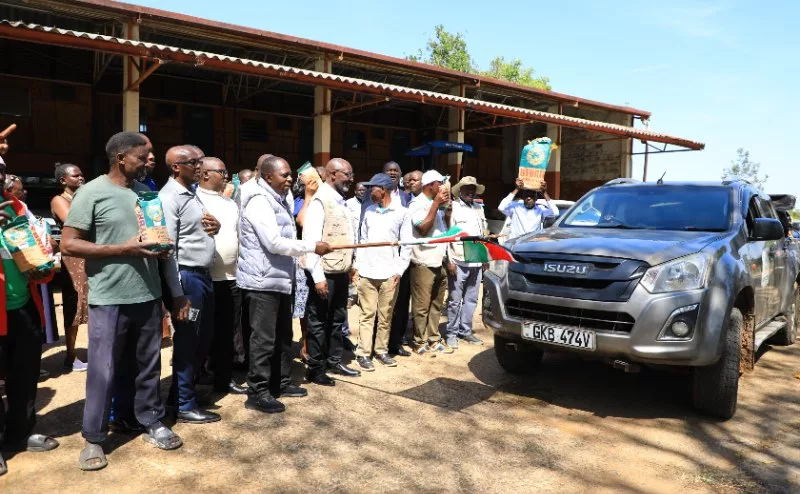
The Migori government has launched a programme to distribute maize seeds to more than 5,000 small-scale farmers in all 40 wards ahead of the short rains season.
Deputy Governor Joseph Mahiri said the initiative, implemented through the county’s department of agriculture under the leadership of Governor Ochilo Ayacko, is aimed at helping farmers who cannot afford to purchase certified maize seeds.
He said each targeted farmer will receive more than four kilogrammes of maize seed to enable them to plant during the short rains season, which normally runs between August and September.
“We have come together with farmers and our agricultural officers to distribute maize seeds to farmers ahead of the short rains. This is a programme that the county government has implemented every year through the department of agriculture,” Mahiri said.
He said the initiative is intended to boost food production and improve food security in the county, which receives relatively adequate rainfall in many areas.
The deputy governor said priority will be given to small-scale farmers who lack the financial capacity to purchase improved seed varieties.
He said the county has selected seed varieties based on the climatic and agricultural conditions of different parts of Migori.
Agriculture executive Lucas Mosenda said farmers in different regions require different maize varieties because of variations in rainfall and climatic conditions.
“We know that the seed planted in Nyatike is not necessarily the same variety planted in Rongo or the Kuria region. That is why we have targeted each region with a variety that can withstand the conditions experienced there,” he said.
Mosenda said the county experienced challenges during the previous planting season due to excessive rainfall followed by a prolonged dry spell, affecting food production.
He said the county had initially targeted producing 150,000 tonnes of maize but harvested about 127,000 tonnes.
“As the agriculture department, we are distributing these seeds to help farmers who were affected by the challenges experienced last season,” Mosenda said.
He urged farmers not to rely solely on the provision of improved seeds but to follow advice from agricultural extension officers throughout the farming season.
Mosenda said farmers should adhere to recommendations on planting methods and crop management, particularly amid forecasts of increased rainfall.
He said dry areas such as Nyatike require maize varieties that mature within a shorter period because rainfall in the region is often unreliable.
“Nyatike experiences short and unreliable rains, so we have to provide seed varieties that mature faster and are suitable for the short period of rainfall,” he said.
The county government said the programme is expected to contribute to increased maize production while strengthening food security among households across Migori.
Instant analysis
Migori’s seed distribution programme highlights the growing importance of targeted agricultural support as farmers contend with increasingly unpredictable weather patterns. Reaching more than 5,000 small-scale farmers across all 40 wards could help ease the cost burden of purchasing certified seed while supporting food production ahead of the short rains. The decision to match seed varieties to local climatic conditions is particularly important, given differences between areas such as Nyatike, Rongo and Kuria. However, the programme’s success will depend on more than seed distribution. Timely planting, extension services, access to other farm inputs and effective crop management will determine whether farmers can translate the support into higher yields and improved household food security.