The results from Britam Holdings, Jubilee Holdings, Old Mutual Holdings and CIC Insurance Group point to an industry increasingly relying on diversified income streams and products tailored to households and small businesses that have traditionally remained underserved by formal insurance.
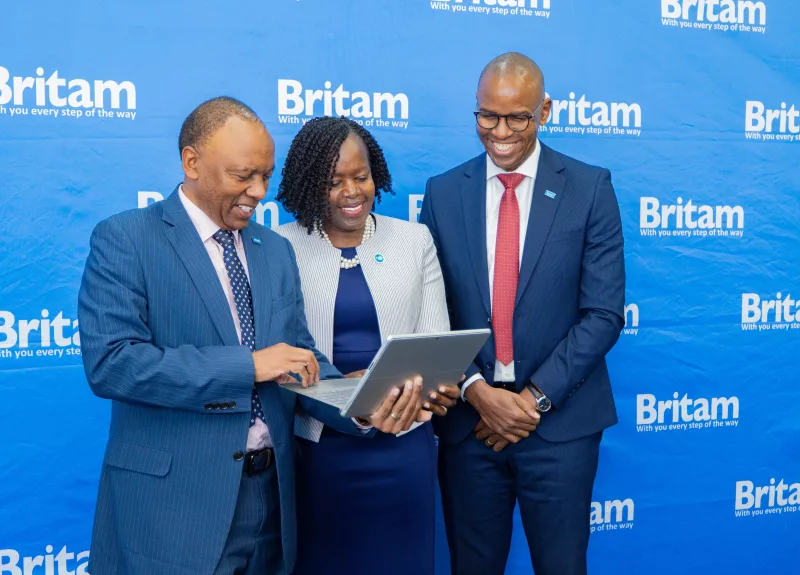
Britam Holdings Plc emerged as the strongest performer among the four, with profit after tax surging 53.3 per cent to Sh2.7 billion in the six months to June, from Sh1.7 billion a year earlier.
The insurer’s insurance revenue hit a record Sh22.4 billion, while total assets expanded to Sh270.8 billion, signalling continued growth in its core business despite a challenging operating environment.
The strong earnings have also been reflected in the company’s performance at the Nairobi Securities Exchange.
Britam did not declare an interim dividend, but its share price closed the week at Sh18.60, having gained 105 percent over the past year.
The counter started 2026 at Sh9.08.
For shareholders of Jubilee Holdings Limited, the earnings improvement came with a more immediate reward.
The insurer reported a 12.7 per cent increase in net earnings to Sh3.5 billion and announced a dividend of Sh2 per share, reinforcing investor confidence as the group continues to strengthen its profitability.
Old Mutual Holdings Plc recorded perhaps the most dramatic turnaround.
Its net profit rose to Sh882 million from just Sh5 million in the corresponding period last year.
The insurance business also returned to profitability, posting an insurance service result of Sh287 million compared with a Sh303 million loss in the first half of 2025.
Management attributed the turnaround to tighter claims management, greater underwriting discipline and cost controls—measures that have become increasingly important as insurers contend with rising claims costs and constrained margins.
At CIC Insurance Group Plc, profit after tax climbed 70 per cent to Sh1.09 billion.
Insurance revenue increased 17.8 per cent to Sh16.3 billion, while investment returns jumped 44 per cent to Sh3.96 billion from Sh2.8 billion a year earlier.
Earnings per share consequently rose to Sh0.38 from Sh0.23.
The performance underscores the growing importance of investment income to insurers, particularly when underwriting alone cannot provide sufficient margins.
Expanding asset-management businesses and targeting mass-market customers through affordable, tailored insurance products are also opening new avenues for growth.
The strong corporate results came against a backdrop of sustained demand for government securities.
At the August 27 Treasury bill auction, investors submitted bids worth Sh56.7 billion against an advertised Sh28 billion, representing a subscription rate of 202.6 percent.
Yields on the 91-day, 182-day and 364-day Treasury bills declined, indicating strong demand even as returns softened.
The August 24 Treasury bond auction similarly attracted substantial interest, with the 10-year Treasury switch bond receiving bids worth Sh22.6 billion against the Sh15 billion on offer, equivalent to 150.6 percent subscription.
On the equity market, however, trading activity weakened even as share valuations strengthened.
For the week ended August 28, the NSE All Share Index, NSE 25 and NSE 20 Share Index gained 0.8 per cent, 0.9 per cent and 1.65 per cent respectively. Market capitalisation rose 0.78 per cent to a record Sh4.13 trillion.
Yet total shares traded and equity turnover fell by 50.5 per cent and 50.2 per cent respectively, pointing to a market where prices are rising despite significantly lower trading volumes.
Bond turnover in the domestic secondary market also declined 5.37 per cent during the week, highlighting a mixed investment environment in which strong demand for selected assets is coexisting with subdued market activity.