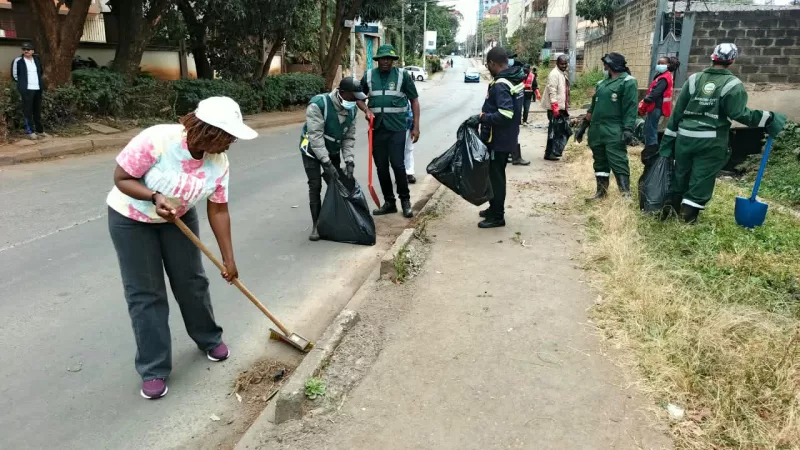
Nairobi County has intensified its citywide clean-up and drainage clearance campaign, removing thousands of loads of garbage from major waste hotspots and river corridors as the city prepares for the expected October El Niño rains.
Daily garbage collection has now increased from about 1,000 tonnes to 3,000 tonnes as the county steps up efforts to keep the city clean while preventing waste from blocking drainage infrastructure.
The operation is targeting all 17 sub-counties, with county teams clearing drainage systems, waterways, river channels, illegal dumps and waste collection points to improve water flow and reduce the risk of flooding.
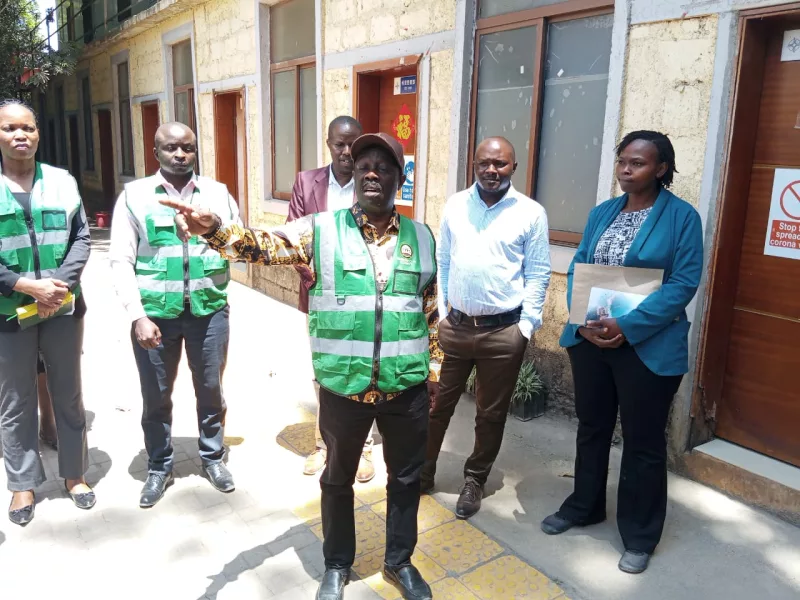
In Parklands, the latest exercise brought together assistant directors, sub-county and ward environment officers and the Parklands Association to clear garbage, silt and other obstructions from drainage systems, waterways and river channels.
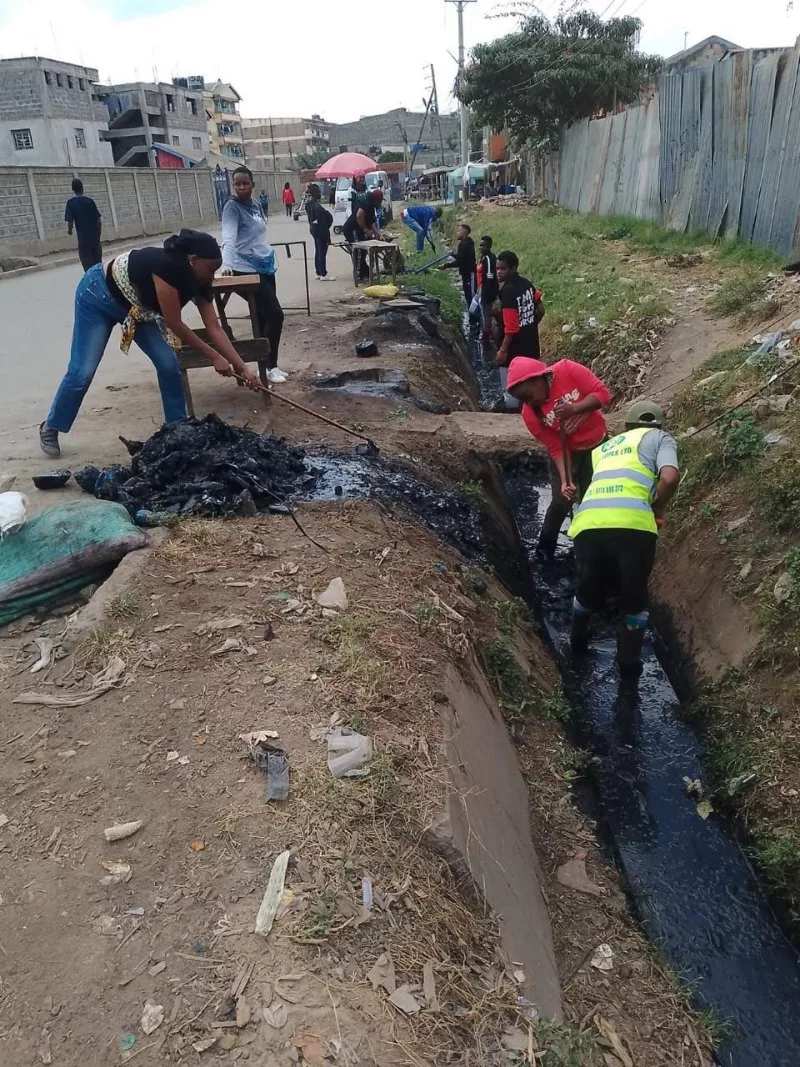
Kware Bridge accounts for 1,538 loads, while another 2,970 loads have been cleared from English Press in Mukuru Kwa Reuben.
Njeri said the county has also been servicing waste collection points along the Ngong River to prevent garbage from choking waterways, particularly as the rainy season approaches.
Waste removal has also been intensified along the Nairobi River in Kamukunji Sub-County.
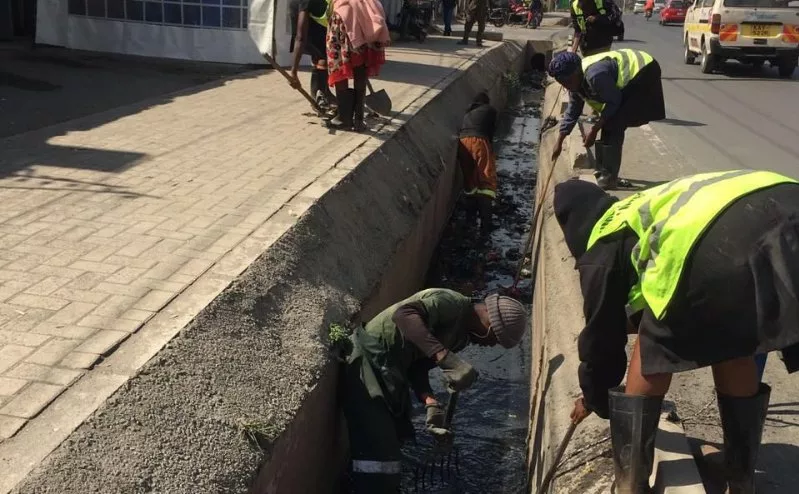
In Ruaka Sub-County, 10 loads have been removed from Gumba Bridge in Babadogo Ward, 27 loads from Kingston in Utalii Ward and 64 loads from Area 3 Sokoni in Mathare North. Another 54 loads have been cleared from Korogocho Market.
Since the citywide clean-up campaign began in April, more than 40 major waste collection points and illegal dumping sites have been cleared.
The county's weekly programme, running from August 31 to September 6, is targeting major roads, markets, waste collection points and public spaces in Starehe, Kamukunji, Mathare, Kasarani, Langata, Dagoretti South, Ruaraka, Embakasi West, Embakasi Central and Makadara, among other areas.
Markets and roads receiving attention include Gikomba, Muthurwa, Wakulima, Korogocho, Kangemi and Toi, while drainage maintenance, desilting, litter collection and vegetation control are also being undertaken in Dandora, Ruai, Langata, Mathare, Kibra and Dagoretti North.
Njeri said the focus was on prevention by ensuring drainage infrastructure is ready before the heavy rains begin.
“As we prepare Nairobi for the El Niño rains, the Green Army is on the ground every day clearing drains, removing waste and keeping our roads and neighbourhoods clean. This is about prevention — ensuring water has a clear path to flow and reducing the risk of flooding.”
The campaign is bringing together county departments, community organisations, businesses and residents.
In Mukuru, Kwa Reuben, Green Army teams have worked alongside Public Health and Environment officers, area administrators, Climate Works, Akiba Mashinani Trust and community groups to clear illegal dumps and drainage channels while sensitising residents on proper waste management.
Njeri said sustained public participation would be critical in protecting the gains made through the clean-up campaign.
“We cannot achieve a clean and flood-resilient Nairobi through the efforts of the County Government alone. We need residents, communities and businesses to take responsibility for their waste and stop illegal dumping.”
The interventions form part of wider reforms in Nairobi's solid waste management system, including the recruitment of 4,000 Green Army workers on permanent and pensionable terms and plans to establish material recovery and waste transfer facilities.
With the October rains approaching, the county is banking on increased garbage collection, drainage clearance, community mobilisation and early intervention to make Nairobi cleaner, safer and more resilient to flooding.