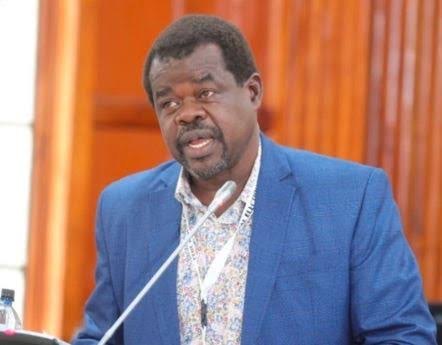
Busia Senator Okiya Omtatah has challenged the Kenya National Examinations Council (Knec) to disclose details of the tender used to print this year’s national examination materials, amid growing scrutiny of the procurement process.
Omtatah has invoked Article 35 of the Constitution and the Access to Information Act to demand details of the procurement, contracting and printing of the 2026 examinations.
The request covers the printing of the Kenya Certificate of Secondary Education (KCSE), Kenya Junior School Education Assessment (KJSEA) and Kenya Primary School Education Assessment (KPSEA) exams.
The request comes after Education ministry officials appeared before the National Assembly Education committee, where MPs were told some information about the procurement could not be disclosed on national security grounds.
However, Omtatah says national security cannot be used as a blanket excuse to keep public procurement information secret.
“The invocation of national security cannot, in our view, operate as a blanket exemption from the constitutional right of access to information,” he says in his letter to Knec.
He wants the examinations council to disclose the tender number, title and the date the procurement process commenced, as well as the procurement method used.
Where a method other than open tendering was adopted, Omtatah wants Knec to provide the specific legal provision and circumstances used to justify the decision.
He is also seeking the number of firms that participated in the process, the evaluation criteria applied and the requirements relating to technical capacity, financial strength, experience, security and production capacity.
The activist wants Knec to identify the successful bidder and provide the tender evaluation and award decisions, except for information that is lawfully exempt from disclosure.
Omtatah has also demanded financial details of the contract.
He wants to know the total value of the contract covering the printing, packaging, handling and distribution of the examination materials.
He is seeking the amount budgeted and approved by Knec, including the relevant budget vote, programme or allocation from which the expenditure will be financed.
The activist also wants Knec to disclose whether the contract value falls within the approved budget and, if not, the authority relied upon to commit expenditure beyond the allocation.
Where the contract has been signed, he wants the date of execution, its duration and the scope of services covered.
He has further demanded details of any payments already made or amounts committed under the contract.
The request also targets the ownership and capacity of the successful company.
Omtatah wants Knec to declare whether the winning bidder is a Kenyan company, a foreign firm, a joint venture or make public its legal nature if neither foreign not local.
Where it is a Kenyan company, he wants the council to explain whether it satisfied itself that the firm had the technical, financial and operational capacity, as well as the relevant experience required to print national examination materials.
If foreign, Omtatah demands details of the country of incorporation, Kenyan partners, subcontractors or local agents, and the extent to which the work will be carried out in Kenya or abroad.
He has also asked whether any part of the contract has been subcontracted and, if so, the identities and roles of the material subcontractors be made public. He also want to know the tax compliance status of the company.
Omtatah wants to know whether bidders were required to demonstrate compliance with tax and other statutory obligations.
Knec should also announce whether the successful bidder’s tax status had been verified and confirmed with the Kenya Revenue Authority before the award.
The calls for transparency have cropped up amid reports a Greek company, previously linked to printing national examinations and ballot papers, was in the news again.
The company has also been mentioned in reports concerning scrutiny by the Kenya Revenue Authority over tax scrutiny.
Omtatah, however, says his request does not seek information that could compromise examination security.
He wants Knec to separate genuinely sensitive information from procurement details that can be released without compromising the integrity of the examinations.
Where Knec intends to withhold information on national security grounds, Omtatah wants the council to identify precisely the information being withheld and cite the specific provision of the law.
He cites the Constitution, the Access to Information Act, the Public Procurement and Asset Disposal Act, or another applicable law.
Where only part of a document is exempt, Omtatah wants the non-sensitive sections released with the protected portions redacted.