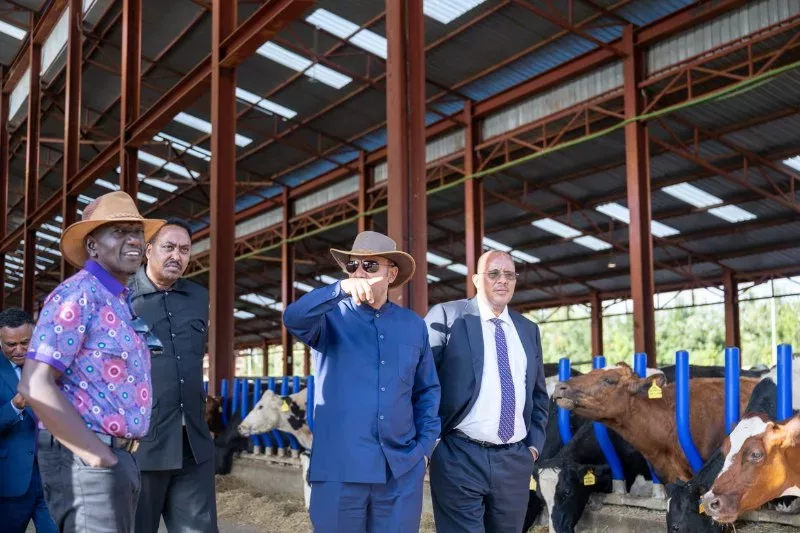
 Muhoroni Sugar Factory General Manager James Oluoch during an interview/COURTESY
Muhoroni’s sugar economy is showing signs of recovery, with the local mill now processing about 1,400 tonnes of cane a day and farmers receiving payment within a week of delivering their crop.
The revival of Muhoroni Sugar Company has renewed business for cane growers, transporters, workers and traders who depend on the mill, months after the factory returned to full operations following a six-week maintenance shutdown.
Muhoroni Sugar Company General Manager James Oluoch said the factory resumed milling on June 6 after targeted repairs to ageing machinery, with the company now monitoring the performance of the equipment before undertaking further maintenance later in the year.
The state-owned mill, which was leased to a private investor last year and renamed Muhoroni Sugar Company 2025 Limited, had been struggling with years of underinvestment and operational challenges.
Oluoch said the latest repairs were necessary because some sections of the factory still required attention after the investor's initial maintenance programme.
“At that time, Muhoroni Sugar had not been operating for close to four months. It was basically almost dilapidated in terms of the state it was in at that moment,” Oluoch said.
He said the investor first undertook an extensive maintenance programme before restarting operations, followed by repairs targeting areas that still needed work.
“We had to close for targeted maintenance in specific areas that had not been done well, so we closed down for about six weeks. We just opened the other day, around June 6, 2026, and you can see now we’re back in operation,” he said.
The company is planning another maintenance shutdown during the October rains, when it expects to work on the boilers, mills and cane preparation section.
“After addressing the specific areas that still needed some fine-tuning, we want to see how the factory will react to the two maintenance programmes that have been done,” Oluoch said.
He said the October shutdown would allow the company to address sections that still require repairs.
“We are targeting to close down during the October rains and fix a few areas that have not been fixed, including the boilers, which require some fixing, and the mills and cane preparation area,” he said.
The return of the mill has also improved payments to farmers, with Oluoch saying growers supplying cane are now being paid within a week.
“We are paying all the farmers that bring cane within one week. The business and local community are happy because there is a lot of money circulation,” he said.
He added that the revival had increased economic activity and kept young people engaged in sugarcane farming, contributing to a reduction in crime in the area.
For residents, the reopening represents more than the return of an industrial plant.
Odhiambo Ngesa, a farmer and transporter who has witnessed the sugar industry’s fortunes since the factory was established in the 1960s, said Muhoroni’s economy was closely tied to the mill.
“I have seen the ups and downs in the sugar industry since then. The worst experience was when Miwani closed down. People lost their livelihoods. A similar situation was creeping into Muhoroni Sugar, but it was saved by the government decision to lease the mill,” Ngesa said.
He said the arrival of the new investor brought noticeable changes to the community.
“When they came, we really appreciated it because there was a drastic change among farmers, transporters and the entire community in the Muhoroni area,” he said.
Ngesa said the factory’s continued operation was critical for thousands of people who depend on it directly and indirectly.
“Muhoroni life depends on this mill. Even an attempt to change it to a collection centre would be very disastrous because the community has more than 50,000 or 100,000 people depending on this mill, directly and indirectly,” he said.
He, however, urged the government and other stakeholders to invest more in sugarcane production, warning that inadequate cane supply could undermine the gains made by the revival of the factory.
“The government should even give out loans to develop the farms so that we have more cane,” he said.
The farmer said restoring the factory must therefore go hand in hand with supporting growers to increase cane production and ensure the mill has sufficient raw material throughout the year.
For Muhoroni, the challenge now is to sustain the momentum, keep the mill supplied with cane and ensure the factory’s revival translates into a lasting recovery for the community.