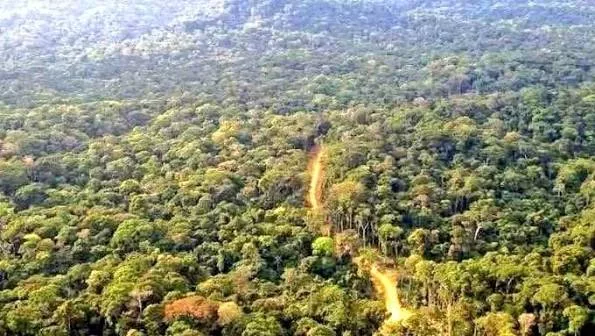
“Forests hold secrets to separate worlds, whispers ancient wisdom through trees and offers a quiet haven for the soul. It is also the source, the keeper and the resilience of live”.
Kaptagat forest holds these magical and definitive aspects that are so dear to human life that we cannot justifiably quantify them. Surrounding these sacred and almost define characteristics of Kaptagat lies a word the has threatened its very successful restoration to what any such forest should be and should provide. Fencing.
There are moments in the life of a nation when a single word acquires such political and emotional weight that it begins to obscure the truth. In Kaptagat today, that word is fence. To some, a fence represents exclusion, dispossession and the closing of a door to a forest with which generations of families have lived in intimate relationship.
To others, it represents protection, regeneration, water security and an attempt to safeguard an ecological inheritance from pressures that have already damaged it. Both perceptions contain elements of truth. The real question is therefore not whether a fence is inherently good or bad, but what happens behind the fence, around the gates and within the relationship between the forest and the people who live beside it.
Kaptagat deserves a conversation more mature than the politics of the wire. The ongoing 273-kilometre electric-fencing programme is intended to secure the Kaptagat ecosystem, while Kenya Forest Service has stated that the objective is not to abolish lawful community access but to regulate it through designated entry points.
The infrastructure is also intended to support patrols, emergency response, fire management and other conservation activities. That distinction is fundamental. A fence can become an instrument of exclusion if it is imposed without consultation and administered without regard for legitimate rights. But it can equally become an instrument of responsible conservation when it establishes boundaries, controls destructive activity and gives a recovering ecosystem the space to heal.
The strongest argument for taking the fencing proposal seriously is that Kaptagat is no longer simply a forest under threat; it is a forest that has undergone significant restoration and now requires protection of the gains already made.
Years of tree planting, community mobilisation and alternative livelihood initiatives have created ecological capital that would be irresponsible to leave vulnerable to renewed degradation. Restoration without protection can become an endless cycle of planting, destruction and replanting. At some point, a recovering ecosystem must be given the security necessary to mature.
Kenya's own conservation experience offers useful lessons. Kakamega Forest demonstrates the scale and complexity of protecting an important forest through collaboration among government, conservation organisations and other partners.
Mount Kenya provides an even more nuanced lesson: research has associated fencing with reduced conflict, improved forest regeneration and reduced forest destruction, while simultaneously documenting community concerns over diminished access to firewood, timber, wild vegetables, fruits and honey.
The lesson is therefore not that fencing is automatically successful. It is that physical protection works best when accompanied by serious consultation, communication and accommodation of legitimate community needs.
Karura offers perhaps the most compelling Kenyan example of what becomes possible when security and community participation are treated as complementary rather than contradictory. Through cooperation between Friends of Karura Forest and Kenya Forest Service, fencing, forest scouts, gateways, trails and public-access infrastructure were developed alongside community involvement and employment. The result has been a remarkable transformation of a previously degraded and insecure landscape into one of Kenya's most valued urban conservation and recreation spaces.
These examples do not mean that Kaptagat should simply copy another ecosystem. Its communities, geography and history are different. They do, however, challenge the assumption that fencing necessarily means shutting people out. The alternative to regulated access is not always freedom. Sometimes it is simply disorder.
Without clearly recognised entry points, a beekeeper, a person collecting a permitted forest product, a researcher, a tourist, a livestock keeper and an illegal logger can all enter through informal routes.
Forest managers struggle to distinguish legitimate activity from destructive exploitation. Fire detection becomes harder. Sensitive regeneration areas remain vulnerable. Illegal extraction can take place beyond effective observation.
Regulated access creates accountability. It tells legitimate users where they may enter. It gives forest managers greater visibility. It makes surveillance and emergency response easier. It allows sensitive areas to receive stronger protection while other areas remain available for lawful use. In that sense, a properly designed gate is not necessarily a locked door. It can be an invitation to enter responsibly. But this is where government must also listen carefully.
Not every restriction is automatically legitimate merely because it carries the label of conservation. A gate located far from traditional access routes can turn a lawful right into a practical impossibility.
A bureaucratic process can discourage legitimate users. Poor communication can transform uncertainty into suspicion. And an electric fence that is poorly maintained can become an expensive monument rather than effective conservation infrastructure. The success of Kaptagat's fencing will therefore be determined less by the kilometres of wire installed than by the quality of governance behind it.
Kenya Forest Service has the statutory responsibility for forest management, but its responsibility cannot end with construction. It must demonstrate that the fence forms part of a coherent forest-management strategy.
Kaptagat Integrated Conservation Programme has a complementary role rooted in restoration, community mobilisation, alternative livelihoods and conservation advocacy. Community Forest Associations occupy perhaps the most delicate position of all: they must become the bridge between statutory authority and lived community experience. They understand local realities in ways that distant institutions cannot.
And the community itself must not be reduced to either an obstacle or a beneficiary. It is a stakeholder and, ultimately, a guardian. The people of Kaptagat should therefore neither surrender their rights nor reject conservation.
They should demand something more sophisticated: protect the forest, respect our lawful rights, involve us in management and ensure that conservation creates opportunities for us. That is not resistance. It is responsible citizenship.
Communities should ask practical questions. Where are the access points? How will recognised forest-user rights be exercised? How will beekeeping, livestock management, collection of lawful forest products and other legitimate activities be accommodated? Who will maintain the fence? What happens when an access arrangement fails? Where will grievances be reported? What employment and enterprise opportunities will emerge? How will communities participate in monitoring? These questions should not be treated as hostility. They are precisely the questions that make conservation stronger.
There is also a larger economic opportunity. A healthy Kaptagat can support beekeeping, ecotourism, tree nurseries, restoration employment, environmental education and other forest-compatible enterprises.
The ecological services of a protected water tower are far more valuable over generations than the short-term gains of uncontrolled extraction. A community that derives sustainable value from a standing forest has a powerful reason to defend it.
The danger is that suspicion can become self-fulfilling. If communities assume every conservation intervention is an attempt at dispossession, partnership becomes difficult. If conservation institutions interpret every question as resistance, trust disappears. And when trust disappears, even good programmes become vulnerable to political manipulation. Kaptagat should refuse that trap.
The strongest community position is not simply, “Remove the fence because it restricts us.” It is: “Protect the forest, respect our rights, involve us in how it is protected, and ensure that we share in the opportunities its protection creates.”
That position is difficult for any responsible institution to oppose. The fence should therefore not become a wall between Kaptagat and its people. It should become a framework for responsible coexistence. The forest needs boundaries, but the relationship between the forest and its communities needs bridges.
Kaptagat has already demonstrated what can happen when government, conservation organisations, communities and partners work towards a common ecological purpose. The next chapter should deepen that achievement rather than fracture it through suspicion, misinformation or political polarisation.
Protect what has been restored. Defend what is lawfully yours. Question what requires questioning. Accept what genuinely advances conservation. Demand transparency where transparency is necessary. And above all, keep the people inside the conservation conversation. Because the ultimate inheritance is not the fence. It is the forest.
And the forest will survive only when the people living beside it believe that protecting it is not a punishment imposed upon them, but a responsibility—and an opportunity—they share. Kaptagat must therefore become a place where conservation does not separate people from nature, but brings them into a more mature partnership with it.
As the African proverb reminds us, “If you want to go fast, go alone; if you want to go far, go together.” Kaptagat must go far. Its forest and its people deserve nothing less.