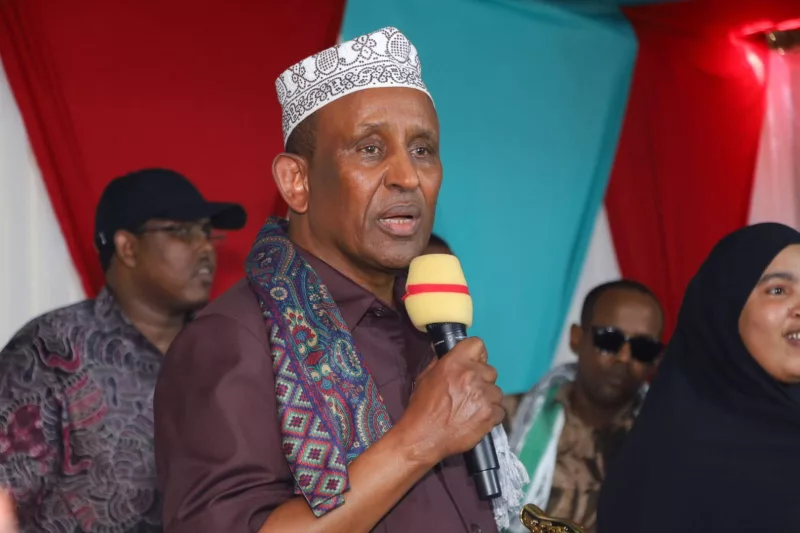
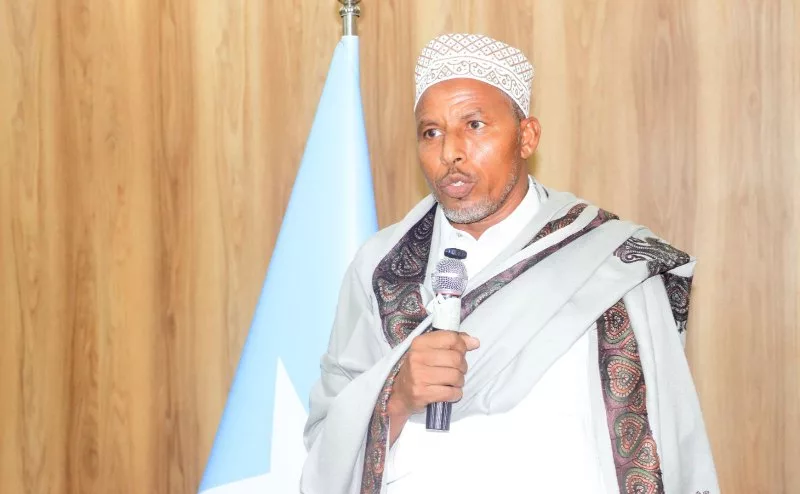
 Ugaad Dibad Hashi, Chairman of Jubaland traditional
leadership in Mogadishu. /STEPHEN ASTARIKO
Ugaad Dibad Hashi, Chairman of Jubaland traditional
leadership in Mogadishu. /STEPHEN ASTARIKOPressure for political change in Jubaland intensified on Friday night as presidential candidate Dr Abdullahi Ali convened an influential group of Jubaland leaders in Mogadishu.
Speakers at the meeting criticised the regional administration’s record on security, representation and governance and demanded urgent action to liberate Middle Juba.
The consultative meeting brought together traditional elders, former ministers, youth representatives, business leaders and senior military officers from Jubaland serving in the Somali Armed Forces.
Discussions centered on a politically sensitive question: how can Jubaland claim stability and representative government while significant parts of the region remain under Al-Shabaab control?
Participants called for a new political direction based on legitimate representation, inclusive government, territorial recovery and stronger cooperation with the Federal Government of Somalia.
They urged authorities to make the liberation and stabilization of Middle Juba and militant-held areas of Lower Juba an urgent priority.
Dibad Hashi, chairman of Jubaland traditional leaders in Mogadishu, said Jubaland communities must continue demanding legitimate and representative leadership.
Hashi said politicians from Jubaland should be capable of competing not only for regional leadership but also for Somalia’s presidency and other senior national offices.
But he warned that credible leadership could not emerge from a political system dominated by nepotism and exclusion.
He called for a system in which communities across Jubaland have a genuine stake in decision-making rather than political power being concentrated among a narrow circle.
Former minister Ugaas Abdikadir Mohamud Dagane urged the Federal Government not to retreat from efforts to liberate Middle Juba, describing continued Al-Shabaab control as an unacceptable national security reality.
Middle Juba, which includes strategic centres such as Bu’aale, Jilib, Salagle and Saakow, remains one of the most difficult fronts in Somalia’s campaign against Al-Shabaab.
In one of the strongest interventions of the evening, Dr Abdullahi Ali directly challenged President Ahmed Madobe’s record, accusing his administration of failing to recover large parts of Jubaland during its years in power.
Ali said seven of Jubaland’s 15 districts had effectively been left under Al-Shabaab control and argued that allowing communities to remain under militant rule for approximately 15 years represented a profound failure of leadership.
He focused particularly on the human cost — children denied education, families displaced and young people exposed to extremist recruitment, coercion and violence.
Children growing up under militant control, Ali said, should instead have been in classrooms preparing to become Somalia’s future doctors, engineers, teachers, entrepreneurs, soldiers and public servants.
He said Jubaland’s leaders should be judged by the security and opportunities they provide their people, not by how long they remain in office.
“Political power cannot be more valuable than human life,” Ali told the gathering, accusing Madobe and his allies of prioritizing political survival over communities living outside government control.
The allegations reflect the position of Ali and other opposition figures.
The Jubaland administration has defended its political and security record amid longstanding disputes with the Federal Government and regional opposition groups.
General Ali Areys, a former Jubaland minister, also called on the Federal Government to adopt a more assertive policy toward Jubaland, arguing that political disagreements should not prevent support for communities seeking liberation, stabilisation and representative government.
Sultan Ahmed Mursal Jalose similarly urged federal authorities to support efforts to restore government control in Middle Juba but warned that military operations must reflect local political and social realities.
He called for “local solutions for local problems,” saying people with direct knowledge of Middle Juba should play a central role in liberation, stabilization and post-conflict governance.
Participants warned that military victory without effective government could simply replace Al-Shabaab with an administrative vacuum. They called for security operations to be followed immediately by reconciliation, public services and representative local administrations.
Despite criticism of federal policy, speakers expressed support for the Federal Government, Somali security forces and international partners working to defeat Al-Shabaab.
The gathering comes amid continuing tensions over Jubaland’s political legitimacy. The 2024 Jubaland presidential election was rejected by the Federal Government and disputed by opposition groups, deepening disagreements over the constitutional and political future of the regional administration.
Jubaland, comprising Gedo, Middle Juba and Lower Juba, occupies a strategically important position bordering Kenya and Ethiopia, making its security and political stability significant beyond the region itself.
Friday’s meeting also signalled a more organised political challenge to the existing Jubaland leadership. By bringing together traditional authorities, former officials, military figures, youth and business representatives, Ali sought to frame his presidential campaign as a broader movement for political change.
His message presented Jubaland with a choice between continuation of the existing political order and a new approach centered on territorial liberation, broader representation, cooperation with Mogadishu and locally rooted governance.
For the leaders gathered in Mogadishu, the measure of political leadership was ultimately straightforward: whether government can protect its people, represent its communities and restore authority to areas that have spent more than a decade under extremist control.
Their political message was equally clear: liberate the territory, restore legitimate government, include the communities and put the lives of Jubaland’s people ahead of the politics of staying in power.
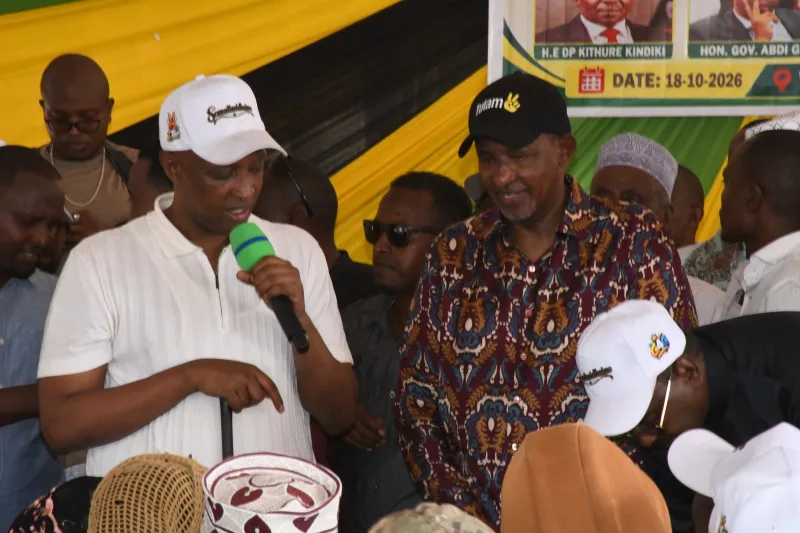
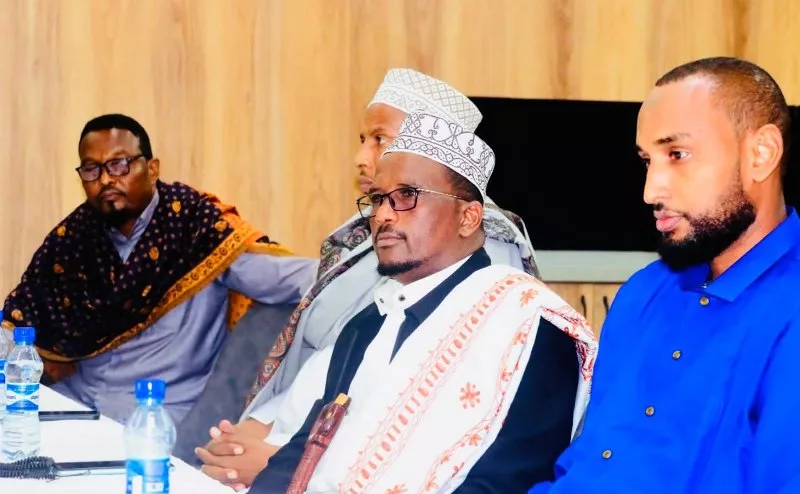 Religious and traditional leaders attend events hosted by Dr
Abdullahi Ali Jubaland presidential candidate. /STEPHEN ASTARIKO
Religious and traditional leaders attend events hosted by Dr
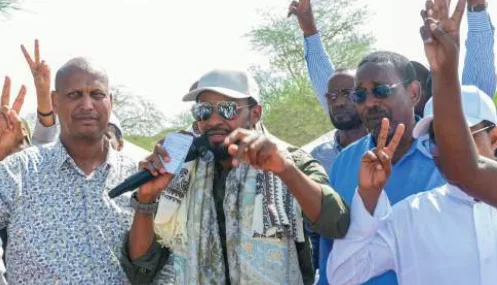
Abdullahi Ali Jubaland presidential candidate. /STEPHEN ASTARIKO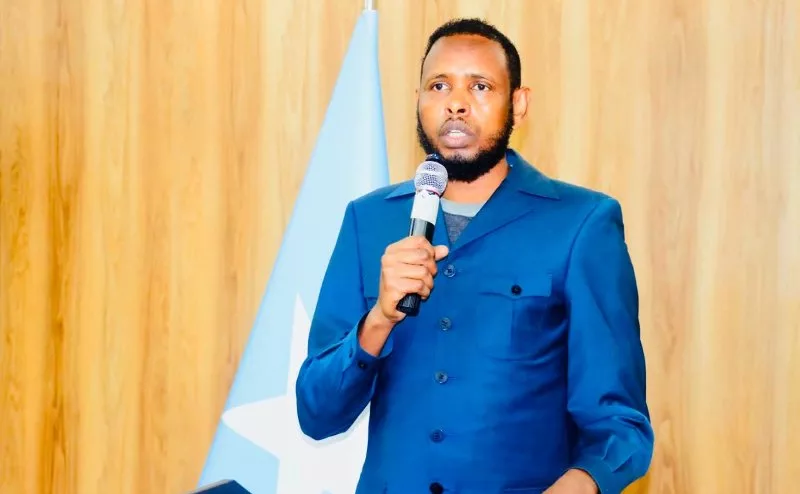 Dr Abdullahi Ali speaking at Mogadishu event./STEPHEN
ASTARIKO
Dr Abdullahi Ali speaking at Mogadishu event./STEPHEN
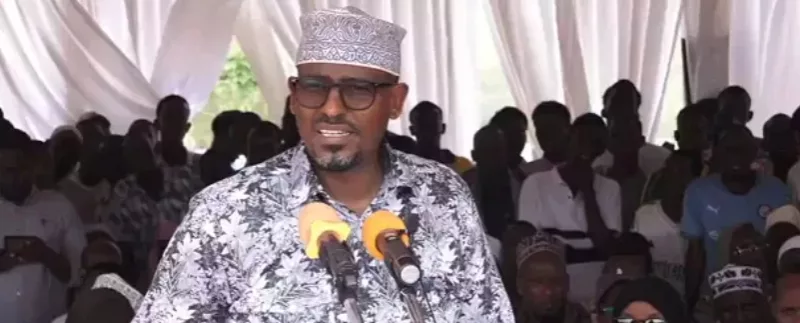
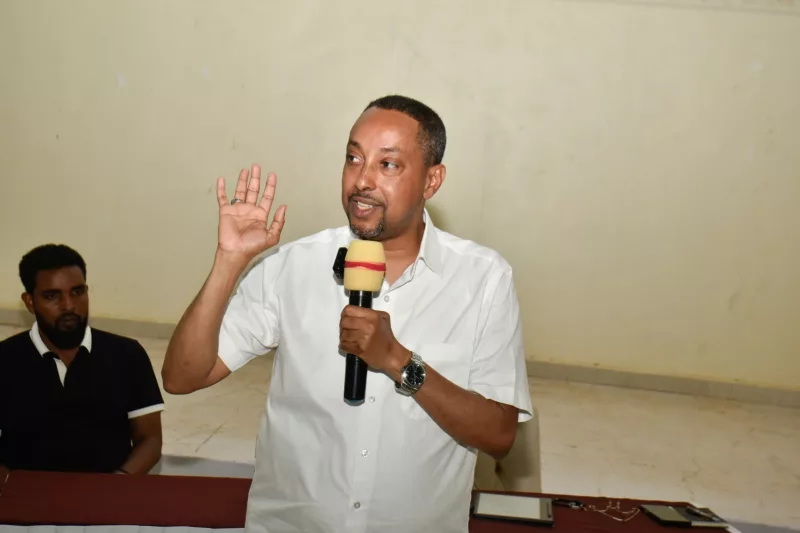
ASTARIKO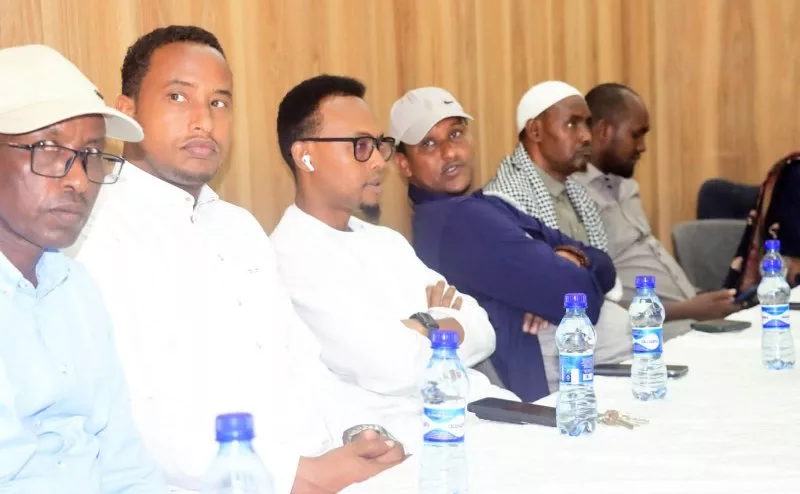 Youth leaders in Mogadishu attend event hosted by Dr
Abdullahi Ali, Jubaland presidential candidate. /STEPHEN ASTARIKO
Youth leaders in Mogadishu attend event hosted by Dr
Abdullahi Ali, Jubaland presidential candidate. /STEPHEN ASTARIKO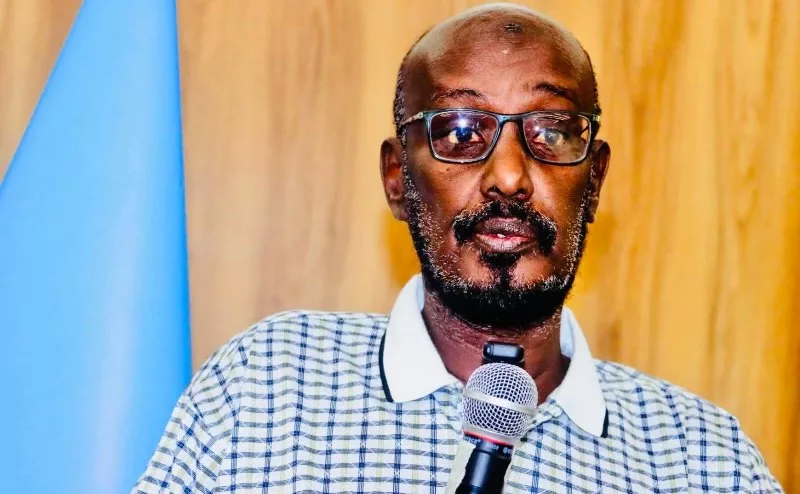 General Ali Areys, former deputy Jubaland interior minister.
/STEPHEN ASTARIKO
General Ali Areys, former deputy Jubaland interior minister.
/STEPHEN ASTARIKO