Kenya plans to phase out second-hand vehicle imports by 2030, betting on local assembly for jobs, manufacturing boost and a regional automotive hub.
This comes amid a renewed push by the local new vehicle assemblers, who want the government to implement a new automotive industry policy, which seeks to gradually cut the second-hand vehicles age limit before a final ban.
But the plan has met resistance from used vehicle importers, who argue that local assemblers lack the capacity or price edge to replace the more than 100,000 imports annually.
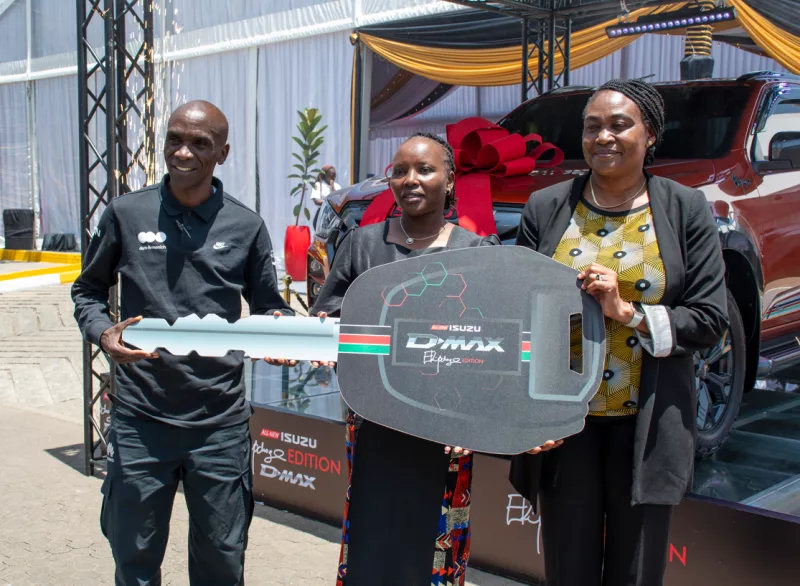
Isuzu East Africa, which commands more than 51 per cent of the local new vehicle market, says restricting used vehicle imports is essential if Kenya is to unlock the capacity already sitting idle in local assembly plants.
In an exclusive interview with the Star, managing director Rita Kavashe said Kenya currently produces only about 15,000 vehicles for the domestic market, while the broader automotive industry is operating at about 34 per cent of installed capacity.
“We have quite a bit of idle capacity,” Kavashe said, arguing that a clear and consistent policy on used vehicle imports would give manufacturers the confidence to expand production, invest in technology and develop local suppliers.
Kenya imports about 130,000 second-hand vehicles annually at a cost estimated at Sh60 billion, with used cars accounting for more than 85 per cent of the market.
Japan supplies about 80 per cent of the imported vehicles, followed by markets including the United Arab Emirates, United Kingdom, Singapore and South Africa.
Kavashe believes the market could instead become a major opportunity for local manufacturers if implementation of the Kenya Standard KS 1515 is carefully aligned with the country’s production capacity.
The standard provides requirements for the inspection of road vehicles and has been central to government efforts to tighten controls on older and potentially less efficient imported vehicles.
The government has proposed reducing the age limit for used vehicle imports from the current eight years to five years by 2027, three years by 2029 and ultimately zero by 2030.
Kavashe supports the direction but cautions against imposing restrictions before local manufacturers are ready to fill the gap.
“We support the idea but let us do it in a systematic way so that we don’t get stuck in a policy,” she said.
She said commercial vehicles could be targeted earlier because Kenya already has sufficient assembly capacity for trucks ranging from three to 30 tonnes, while allowing saloon cars to continue coming in as imports.
Kenya’s main assembly plants include Isuzu East Africa, Associated Vehicle Assemblers (AVA) and Kenya Vehicle Manufacturers (KVM).
Kavashe said the three plants have the capacity to produce the commercial vehicles needed by the country, while capacity for saloon cars needs further development.
The push has also exposed a major divide between manufacturers and the Car Importers Association of Kenya (CIAK).
CIAK argues that local assemblers cannot yet meet demand for smaller vehicles and that restricting used imports would make vehicle ownership unaffordable for millions of Kenyans.
National chairman Peter Otieno has said locally assembled vehicles remain significantly more expensive than used imports, while warning that a zero-age import policy could create a captive market for a limited number of manufacturers.
Importers have also questioned the environmental argument behind the restrictions, arguing that some five-year-old vehicles from advanced markets can have better emissions performance than locally assembled models.
Kavashe, however, sees the restrictions as necessary for industrialisation, pointing to countries such as South Africa, Egypt and Thailand, where restrictions on used imports helped create stronger automotive industries.
She said Kenya’s automotive sector could eventually serve East and Central Africa if it develops sufficient local content and production scale.
A key element of that strategy is the Sh13.1 billion allocation under the Kenya-Japan Samurai financing agreement signed in June, witnessed by President William Ruto.
The wider Sh22.1 billion package includes funding for automotive development, energy and government reforms.
The automotive allocation is expected to support vehicle assembly, spare-parts manufacturing, e-mobility, technology transfer and skills development.
Kavashe said Isuzu wants part of the funding directed towards expanding body-building facilities, improving local parts manufacturing and developing suppliers capable of meeting international quality and cost standards.
This is particularly important as Kenya seeks to benefit from the African Continental Free Trade Area, which requires manufacturers seeking to access regional markets to build sufficient local content.
“The 13 billion is significant; it can really leapfrog the entire industry to growth,” Kavashe said.
The government has also introduced assembly incentives, including favourable duty treatment for completely knocked-down kits, while its automotive policy seeks to attract more investors into local assembly.
Kavashe said these measures are already making locally assembled vehicles more competitive.
She cited the Isuzu M-UX, assembled locally at about Sh8.9 million, compared with a second-hand SUV costing about Sh7.5 million.
The challenge, she said, is to maintain predictable policies. Frequent shifts in government policy have historically discouraged long-term investment in the sector.
Isuzu is also expanding its regional infrastructure. The company has invested Sh1.3 billion in a new parts distribution centre in Kenya, aimed at supporting East African and wider regional markets.
For Kavashe, the ultimate objective is not simply to stop used vehicle imports, but to create an automotive ecosystem spanning assembly, parts manufacturing, body building, technology and skilled employment.
“We must have serious policy direction,” she said. “Then the industry will grow, then the parts manufacturers will go, then the body-building industry will go, then meaningful jobs will come in.”
Kenya’s challenge now is to strike a balance between protecting consumers who depend on affordable used vehicles and giving local manufacturers the market certainty required to invest.
For Kavashe, a carefully staged implementation of KS 1515, backed by incentives and investment in local capacity, offers the pathway to achieving the government’s 2030 ambition.