Kenyan schools must move beyond exam-centred education and equip learners with practical skills fit for global labour market, educators have said.
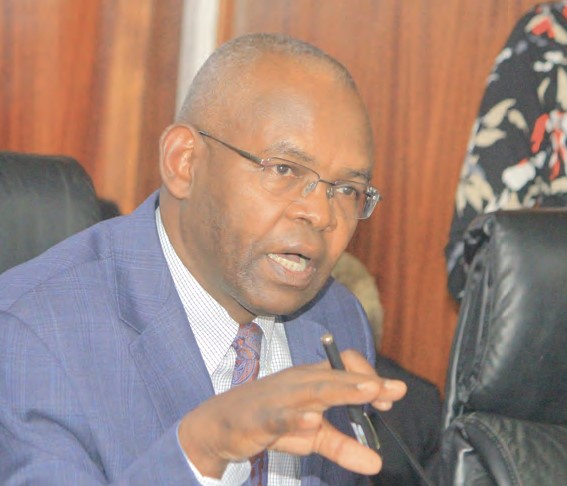
Amanda Birkenstock, a top executive at Crawford International School, said technical adaptability, financial literacy, collaboration and problem-solving were no longer optional skills but essential tools for young people entering an increasingly automated economy.
Speaking in Nairobi, Birkenstock warned that academic qualifications alone could leave young people ill-prepared for workplaces being transformed by artificial intelligence (AI), automation, digital finance and new corporate structures.
“Schools that fail to align their day-to-day curricula with these modern workplace realities risk producing graduates who possess impressive academic credentials on paper but lack the practical, employable competencies demanded by recruiters,” she said.
The warning comes as employers worldwide grapple with a rapidly changing skills landscape.
The World Economic Forum’s Future of Jobs Report 2025 estimates that 39 per cent of workers’ core skills will change by 2030, with technology-related capabilities, creative thinking, resilience, flexibility and leadership among the skills expected to grow in importance.
The International Labour Organization (ILO) has also warned that generative AI is already reshaping occupations.
Its 2025 analysis found that one in four workers globally are in occupations with some exposure to generative AI, although transformation of jobs, rather than outright replacement, is expected to be the dominant outcome.
For schools, this means preparing children not simply for the jobs that exist today, but for careers that could look very different by the time they graduate.
Birkenstock said education institutions therefore have a responsibility to close the widening gap between static classroom learning and the realities of modern industries.
Crawford International School, a model modern school located at Tatu City has responded to this need by combining the Cambridge International Curriculum with programmes focused on workplace readiness and emerging technologies.
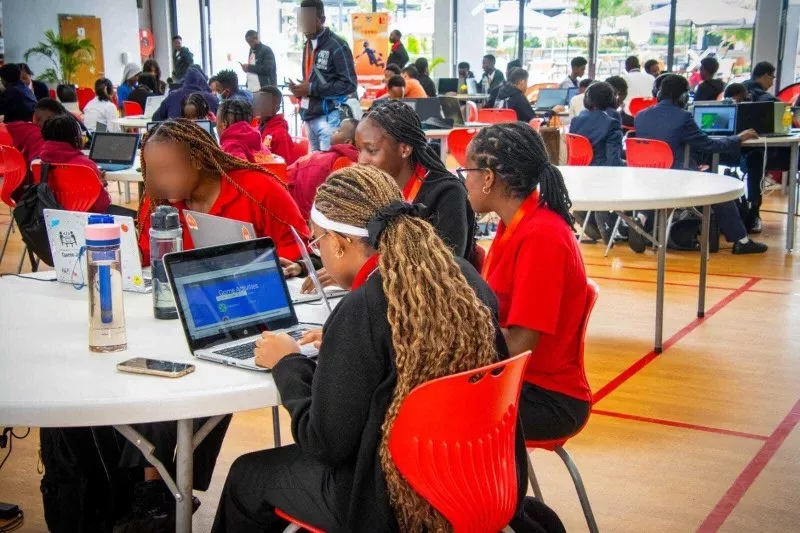
The school has invested in computer laboratories, science facilities, music studios and innovation spaces where learners engage with artificial intelligence, robotics, drones, 3D printers and laser cutters.
It has also introduced an AI-powered learning platform designed to personalise STEM education according to individual learning pace and needs.
The approach reflects a wider shift in education policy.
UNESCO’s AI Competency Framework for Students identifies 12 competencies across human-centred thinking, AI ethics, AI techniques and applications, and AI system design, with learners expected to progress from understanding to applying and creating with AI.
But Birkenstock argues that technology must not come at the expense of human skills.
Crawford incorporates financial and entrepreneurial literacy, including exposure to cryptocurrency and blockchain, while linking technology and engineering projects to the 17 United Nations Sustainable Development Goals.
Learners are also exposed to internships, career fairs, life-coaching sessions and industry speakers.
An educational psychologist supports students through aptitude assessments and career guidance designed to connect individual abilities with potential career paths.
The emphasis extends to debating, emotional intelligence, leadership and collaborative problem-solving skills increasingly valuable in workplaces where employees are expected to work across disciplines and navigate uncertainty.
The challenge, however, extends beyond individual schools.
UNESCO says teachers themselves require continuous professional development to use AI responsibly and effectively, highlighting the need for education systems to equip both educators and learners for the digital transition.
"As technology continues to redefine occupations, the strongest education systems will be those that teach learners not merely how to pass examinations, but how to think, adapt, create, collaborate and solve problems."