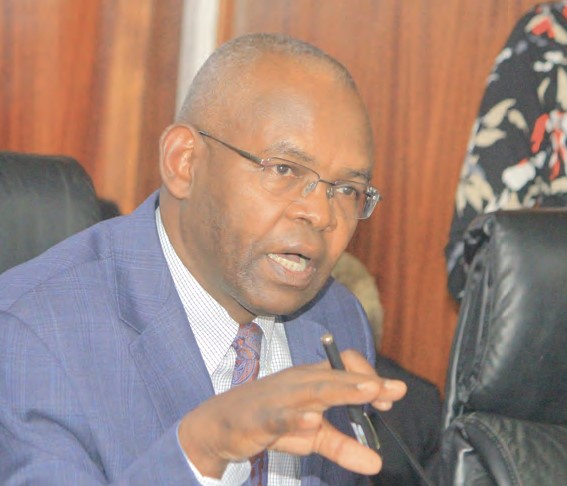
 Mentor Sacco CEO Joyce Waceke /FILE
Kenya’s Sacco sector remains locked out of the National Payments System as delays in parliament hold up the enactment of a new Co-operatives Bill.
The proposed Co-operatives Bill, 2024, which seeks to repeal the outdated Co-operatives Act, Cap 490, has been caught in a parliamentary deadlock after the National Assembly rejected amendments proposed by the Senate in April this year.
Sector stakeholders are now awaiting the Senate to fast-track the process of the bill, pending presidential assent.
The Bill was passed by the National Assembly with amendments on December 3, 2024, but was struck at the Senate after it underwent the first, second, and final readings on November 12 last year.
The Senate then passed the Bill with amendments and referred the document back to the National Assembly for consideration on February 12th, 2025.
By law, the two houses must agree on the amendments before the Bill is sent to the President.
Sacco sector stakeholders say the delay in the National Cooperative Bill could be due to governance clauses and devolved functions between the National Assembly and the Senate.
According to the Senate Bill tracker, this draft, which was published two years ago, was passed by the Senate with amendments and referred to the National Assembly for consideration.
However, the National Assembly rejected these Senate amendments on Tuesday, 14th April, 2026. The Bill has thus been referred to a Mediation Committee.
“There is a lot of goodwill from the co-operatives sector about the need for legal and regulatory reforms. At present, we have numerous forums that are disseminating information, most of which are not well-researched, doing the rounds,” said Mentor Sacco chief executive officer Joyce Waceke.
“This industry is huge, with a lot of resources, and therefore attracting the attention of vested interests and groups.”
She adds that for the Bill to become law, what is needed is wider public participation and a lot of understanding and harmony in the industry, as well as consultations.
As 2026 draws to a close, and with no inter-Sacco lending facility in place following troubles at Kenya Union of Savings and Credit Cooperatives (KUSCCO), financial cooperatives are still locked out of the National Payments System.
“Inter-Sacco lending is a long overdue issue. But once structures are put in place and a central pool identified, Sacco’s will be able to access the facility that offers loans at lower rates than what banks are offering and hence make more profits,” said coast region chairman of Kenya Association of Front Office Service Activity Isedorius Agolla.
The New Cooperatives Bill, if enacted into law, seeks to establish a Deposit Guarantee Fund to compensate members in the event that a financially troubled SACCO goes under and is liquidated.
“The New Cooperatives Bill that is coming up seeks to address some of the legal challenges and regulatory gaps that allowed losses to occur, as in the case of KUSCCO, which took place over a long period of time without anyone noticing or taking any action. We need a regulatory framework to govern the operations of Secondary Cooperative Societies such as KUSCCO,” said Waceke.
She added that the Cooperative is currently enjoying goodwill from the Government.
“The new bill will repeal the current Cooperatives Act Cap 490, enabling Saccos to enter the National Payments System, for instance. This has enormous benefits for Sacco’s in terms of service delivery to members, such as clearing of cheques without going through a bank,” she said.
Industry data shows that all cooperative Societies, including Saccos as well as Housing, Coffee, Dairy and Others, hold over Sh1.5 trillion in deposits and assets.