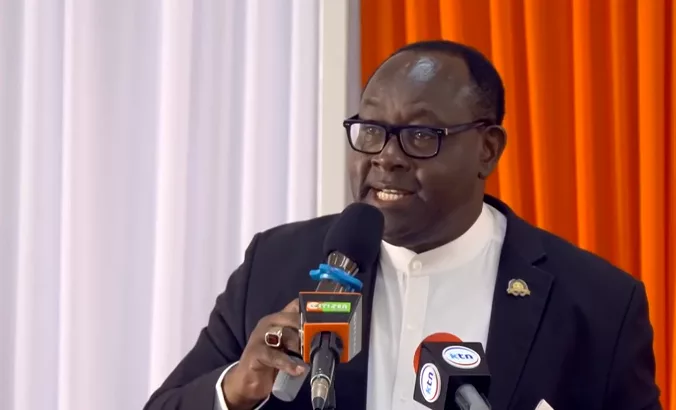
The National Cohesion and Integration Commission (NCIC) has urged church leaders to take a firm stand against politicians who use places of worship to spread hate speech and incitement ahead of the 2027 General Election.
NCIC chairperson Bishop Dr Kepha Nyamweya Omae said religious leaders have the authority to prevent politicians from using church platforms to promote narratives that could fuel hatred and division.
He said church leaders should not be afraid to take action, including cutting off microphones when politicians use worship services to deliver inflammatory messages.
“Servants of God, I want to implore you that in case a politician comes to your Church in the name of worship but actually with a hidden motive, you have the right to stop such a leader from uttering narratives which are of hate speech and incitement,” Omae said.
“You have the power, like some of us have done, where actually the technical crew that provides sound switches off the microphone and the man of God takes his mic and continues with the service,” he said.
Omae challenged religious leaders to be courageous in confronting political leaders who cross the line, warning that silence should not be mistaken for acceptance.
The NCIC chairperson also warned of the growing influence of digital spaces, where hate speech, misinformation, disinformation, propaganda and inflammatory rhetoric can spread rapidly, particularly on social media platforms.
He stressed that hate speech published online is subject to the same law as verbal hate speech, warning social media users against assuming that they can escape accountability by hiding behind anonymous accounts or keyboards.
Omae said the commission was already engaging stakeholders on ways to confront the growing menace, noting that perpetrators could still be identified and investigated with a view to prosecution.
“The law that applies to hate speech that is verbalised applies to hate speech written on social media. Hiding behind the keyboard will not protect perpetrators from being sought and investigated with a view to prosecuting them,” he said.
Omae also called on politicians to exercise responsibility in their public utterances, warning that inflammatory speech by political leaders could trigger hatred and destruction.
“Let us have responsibility in speech and call on the political class to train their tongues, as once wrongly used has a potential of igniting hatred that could lead to destruction,” he said.
His remarks come as faith leaders, NCIC and other stakeholders intensify preparations for the 2027 electoral cycle, with concerns over hate speech, misinformation, political competition and the mobilisation of identity.
Omae urged religious leaders to use their influence to protect national cohesion and prevent places of worship from becoming platforms for messages that could divide communities.
He said religious leaders must demonstrate courage in confronting harmful political narratives, warning that their quietness should not be interpreted as weakness.