The National Cohesion and Integration Commission (NCIC) and faith leaders have warned of the growing risk of misinformation and the use of religious identity to fuel divisions ahead of the 2027 General Election.
The warning was issued during a National Inter-Religious Consultative Forum on Peace, National Cohesion and Peaceful Elections, where religious leaders and other stakeholders discussed preparations for the next electoral cycle.
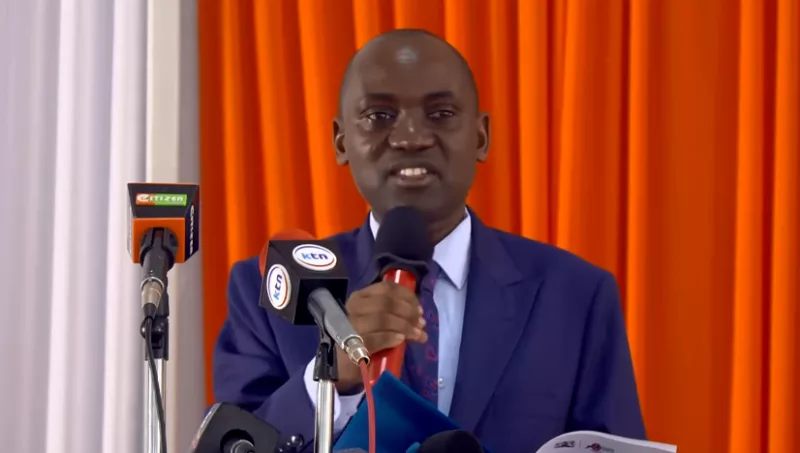
NCIC Commission Secretary and CEO Daniel Giti said Kenya must begin preparing early, warning that the foundations for peaceful or violent elections are often laid long before polling day.
He identified political competition, ethnic mobilisation, hate speech, misinformation and other forms of intolerance as emerging risks that must be addressed before they escalate into conflict.
“As Kenya gradually moves towards the 2027 General Elections, it is important that we begin preparations early and deliberately,” Giti said.
“One of the greatest challenges facing our society today is the rapid spread of hate speech, incitement, misinformation and disinformation, particularly through digital and social media platforms.”
He warned that inflammatory rhetoric can spread quickly, deepening divisions and creating fear and mistrust among communities.
Giti called for a unified national peace message delivered through places of worship, community networks and traditional and digital media platforms.
“We must therefore work together to promote a unified national peace message that speaks consistently to all Kenyans,” he said.
The NCIC chief also called for stronger early-warning, mediation and rapid-response mechanisms, noting that faith leaders and community structures are often among the first to identify emerging tensions at the grassroots.
He said better coordination between faith leaders, communities, government institutions, civil society and peacebuilding organisations would improve the country's ability to identify risks and intervene before disagreements escalate into violence.
The warning was echoed by Inter-Religious Council of Kenya Chairman Sheikh Abdullahi Salat, who said political competition remains intense and misinformation is spreading faster than truth as the country approaches 2027.
He raised concern over attempts to draw religious identity into political contests, warning that faith should not be turned into an instrument of division.
“The pressures have not disappeared. Political competition remains intense. Misinformation spreads faster than truth. In some corners, we continue to see attempts to draw religious identity into political contests to use the sacred trust placed in us as instruments of division rather than unity,” he said.
Salat said religious leaders have a responsibility to speak against hate speech and call for restraint because of the trust they command within Kenyan communities.
He said faith leaders' role in protecting peace during the electoral cycle was not new, but required greater coordination, urgency and unity.
“The role of faith leaders in safeguarding peace ahead of the 2027 electoral cycle is therefore not new. It is the same role we have always carried but one that now demands greater coordination, greater urgency, and greater unity of message. We cannot afford to speak with many voices when the moment calls for one,” he said.
He cited the experience of the 2022 elections, saying Kenya demonstrated that peaceful elections are possible when faith leaders, government institutions and communities work together.
Salat said religious leaders had contributed to peace efforts through the National Peace and Mediation Team, the Uwiano Platform and community-level conversations in churches, mosques and temples.
The forum is expected to develop a Joint Communiqué on Peaceful Campaigns and the 2027 General Elections, reaffirming commitments to peaceful campaigns, national cohesion, responsible leadership and violence-free elections.
Participants are also expected to develop a Joint Peace and Cohesion Action Framework for 2026–2028, outlining shared priorities, institutional responsibilities, timelines and coordination mechanisms.
The proposed framework will also include a coordinated National Peace Messaging Framework and strengthened early-warning, mediation and rapid-response mechanisms.
NCIC has proposed a Joint Steering Committee bringing together NCIC, the Inter-Religious Council of Kenya, World Vision Kenya and other strategic partners to oversee implementation of the forum's resolutions.
Salat said the Inter-Religious Council of Kenya would commit its nine Religious Coordinating Bodies, county interfaith structures and its voice to the peace process.
He said the objective was to ensure that the 2027 campaign period and General Election are peaceful, credible, and free of the violence that has scarred parts of our history.