A solar and battery energy project supplying one of Africa’s largest copper mining complexes has reached commercial operation in the Democratic Republic of Congo, marking a major step in the use of renewable energy for large scale mining.
The Kamoa-Kakula Solar BESS Baseload Project, located near Kolwezi, began commercial operations in August 2026 and is supplying 30 megawatts (MW) of firm renewable baseload power to the Kamoa-Kakula Copper Mining Complex.
CrossBoundary Energy Development Director for the DRC Gracia Munganga described the milestone as a significant step towards wider use of renewable energy.
“Achieving this milestone with Kamoa Copper S.A. is a significant step to mainstreaming round the clock renewable power,” Munganga said.
“It proves how quickly clean, stable energy can be deployed and the great potential of renewable energy solutions to support the mining sector’s ambitious growth.”
The project was developed, financed, owned and operated by CrossBoundary Energy under a long term power purchase agreement with Kamoa Copper S.A.
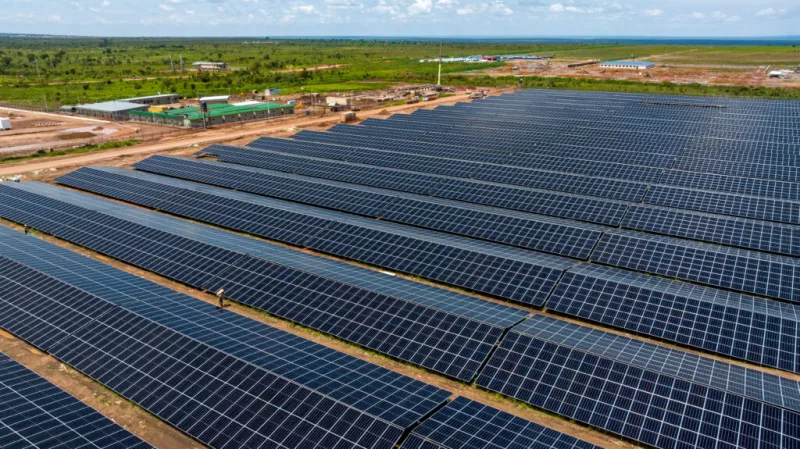
It combines a 233 MWp solar photovoltaic facility with a 123 MVA/526 MWh battery energy storage system.
The batteries store surplus solar power and dispatch it when required, allowing the facility to provide round the clock renewable electricity.
Kamoa Copper Managing Director Annebel Oosthuizen said the project would support the mine’s planned expansion.
“Kamoa-Kakula continues to lead the way in sustainable mining, with our copper production being among the lowest carbon intensive in the world,” Oosthuizen said.
“The new facility by CrossBoundary Energy will help power our planned growth in copper production, delivering an additional 30 megawatts of reliable, renewable baseload power.”
The plant has a 95 per cent availability factor and is expected to produce about 300,000 MWh of clean electricity each year.
The project reached commercial operation about 16 months after Kamoa Copper and CrossBoundary Energy signed the power purchase agreement in April 2025.
According to CrossBoundary Energy, this makes it the fastest solar and battery energy storage project of this type and scale to reach commercial operation in Africa.
The speed of delivery stands out against the average utility scale solar and battery project in Africa, which takes about 29 months from signing of a power purchase agreement to commercial operation.
The facility contains more than 357,000 solar panels and 180 battery containers.
Its solar installation covers 163 hectares, while the entire project, including the battery storage area, spans more than 180 hectares.
In its early operation, the photovoltaic plant had already been providing more than 150 MW, with 50 MW supplied directly to the mine network and the remaining power used to charge the battery plant.
The project is expected to reduce reliance on diesel generation and avoid an estimated 78,750 tonnes of carbon emissions each year.
The project also created 1,200 construction jobs and 18 long term permanent local jobs, with three long term subcontractors also created.
Its construction involved significant cross border logistics.
More than 1,000 20-foot containers and 870 40-foot containers were sourced and shipped through four countries.
The project fact sheet records about 998 truckloads travelling from Durban Port to Kolwezi.
Each vehicle covered about 3,080 kilometres, with cumulative travel exceeding three million kilometres.
Kamoa-Kakula is located on the western edge of the DRC Copper belt and is described as Africa’s largest copper mining complex.
The complex began Phase 1 operations in July 2021.
In 2025, construction was completed on its onsite direct to blister copper smelter, described as the largest in Africa.
The smelter produced its first 99.7 per cent pure copper anodes in December 2025 and is currently ramping up towards its nameplate capacity of 500,000 tonnes of copper.
The solar and battery facility adds renewable power to the complex as Kamoa-Kakula continues to expand its mining and processing operations.