 Kenya National Bureau of Statistics (KNBS) Director General Dr Macdonald G. Obudho./HANDOUT
Kenya has demonstrated the strategic value of integrating statistical and geospatial capabilities to strengthen evidence-based decision-making and support sustainable development, Kenya National Bureau of Statistics (KNBS) Director General Dr Macdonald G. Obudho has said.
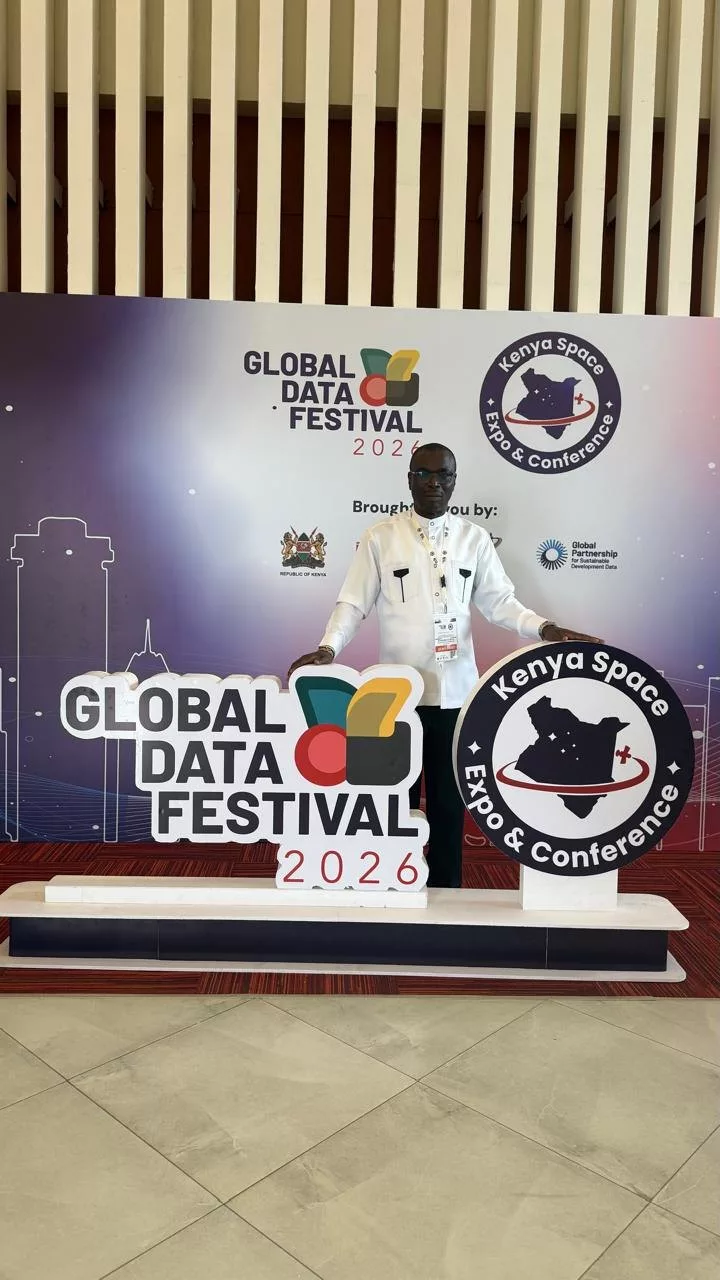
Obudho said this was highlighted extensively at the 2026 Global Data Festival and Kenya Space Expo and Conference, held from June 2-5, 2026 at The Edge Convention Centre in Nairobi.
In a statement, Obudho said the joint event demonstrated that statistical and geospatial systems should not be treated as separate platforms, but as complementary components of a modern evidence ecosystem.
He said bringing together official statistics, Earth observation, satellite-derived information, mapping and spatial intelligence creates opportunities for governments and other stakeholders to generate more comprehensive evidence for planning and decision-making.
The event was hosted by the Government of Kenya, led by KNBS in collaboration with the Kenya Space Agency (KSA) and organised by the Global Partnership for Sustainable Development Data (GPSDD).
According to Obudho, the gathering provided an important platform for building partnerships capable of turning better information into practical action for people, prosperity and the planet.
The four-day event attracted 1,376 participants from 65 countries, highlighting growing international interest in the combined potential of data, space science and emerging technologies to address development challenges.

GPSDD contributed its Global Data Festival platform and international data-for-development network, creating a common forum where statistical and space-based information could be explored as complementary tools for development.
Obudho said the integration of these capabilities is particularly important as countries seek timely and reliable information to respond to complex challenges.
“The integration of official statistics with geospatial intelligence strengthens the evidence base available to policymakers and creates new opportunities to understand where challenges are occurring, who is affected and how resources can be deployed more effectively,” he said.
The Nairobi edition was particularly significant as it marked the first Global Data Festival to be held in Africa and the third edition of the Kenya Space Expo and Conference.
The Global Data Festival series began in Bristol, United Kingdom, in 2018, where the inaugural Data for Development Festival attracted about 400 delegates. The second edition was held in Punta del Este, Uruguay, in 2023, drawing 555 participants from 62 countries.
The joint Nairobi event sought to connect policymakers, statisticians, space scientists, innovators, investors, academics, civil society organisations and development partners around practical applications of data and technology.
Participants explored how official statistics, artificial intelligence, geospatial information and Earth observation can contribute to areas including climate action, agriculture and food security, natural-resource management, spatial and urban planning, disaster-risk reduction, security and health.
The event also focused on strengthening inclusive data governance, common standards, institutional capacity, partnerships and investment.
Obudho said the ultimate objective was to ensure that advances in data and technology translate into tangible development outcomes.
“The value of data is realised when evidence is translated into decisions and action. By connecting statistical systems with geospatial and space-derived intelligence, we can provide a stronger foundation for policies that advance resilience, equity and economic growth,” he said.
The conference further emphasised the role of partnerships in accelerating innovation and ensuring that countries can harness emerging technologies responsibly.