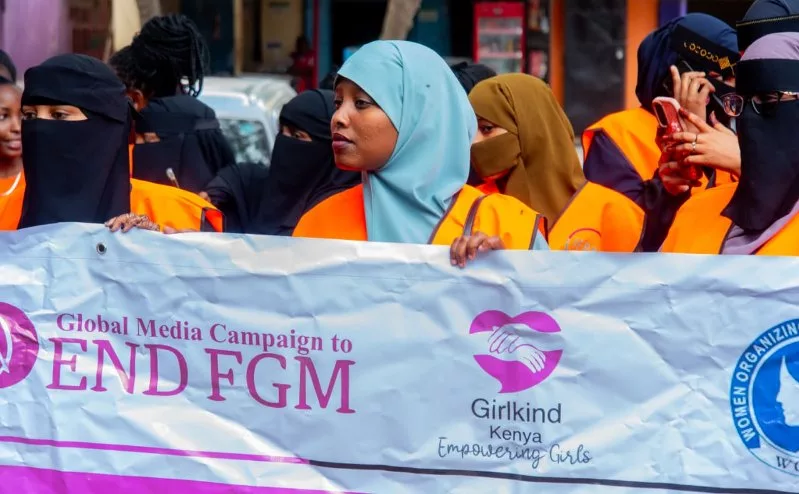
Human rights activists have called for tougher penalties for those engaging in Female Genital Mutilation (FGM) and strict enforcement if the law to end the vice.
The activists made the call during a caravan in Garissa town to create awareness on the dangers of FGM.
The campaign is aimed at mobilising communities to take a stronger stance against the practice.
The ‘Born Perfect Caravan' was organised by Girlkind, a non-governmental organisation involved in advocacy against FGM. It is funded by the German embassy.
The theme of the campaign is strengthening anti-FGM legal awareness and enforcement in Garissa county.
Girlkind official Asia Haasan called for a united front involving government agencies, parents, guardians, community elders, medical practitioners, religious leaders, and human rights defenders to end the practice.
“FGM is criminalised in Kenya, yet the practice continues and is now being done more discreetly. This means we must move beyond awareness and strengthen enforcement so that those who violate the law face the consequences,” she said.
“All stakeholders must speak with one voice. We cannot leave the responsibility of fighting FGM to the government or civil society alone. Parents, guardians, elders, health workers and the entire community have a role to play in protecting our girls.”
Haasan cited FGM's far-reaching consequences, saying the practice exposes girls to early and forced marriages, disrupts their education and limits their potential.
“FGM has lifelong consequences for girls and women. It can lead to severe infections, prolonged pain, psychological trauma, obstetric fistula and other reproductive health complications,” she said.
Despite sustained campaigns by the national and county government, civil society organisations and other non-state actors, the practice persists.
Rural areas remain particularly vulnerable, with campaigners saying the hidden nature of the practice makes it difficult to detect and prosecute perpetrators.
Korakora assistant chief Ahmed Mohamed said the persistence of FGM despite years of awareness campaigns and legal interventions demonstrated the need for a more coordinated response.
“Many girls remain vulnerable, particularly in rural areas. Awareness alone is not enough. We need stronger community surveillance, better reporting mechanisms and closer cooperation between communities and government agencies,” he said.
Acting deputy county commissioner Paul Omondi said the government remains firm in enforcing the law. He warned that anyone found facilitating or engaging in FGM would face the full force of the law.
Omondi urged parents and guardians to take the lead in protecting children from the practice and to report cases whenever they occur.
“Protecting girls requires collaboration between government agencies, local leaders, religious figures and communities. Long-term progress will depend on all of us changing our attitudes. We need to empower our women and girls,” Omondi said.
The administrator said communities should not shield perpetrators under the guise of culture or tradition, saying the protection of children must take precedence.
The campaign also drew support from boda boda riders, who said they could play a critical role in identifying and reporting cases, particularly in remote villages where perpetrators may operate away from public scrutiny.
Omar Ndombi, a boda boda rider, said riders frequently travel to remote parts of the county and can therefore provide valuable information to authorities.
“We sometimes come across female cutters going about their business, especially in the villages. At times, we are even informed that they are at a particular place carrying out the practice. We can report such cases to the relevant authorities,” Ndombi said.
He, however, called for stronger legal and policy measures to complement community sensitisation efforts.
“Stronger legal and policy frameworks, coupled with effective implementation, would help deter offenders and protect vulnerable girls. People must know that FGM is not only harmful but also a criminal offence,” he said.
According to the Kenya Demographic and Health Survey, Garissa continues to record an alarming FGM prevalence rate of about 83 per cent, underscoring the scale of the challenge in the county.
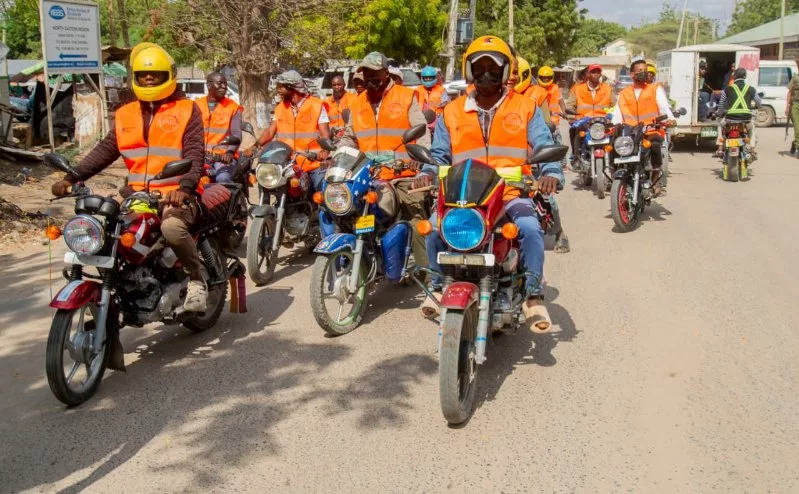 Bodaboda riders participate in the sensitization walk. /STEPHEN
ASTARIKO
Bodaboda riders participate in the sensitization walk. /STEPHEN
ASTARIKO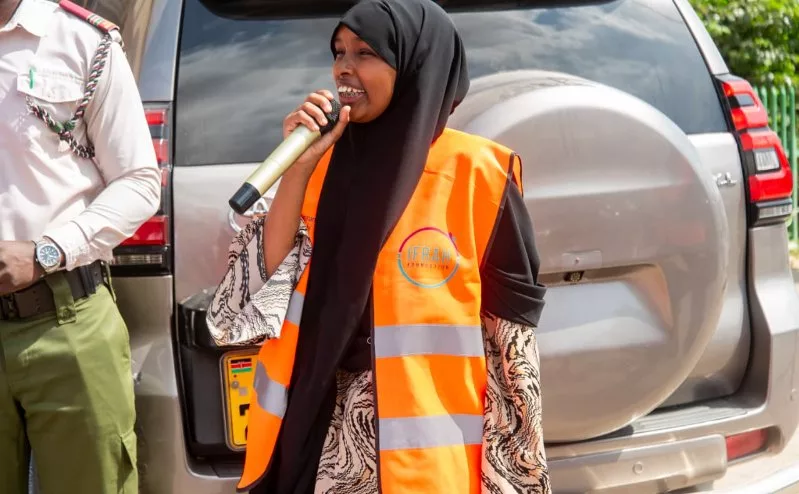 Asia Hassan of Girlkind speaking. /STEPHEN ASTARIKO
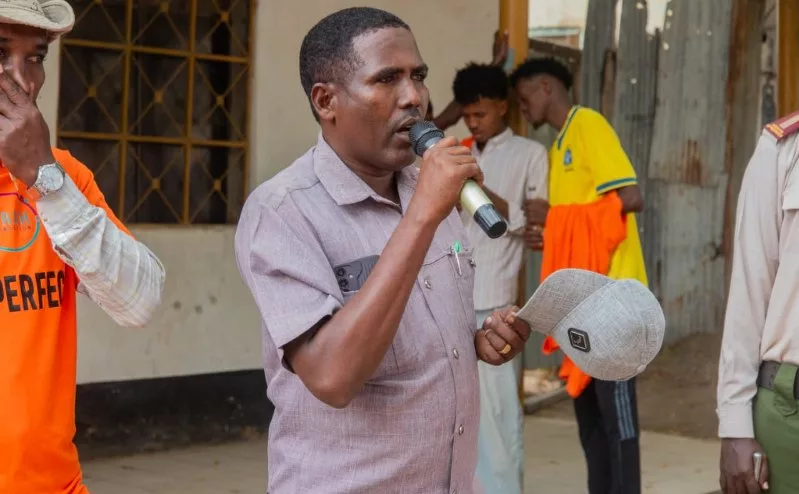 Iftin East location chief Dekow Ahmed speaking during the
sensitization walk. /STEPHEN ASTARIKO
Iftin East location chief Dekow Ahmed speaking during the
sensitization walk. /STEPHEN ASTARIKO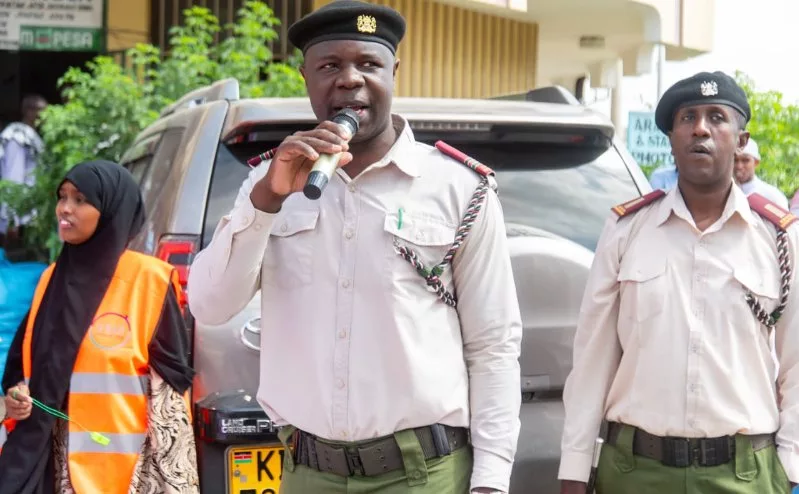 Acting Deputy County Commissioner Paul Omondi speaking during
the sensitization walk. /STEPHEN ASTARIKO
Acting Deputy County Commissioner Paul Omondi speaking during
the sensitization walk. /STEPHEN ASTARIKO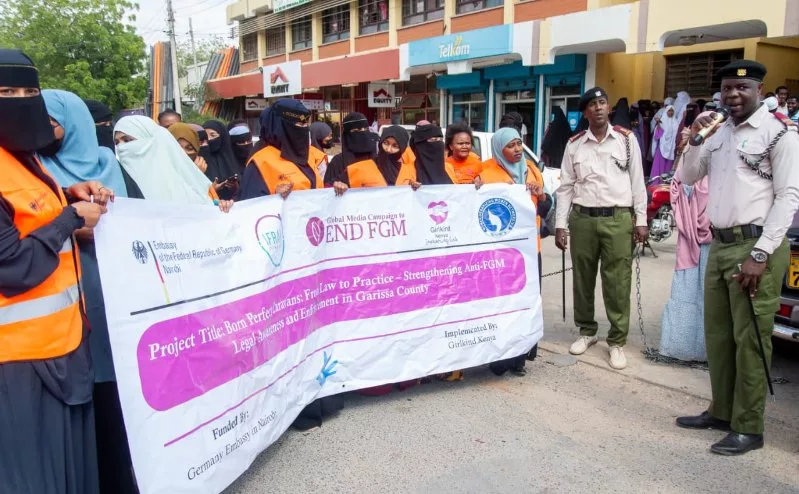 Members of the civil society group, local administration,
bodabodas, and members of the public participate in the sensitization walk in
Garissa town. /STEPHEN ASTARIKO
Members of the civil society group, local administration,
bodabodas, and members of the public participate in the sensitization walk in
Garissa town. /STEPHEN ASTARIKO