KENYA is inching closer to having a local palm oil factory, in what is expected to help cut billions spent on imports.
Plans for a refinery and commercial plantations in Lamu county are gaining momentum, which is part of a broader partnership with Malaysia.
The proposed investment will be located within the LAPSSET Special Economic Zone (SEZ), where discussions are already under way between Kenyan authorities, CPF Investment and Malaysian consultants over the establishment of a palm oil refinery.
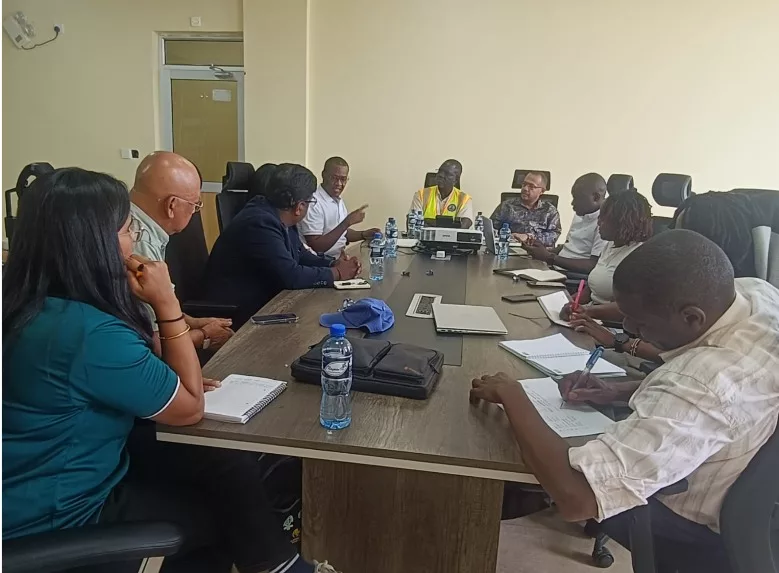
LAPSSET regional manager Salim Bunu and Kenya Ports Authority manager for terminal engineering Albert Owino hosted the CPF Investment delegation and its Malaysian consultant to discuss the proposed refinery site and the development of the project.
CPF Investment has identified land in Witu, Lamu county, where it plans to establish palm plantations, signalling a shift from Kenya's traditional dependence on imported crude palm oil towards developing a domestic supply chain.
Kenya imports about one million tonnes of palm oil annually, with the value estimated at close to $1 billion (Sh129.4 billion).
The commodity is one of the country's major import expenditure items and is widely used in cooking oil, food processing, soap manufacturing and cosmetics.
About 90 per cent of Kenya's palm oil imports comprise crude palm oil, mainly sourced from Malaysia and Indonesia, which is then refined locally.
The proposed Lamu refinery would therefore give Kenya an opportunity to retain more value within the domestic economy while creating an industrial base for supplying the local and regional markets.
The project is also expected to create jobs, stimulate agro-processing and attract additional investments into the LAPSSET SEZ, which is being positioned as a major industrial and logistics hub along Kenya's coast.
The palm oil initiative comes amid strengthening economic ties between Kenya and Malaysia, with Malaysia seeking to deepen its presence in Kenya's edible oil industry.
Malaysia has also moved to establish Nairobi as a regional base for its palm oil trade and re-export activities across Sub-Saharan Africa, creating an opportunity for Kenya to position itself as a regional processing and distribution hub.
During a recent visit to Kenya, Malaysia's Minister for Plantation and Commodities Johari Ghani said his country was prepared to support Kenya with technical expertise and palm oil seedlings as the two countries explored ways of developing the edible oil value chain.
“We will be setting up a trade support office in Nairobi to address any challenges being faced by Kenyan imports and equally to support exporters to trade with Malaysia,” Ghani said.
He added that Malaysia was willing to support Kenyan farmers and manufacturers to increase production for the domestic market and exports to the East African region.
The partnership could help Kenya address one of the biggest weaknesses in its edible oil industry—the shortage of locally produced raw materials.
According to the Kenya Association of Manufacturers, Kenya has edible oil refining capacity of about 2.1 million tonnes annually, but factories are operating at only around 40 per cent of capacity because of inadequate access to raw materials.
“There is opportunity to enhance capacity utilisation and scale up production to meet national demand,” KAM chief executive Tobias Alando said.
Kenya's annual edible oil demand is estimated at more than 900,000 tonnes, with imports accounting for the bulk of consumption.
The proposed Lamu investment could therefore help tackle two problems simultaneously: underutilised refining capacity and dependence on imported raw materials.
The government and industry have increasingly been pushing for localisation of the edible oil value chain, including greater cultivation of oilseed crops, improved access to finance and the development of out-grower schemes.
Malaysia's involvement could provide Kenya with access to technical knowledge accumulated over decades in commercial palm cultivation, processing and value addition.
For Lamu, the project would add an important agro-industrial component to the LAPSSET development strategy, linking farming and processing with the Port of Lamu and opening opportunities for exports to the wider East African market.
Kenya's imports from Malaysia rose to Sh135.9 billion last year from Sh120.5 billion the previous year, underlining the scale of the existing commercial relationship.
The palm oil project now offers an opportunity to change the nature of that relationship, from one dominated by imports of raw materials and manufactured goods, to one increasingly built around local production, processing, investment and regional exports.
If implemented, the Lamu refinery and plantation project could become a major test of Kenya's ambition to reduce its edible oil import bill while turning the coastal region into a new centre for agricultural processing and manufacturing.