Kenya’s fight against illicit and counterfeit alcohol is increasingly shifting beyond retail outlets, with liquor traders calling for tighter controls across the entire alcohol supply chain to stop illegal products from reaching consumers.
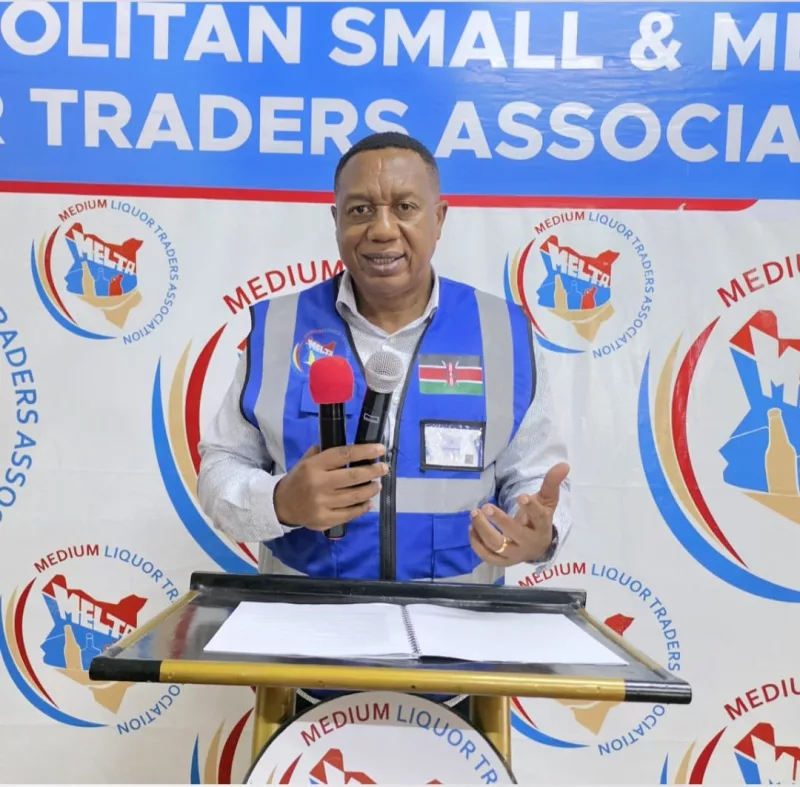
The Medium and Small Liquor Traders Association (MELTA Kenya), which represents licensed liquor and hospitality traders, says weaknesses across the supply chain are allowing unlicensed, untaxed and unregulated alcohol products to compete with legitimate businesses.
The association says the problem cannot be addressed by targeting retailers alone, arguing that stronger controls are needed from the point products enter the country through distribution, transportation and wholesale channels to their eventual sale to consumers.
The concerns raise questions about how illicit alcohol moves through Kenya’s market, including the role of manufacturers, distributors, wholesalers, transporters, warehouses, border points and increasingly online channels.
“This trade operates outside the law, bypassing quality controls and denying government its rightful tax revenue, while undercutting the thousands of licensed traders who operate legally and responsibly,” said MELTA Kenya chairman Francis Mbogo.
MELTA says licensed businesses are being placed at a disadvantage because they bear the cost of complying with tax, licensing and regulatory requirements while illegal operators can avoid such costs.
“Our members operate within the law, and it is time government matched their compliance with real enforcement against those who don't,” he added.
The association's position comes as authorities continue to grapple with the circulation of counterfeit and illicit alcoholic products, which pose risks to consumers while depriving the government of taxes.
The traders argue that licensed liquor stores, bars and hospitality establishments operate within a regulatory framework that requires them to obtain licences, comply with tax obligations and source products through legitimate channels.
Illegal operators, by contrast, can potentially offer products at lower prices by avoiding some of these costs, putting compliant businesses under pressure.
MELTA convened a multi-stakeholder meeting in Kajiado on August 28, bringing together alcohol trade associations from across the country to discuss the scale of illicit trade and propose measures to government.
The traders are now pushing for stronger enforcement against illicit operators and tighter regulation of the alcohol supply chain.
The association also wants greater support for businesses that comply with the law, arguing that enforcement should cover the entire chain rather than concentrate on the final point of sale.
The issue presents a challenge for regulators because an effective crackdown requires coordination across several points of the market.
Controls at borders must prevent illegal products from entering the country, while manufacturers and distributors need to ensure products moving through legitimate channels can be traced. Transporters and warehouses also form critical links between suppliers and retailers.
At the retail end, authorities can identify unlicensed outlets and counterfeit products, but traders argue that shutting individual outlets will have limited impact if alternative supply channels remain open.
The growth of digital commerce could further complicate enforcement, as alcohol products can increasingly be marketed and sold through online platforms and informal delivery networks.
MELTA is calling for a coordinated approach involving national and county authorities, alongside industry associations, to strengthen traceability and enforcement.