For years, the script for Kenya’s education technology (EdTech) scene followed a predictable, somewhat elite, pattern.
Startups scrambled for the same slice of the pie: the urban private schools with stable Wi-Fi, parents who owned iPads and classrooms where electricity was a given
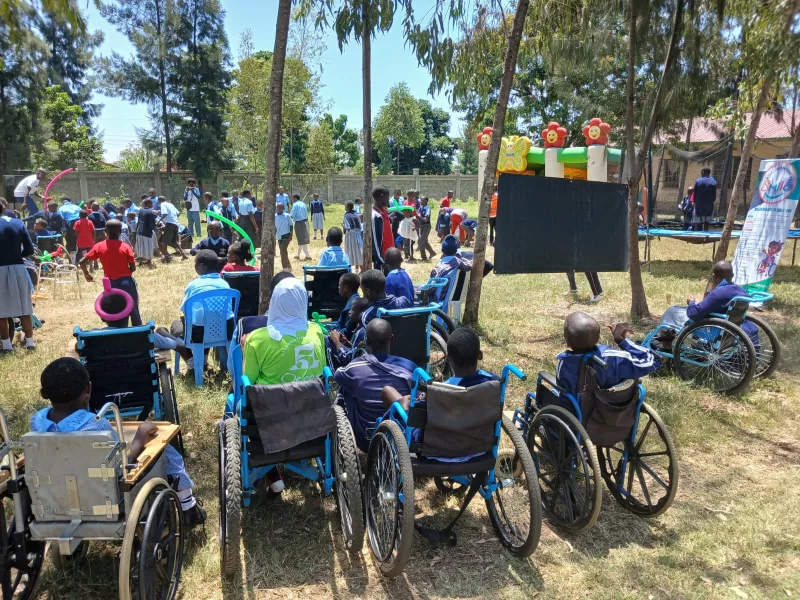
But if you walk into a tent-turned-classroom in Kakuma refugee camp or a rural school for the deaf in Kilifi, that script flips.
Kenya is currently witnessing a massive strategic pivot. A new crop of homegrown founders is realising that the next great growth market is not in the leafy suburbs of Nairobi, but in the "overlooked" classrooms of the marginalised.
This shift is not just about social "impact"; it’s a cold, hard business bet that if a solution works in the hardest contexts first, it can scale anywhere in the world.
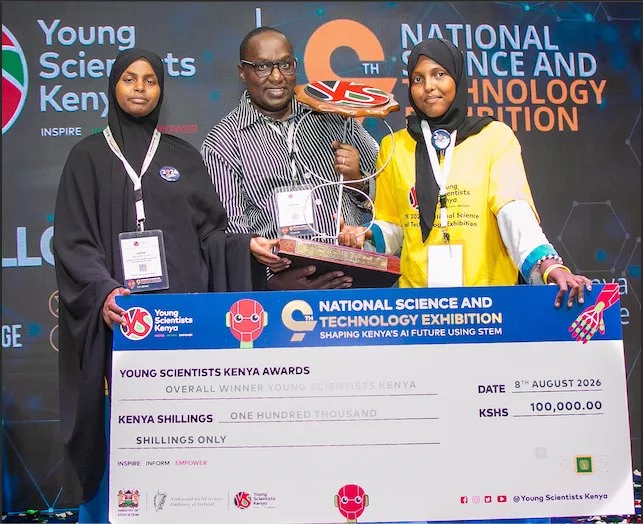
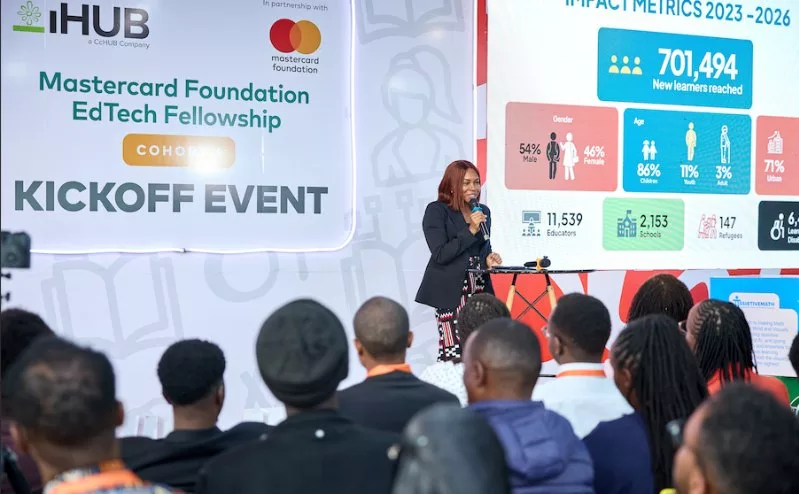
The most striking evidence of this change was visible at the recent unveiling of Cohort 4 of the Mastercard Foundation EdTech Fellowship and also the ninth National STEM Exhibition at Moi Girls High School, Nairobi.
This is where the likes of Mamuch Bey, the founder of Neurollect Audread, come in.
His startup, part of the newly unveiled Cohort 4 of the Mastercard Foundation Fellowship, has built an AI-powered, "offline-first" learning platform.
Audread combines multilingual AI tutors with virtual 3D science labs that do not require a constant internet connection.
"For founders in refugee and rural settings, the hardest part was never really the technology. It’s designing for the world as it actually is—where power isn't always on... where a classroom might be a tent," says iHUB managing partner Nissi Madu.
In the STEM exhibition, among the 154 student projects, 20 refugee schools from Kakuma and Dadaab made the cut to showcase AI-driven innovations.
These are not just academic exercises; students are applying AI to real-world community issues like precision farming and solar energy.
Principal Secretary in the State Department for Science, Research and Innovation Prof Shaukat Abdulrazak said the government remains committed to supporting young people developing technology-driven solutions.
“Artificial intelligence is already here, and seeing our young people apply it to real-world challenges like precision farming and solar energy is inspiring,” he said.
“As we develop our national AI policy, the government will continue supporting these young minds through mentorship and innovation hubs to ensure their creativity drives Kenya’s future.”
Young Scientists Kenya national director Dr Victor Mwongera said exposing learners to emerging technologies at an early stage would help prepare them for rapidly changing workplaces and industries.
“Artificial intelligence has evolved from a novel innovation into an essential skill across modern industries...that learners must grasp to navigate their future careers,” he said.
However, the challenge has always been: how do you run AI in a refugee camp where the internet is intermittent and "science laboratories exist only on paper"?
The commercial logic behind this inclusive pivot is backed by sobering data. In Kenya, approximately one million children live with disabilities, yet fewer than 30 per cent of them are enrolled in school.
This leaves roughly 800,000 learners completely underserved by both the government and traditional commercial tech providers.
"Accessibility to education here is often like an afterthought," notes Rodwell Mangisi, the acting director of the Mastercard Foundation Centre for Innovative Teaching and Learning.
But for the 12 startups selected for the Fellowship, including DeafHealth, Signvrse and AssistiveMath, inclusion is the core business strategy.
These companies are developing digital tools that adapt the education system to the learner, rather than forcing a child with a hearing or visual impairment to adapt to a system not built for them.
The players in the country’s education technology sector say that by targeting these "hard-to-reach" learners, startups are solving real infrastructure constraints that, once mastered, make their products incredibly resilient for broader markets.
M-Lugha, a fellow from a previous cohort, is the proof of concept. Originally built to bridge language gaps in rural Kenya, the platform has now reached 14,000 learners across 35 counties and has been downloaded in 130 countries.
Each of the 12 startups in Cohort 4 receives up to $100,000 (roughly Sh13 million) in equity-free funding
This 18-month journey is specifically designed to help early-stage companies move past the "gadget" phase.
"Historically, EdTech has received very few [venture capital] compared to other sectors," Madu admits.
The goal of the fellowship is to help founders generate the evidence that their solutions actually improve learning outcomes, the kind of data that makes them attractive to global investors and governments.
Mastercard Foundation Director, Public Affairs and Communications, Education and Transitions Wariko Waita describes the fellowship as the intersection of "education system transformation, inclusive technology-enabled solutions, and sustainability".
Connectivity, too, is being redefined. Cyrus Sun of Jamii Telecommunications argues that internet access must be treated as critical infrastructure, right alongside electricity.
He advocates public-private partnerships where the government de-risks investments by bringing fibre closer to schools, allowing private operators to handle the "last mile".
Perhaps the most exciting takeaway for the Kenyan business community is that by solving "local" problems like a solar-powered AI assistant from Juza AI that runs entirely offline, Kenya is positioning itself as a global EdTech hub.
The constraints of a rural Kenyan classroom—lack of power, intermittent web and diverse languages—are mirrored in many parts of the developing world.
As Abdinoor Ali Mahdi of M-Lugha notes, his success shows the "power of investing in local innovators who are building solutions for Africa's education needs" that find global relevance.
As these 12 new startups begin their 18-month acceleration, the message to the market is clear: the future of Kenyan EdTech isn't just about digitising the status quo for the few.
It’s about reimagining the classroom for the millions who were previously left in the dark. If these founders can prove that inclusive AI can work in a tent in Kakuma, they might just change the way the world learns.
The broader Kenyan policy landscape is also shifting. At a recent panel hosted by technology firm Samsung on the future of digital learning, industry leaders argued that Kenya has finished the "first phase" of just distributing devices.
"We are way past availing devices; the next frontier is immersive and AI-powered learning...but the greatest technology in any classroom is the teacher," says Daniel Katula, chairman of the AI Teachers Association
“This highlights a critical pillar of the new EdTech ecosystem: teacher preparedness. Without educators equipped to use these tools, even the most advanced AI becomes expensive "e-waste".
Education stakeholders are now calling for stronger partnerships among teachers, government, technology firms, universities and development partners to accelerate the adoption of education technology (EdTech) and better prepare all learners for a rapidly changing world.
At the Freedom 250 EdTech Innovators Summit held at the Kenya School of Government in Nairobi, participants said collaboration would be key to ensuring technology improves learning outcomes and expands access to quality education.
Discussions focused on emerging technologies, digital learning platforms, teacher innovation, English language learning and strategies for strengthening partnerships to drive education reforms.
They noted that EdTech also includes digital learning content, learning management systems, virtual and blended learning, immersive technologies, digital assessment tools and teacher professional development platforms, all of which have the potential to make education more accessible and engaging.