UDA legislators from Mt Kenya are facing an uphill task in their bid to save their political careers as a DCP wave sweeps across the region.
Gatundu South MP Gabriel Kagombe's experience captures the dilemma facing a growing number of UDA politicians in the region.
Kagombe decamped to former Deputy President Rigathi Gachagua's DCP after previously serving as a prominent supporter of President William Ruto and his administration.
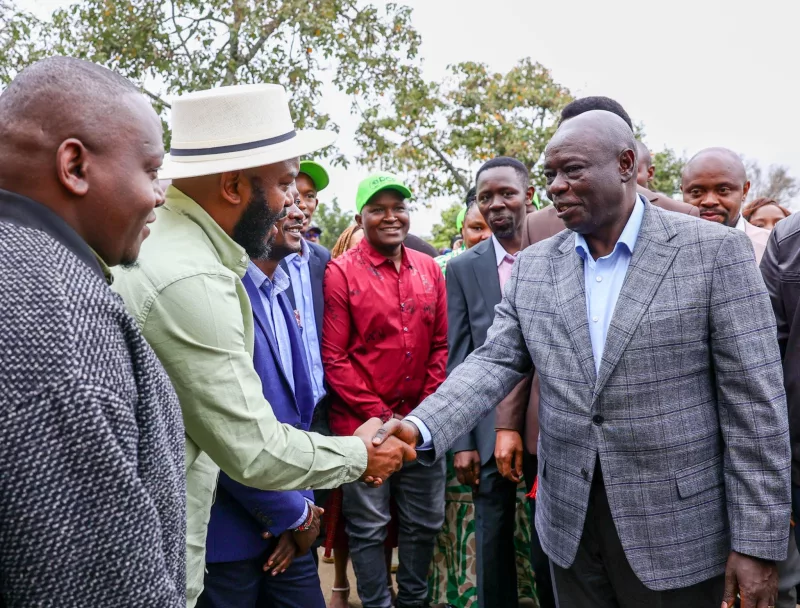
But his attempted political move was met with a hostile reception from residents in his backyard, where he appeared alongside Gachagua.
He is among MPs who impeached Gachagua and for long maintained Gachagua was overrating his influence.
The MP was booed by the crowd and faced chants of "one-term", signalling that abandoning UDA may not automatically win him acceptance among voters who have increasingly embraced Gachagua's political camp.
This was despite Kagombe earlier seeking forgiveness from Gachagua, describing his political shift as a "Damascus moment".
Gachagua urged Kagombe and other defecting politicians to first seek peace with the people of the region.
The Kagombe case points to the difficult political terrain facing UDA MPs in Mt Kenya as the region moves increasingly towards DCP.
The July Ol Kalou parliamentary by-election provided the clearest electoral evidence yet of the region's direction.
DCP candidate Sammy Waweru won the seat with 35,440 votes against UDA's Samuel Muchina, who received 5,450 votes.
The nearly 30,000-vote margin was interpreted by Gachagua's camp as evidence that DCP had established itself as the political vehicle for the region, with its leaders declaring UDA dead in Mt Kenya.
The result also exposed the difficult position of politicians who remain associated with UDA in a region where Ruto's popularity has fallen sharply since his fallout with Gachagua.
Since then, a number of UDA politicians have increasingly signalled an interest in moving towards the opposition. But DCP is not opening its doors indiscriminately.
Gachagua's party has established a seven-member vetting committee to examine politicians seeking to defect to DCP.
DCP officials and allied leaders have said defectors will have to demonstrate that they subscribe to the party's political principles and that their entry will not undermine the party's credibility.
Murang'a Senator Joe Nyutu, a member of the vetting committee, said the team would seek to ensure that UDA "moles" do not infiltrate the party.
He said the vetting would focus on elected legislators from Mt Kenya and seek to establish their motivation for defecting.
“If we establish that you are joining us because you have realised the ship is sinking on the other side, then you don’t have any business joining us because you don’t believe in the cause for which some of us have sacrificed for,” Nyutu said.
He added that the party would be keen to ensure it does not bring in “Saul masquerading as Paul”.
At the same time, the MPs are also facing pressure from pro-government politicians.
Laikipia East MP and TSP leader Mwangi Kiunjuri, for instance, has urged residents to reject UDA politicians defecting in search of re-election survival.
Speaking in Laikipia county on Wednesday, Kiunjuri said defection without performance would not save such politicians.
“If you are elected on UDA as MP, senator or governor and you have not delivered, don’t think you can decamp to DCP and be sanitised. You will remain as useless,” Kiunjuri said.
The vetting process also reflects the political dilemma facing Gachagua.
While he needs elected leaders to strengthen DCP's grassroots structures ahead of 2027, absorbing every politician leaving UDA could create resentment among party supporters who remained loyal to him during his fallout with Ruto.
The Kagombe incident demonstrated the problem. Gachagua may welcome politicians who abandon UDA, but his supporters may not necessarily regard them as political allies.
Some of the anger is rooted in the impeachment of Gachagua as Deputy President last year.
The former Deputy President has repeatedly accused Mt Kenya MPs who supported his impeachment of betraying the region and the community.
During the Ol Kalou campaign, he criticised several MPs from the region who remained aligned with the government, accusing them of abandoning the community's interests.
Loyalty to Gachagua has consequently become an important test for politicians seeking to remain influential in the region.
For those who backed his impeachment, changing parties may, therefore, not be enough. They will also have to explain their previous decisions to voters, as Gachagua has directed.