
Nairobi has given Sudanese activists greater room to organise and speak out, but uncertainty and mistrust continue to shape life in exile.
A report by the Ayin Network says Sudanese activists in Kenya have found a markedly more open environment for political and civic activity than their counterparts in Egypt, where fear of arrest, deportation and restrictions on political organising have pushed many activists underground.
However, the report says Sudanese activists living in Nairobi are facing financial insecurity, uncertain legal status and the emotional toll of displacement.
The report is titled ‘Sudan’s revolutionaries: A glimpse into the lives of Sudan’s 2019 activists in Egypt and East Africa’.
It also identifies mistrust within the Sudanese diaspora as a challenge, limiting some activists’ sense of safety and freedom in Kenya.
The report’s findings come against the backdrop of Kenya’s engagement with Sudan’s war. Nairobi has maintained relations with both sides of the conflict and has presented itself as a platform for dialogue.
However, its engagement with the Rapid Support Forces (RSF) has generated suspicion among sections of the Sudanese community.
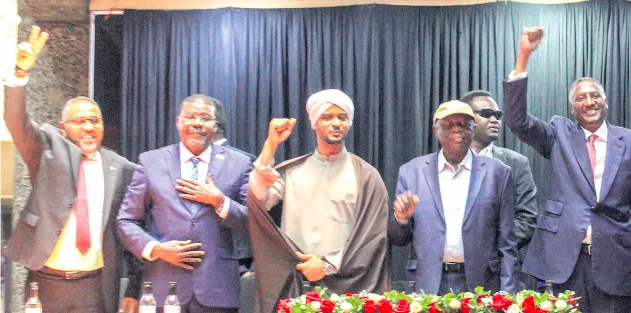
In February 2025, Kenya hosted an RSF-linked political gathering at the Kenyatta International Convention Centre, where the paramilitary group and allied political forces discussed plans for a parallel government in Sudan.
The meeting triggered a response from Sudan’s military-led government, which accused Kenya of hostility and supporting the RSF.
Kenya rejected the accusations, saying it was not supporting the RSF and that providing a platform for Sudanese actors was consistent with its role in facilitating dialogue.
The dispute has raised questions about Kenya’s neutrality as a regional mediator.
The accusations and the events have also added to sensitivities among Sudanese living in Kenya, particularly as the RSF has been accused of grave abuses during the war.
The presence of RSF-linked actors in Kenya has raised questions about the country’s neutrality and, by extension, the security of Sudanese political activity taking place on Kenyan soil.
The Ayin report, based on interviews with more than 30 former and current Sudanese activists in Kenya and Egypt, examines how displacement has changed the nature of Sudanese political activism since war broke out in April 2023.
The conflict has displaced millions of Sudanese and scattered much of the generation that participated in the 2018–19 revolution.
Many activists who previously organised demonstrations and resistance committees have since shifted towards humanitarian assistance, documenting abuses, supporting displaced people and lobbying international organisations.
Nairobi has provided space for some of this work.
Sudanese activists have organised public discussions, coordinated humanitarian initiatives, documented violations and engaged international organisations from the Kenyan capital.
For some, the contrast with Egypt is particularly significant.
Egypt hosts a much larger Sudanese population, but activists interviewed by the report described restrictions that have made political organising more difficult, including fear of arrest and deportation.
Kenya’s relatively open civic environment has therefore allowed some Sudanese activists to remain politically engaged rather than abandoning activism altogether.
But that freedom comes with the realities of displacement.
The report highlights financial difficulties, uncertain immigration status and the psychological burden of being separated from family and communities caught in the war. Mistrust among members of the Sudanese diaspora further complicates efforts to build cohesive networks.
Some activists have also questioned whether organising from abroad can have the same impact as the grassroots mobilisation that helped drive Sudan’s 2019 revolution.
The war has fractured some of those networks. Former activists have taken different positions on the conflict, while others have withdrawn from politics after years of violence, displacement and disappointment. Yet others are adapting their activism to life outside Sudan.







