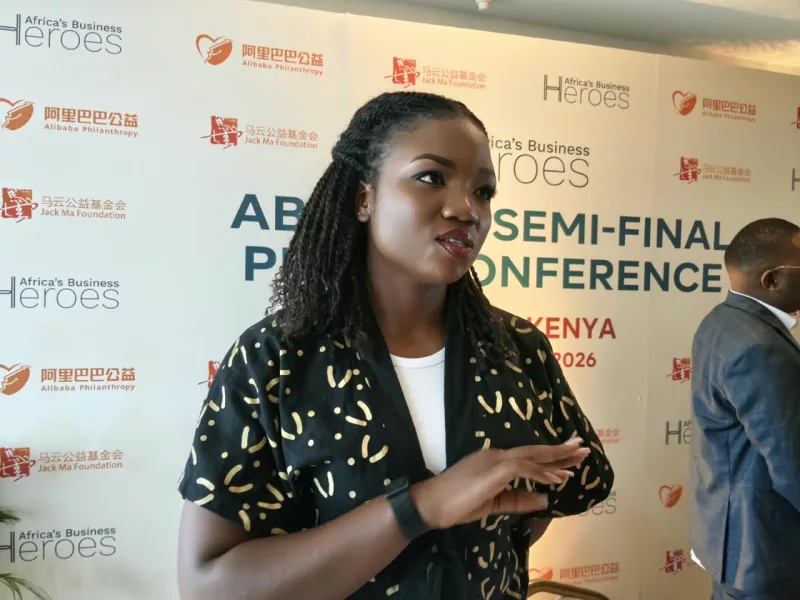
 Africa’s Business Heroes senior strategic partnerships and community growth consultant Anysie Ishimwe./ JACKTONE LAWI
Talent sourcing has emerged as the second biggest challenge after financing for businesses seeking to expand beyond the country’s borders, stakeholders at the Africa’s Business Heroes (ABH) forum have said.
The right “Talent” capable of navigating new markets was identified as one of the biggest constraints facing African entrepreneurs after access to finance.
This was particularly for businesses operating in specialised sectors that require engineers, technology experts, managers and other professionals with experience that is often difficult to find locally.
Africa’s Business Heroes senior strategic partnerships and community growth consultant Anysie Ishimwe, said businesses increasingly struggle to find skilled workers as they move from the startup stage to expansion.
“I would say talent is among the greatest challenges. Getting competent teams and the skill sets they need on board. Then there’s expansion. A lot of companies want to expand beyond their borders, but the countries they are expanding into often have different norms and regulatory requirements, which can create challenges depending on the market,” said Ishimwe.
The concerns emerged during the unveiling of the ABH 2026 Top 20, which was selected from more than 24,000 applications from all 54 African countries.
The finalists represent 12 countries and 11 sectors and collectively generated about $85 million in revenue in 2025, highlighting the growing commercial potential of African enterprises.
Beyond talent shortages, entrepreneurs face additional hurdles when entering new African markets, including different regulatory, certification and product standards.
Businesses seeking to manufacture or sell products across borders often have to meet varying requirements in each market, increasing the cost and time needed to expand.
For startups and smaller enterprises, the burden can be greater because they have fewer financial and legal resources to navigate multiple regulatory systems.
The ABH 2026 cohort also highlights the growing diversity of Africa’s entrepreneurial ecosystem, with businesses expanding beyond traditional fintech, e-commerce and software models.
Among the finalists is Egyptian manufacturer Simplex, which produces computer numerical control (CNC) machines used in industrial production. Other businesses operate in renewable energy, agritech, healthcare, climate technology, enterprise software, education and financial services.
The shift into manufacturing and other capital-intensive sectors is creating new opportunities but also increasing demand for specialised skills, machinery, certification and access to markets.
Meanwhile, investors are increasingly looking beyond business ideas and focusing on companies that can demonstrate commercial traction and the ability to scale.
The ABH selection process assessed entrepreneurs on leadership, innovation, impact, scalability and commercial strength, with physical visits conducted for businesses that advanced to the semi-final stage.
The visits sought to assess whether the businesses had functioning teams, real customer demand and the operational capacity to execute their growth plans.
The combined $85 million in revenue generated by the Top 20 in 2025 underscores the growing emphasis on businesses with established operations and proven demand.
This means entrepreneurs seeking capital are increasingly expected to demonstrate revenue, customers, employment, operational capacity and a credible path to expansion rather than relying solely on a promising idea.
The finalists will compete for $1.5 million in prize money, with the winner set to receive $300,000. The second- and third-placed entrepreneurs will receive $250,000 and $150,000 respectively, while the remaining seven finalists will each receive $100,000.
The ABH 2026 semi-final is being held in Nairobi on August 21 and 22, bringing together entrepreneurs, investors and other business ecosystem players from across Africa.