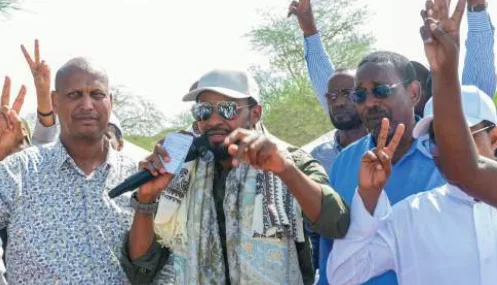
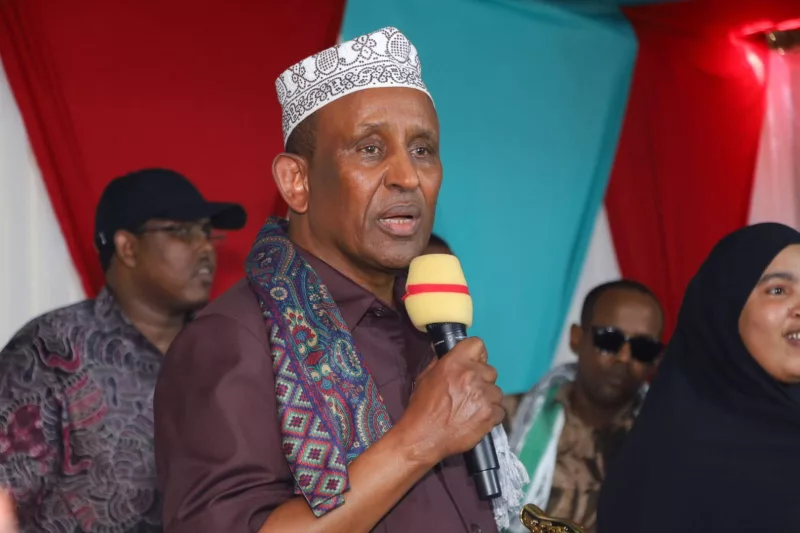
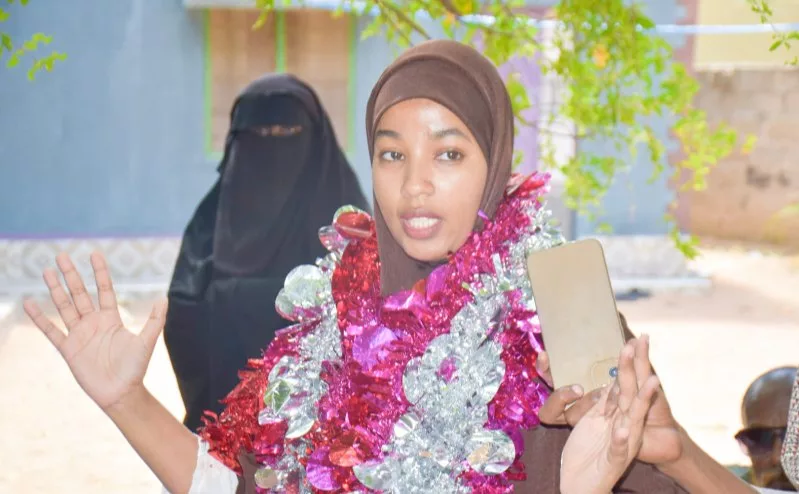
 ODM-nominated MP Umulkheir Harun speaking in Maalimin,
Lagdera sub county two weeks ago. /STEPHEN ASTARIKO
ODM-nominated MP Umulkheir Harun speaking in Maalimin,
Lagdera sub county two weeks ago. /STEPHEN ASTARIKOThe war of words between ODM-nominated MP Umulkheir Harun and Garissa Senator Abdul Haji appears far from over.
The latest exchange came on Wednesday when Umulkheir took to Facebook to raise concerns about several young men whom she alleged were being held by security agencies, while also questioning political alliances taking shape ahead of the 2027 General Election.
Umulkheir is seeking the woman representative seat, while Haji is seeking the governorship. The two leaders trace their roots to the Samawadhal community.
Haji is the son of the late veteran politician Yussuf Haji and the younger brother of NIS Director Noordin Haji.
In her Facebook post, Umulkheir challenged Haji and other leaders seeking the support of the Aulihan community to first seek answers about young men whose families have reportedly said they were arrested or went missing.
“If you must ask for the support of the Aulihans, then first release their sons who are in police custody on what their families describe as fabricated charges,” Umulkheir claimed.
She appeared to link the concerns to a political alliance reportedly being discussed between the Aulihan and Samawadhal communities ahead of the 2027 polls.
Umulkheir also called on Aulihan elders and leaders to seek the release or production in court of the young men, arguing that communities should not be treated merely as voting blocs while families continue searching for missing relatives.
She further alleged that seven young men from Liboi and Dadaab had gone missing, saying their families deserved answers.
“The coalition must acknowledge the seven sons missing from Liboi and Dadaab. Their mothers are crying, their families are waiting, yet we are witnessing politicians dancing as though these lives never mattered,” she said.
Her remarks drew a response from several leaders, who accused her of turning a sensitive national security issue into a political contest.
East African Legislative Assembly MP Falhada Iman Dekow challenged Umulkheir to provide evidence to support her allegations and cautioned politicians against making serious claims about security agencies without verification.
“Serious allegations require serious evidence, not emotional claims, speculation or political theatrics. Stop throwing reckless, unsubstantiated accusations around,” Falhada said.
She said concerns about security institutions could be raised but should be based on verifiable information.
“You are free to question institutions, but you are not entitled to manufacture facts, smear individuals, or present allegations as established truth,” she said.
Former Garissa Woman Representative Shukran Gure took a more conciliatory position, acknowledging concerns over reported disappearances in northern Kenya while cautioning politicians against using affected families' experiences for political gain.
Gure said families in Dadaab, Fafi, Ijara, Garissa Township and parts of Wajir and Mandera continued to live with uncertainty over missing relatives.
“Behind every missing person is a family living with fear, uncertainty and unanswered questions,” she said.
She acknowledged the role of elected leaders in raising such cases and helping families seek information but warned against turning the issue into campaign material.
“Abductions and disappearances should never become anyone’s political poster-child agenda. We can advocate strongly, question authorities, demand accountability and pursue answers without exploiting the pain of affected families for political advantage,” Gure said.
The latest exchange comes amid political differences between Umulkheir and Haji as leaders position themselves ahead of the 2027 elections.
The two leaders previously clashed publicly over remarks by Haji concerning an emerging political understanding between the Samawadhal and Aulihan communities.
While addressing residents in Modogashe in July, Haji spoke of what he described as a political arrangement under which the Samawadhal community would produce the gubernatorial candidate, while the Aulihan community would take other key elective positions, including deputy governor, senator and woman representative.
The proposal drew opposition from Umulkheir.
The arrangement could put her in a difficult political position because she and Haji both trace their roots to the Samawadhal community, while the proposed formula would place the woman representative position on the Aulihan side.
Umulkheir subsequently criticised the idea of negotiating elective positions among clans and communities. She argued that women aspirants should be allowed to compete freely and that voters, rather than clan elders or political agreements, should have the final say.
The latest exchange has added another layer to the political differences between the two leaders ahead of the 2027 General Election.
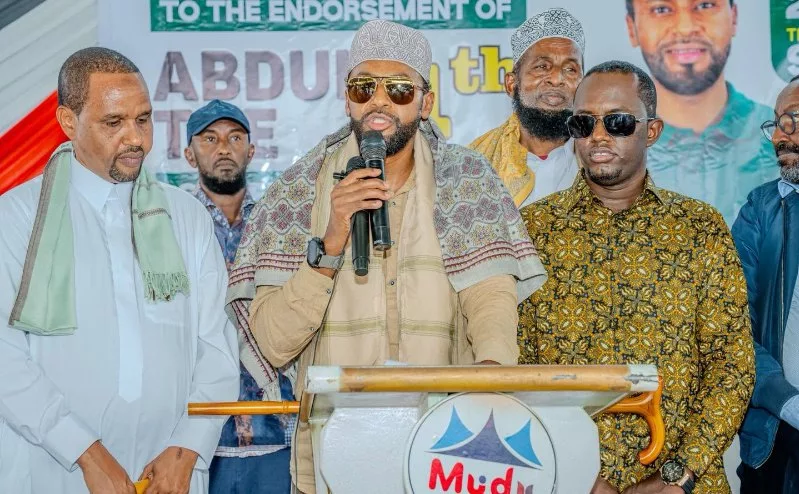
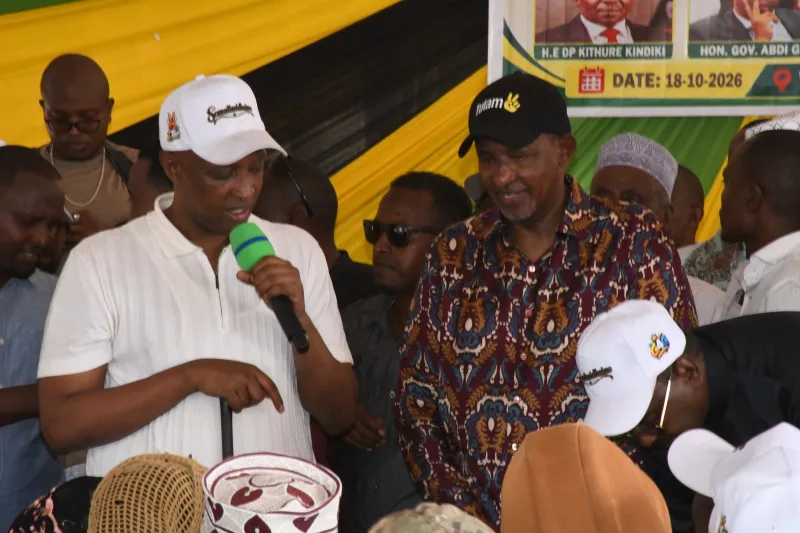
Senator Abdul Haji and governorship aspirant Abdul Haji addressing community members from the Adenkheir family of the larger Awliyahan community, after they endorsed /STEPHEN ASTARIKO
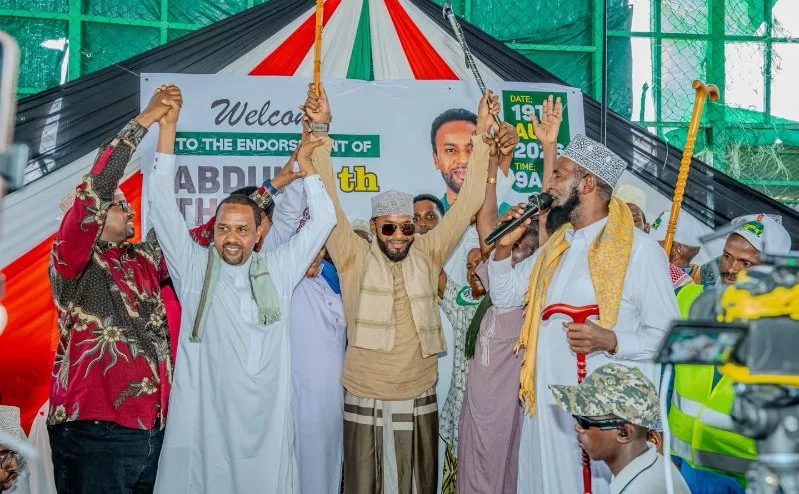 Garissa senator Abdul Haji and governorship aspirant Abdul
Haji when he was endorsed by the Adenkheir family of the larger Awliyahan
community./STEPHEN ASTARIKO
Garissa senator Abdul Haji and governorship aspirant Abdul
Haji when he was endorsed by the Adenkheir family of the larger Awliyahan
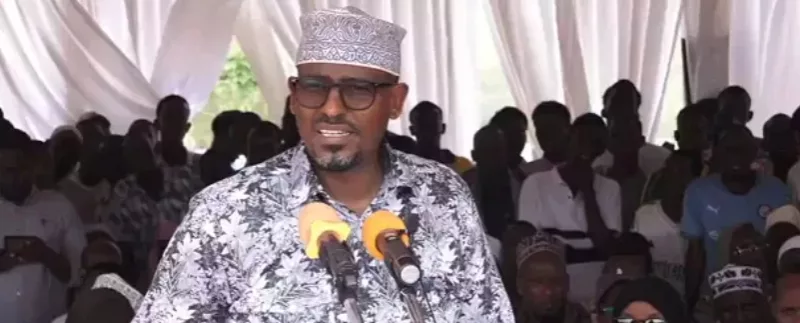
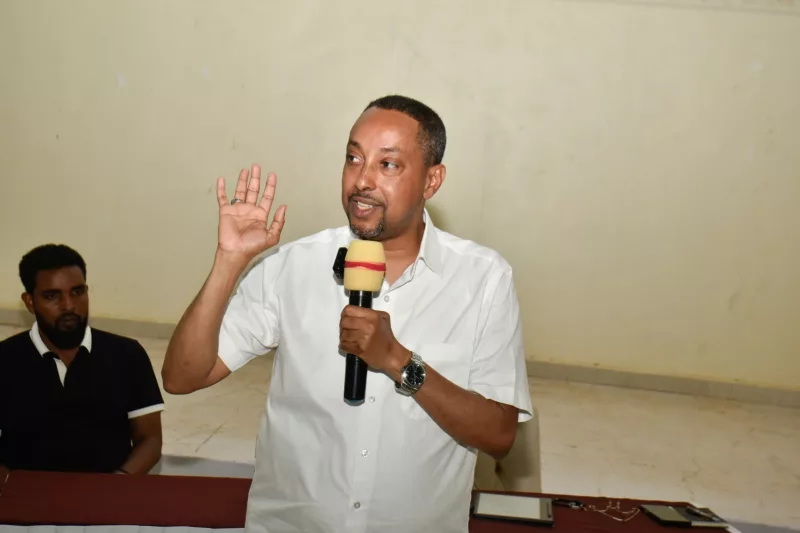
community./STEPHEN ASTARIKO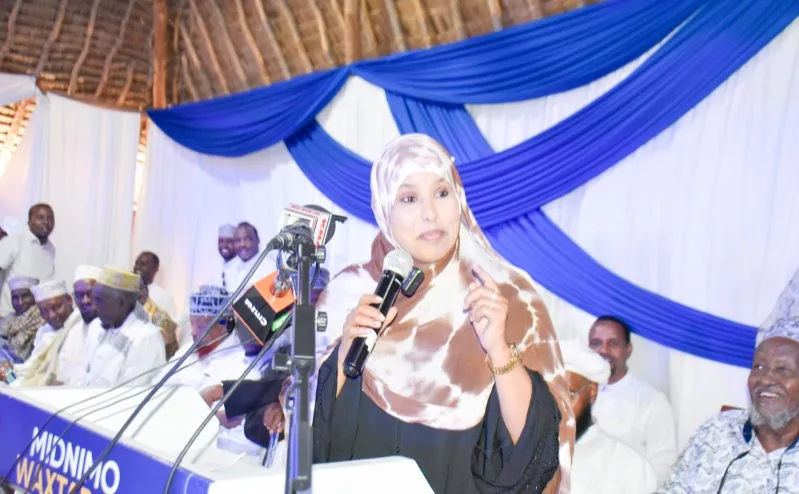 East African Legislative Assembly MP Falhada Iman Dekow
speaking at a function in Garissa town last week./STEPHEN ASTARIKO
East African Legislative Assembly MP Falhada Iman Dekow
speaking at a function in Garissa town last week./STEPHEN ASTARIKO