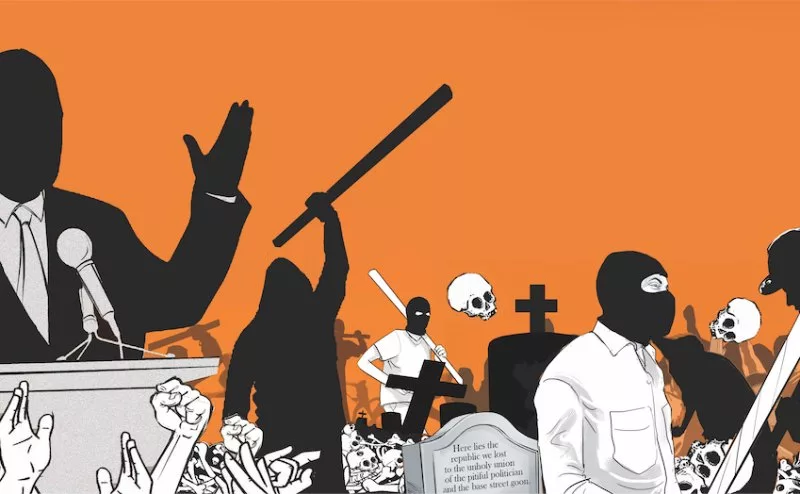
A psychology datum has it that behaviour is either inherited or acquired – the principle of nature versus nurture. Nelson Mandela said no one is born hating another person; people learn to hate.
Politicians have perfected the art of mobilising communities to monumental levels of hate. Take, for instance, Adolf Hitler, in whose hands millions were killed for belonging to the 'wrong' race.
The politics of hate relies on division, fear and animosity, leading to polarisation and damaging society. Politicians seemingly benefit from the cracks that emanate from their actions. They split society into fragments they can manage and control. These include racial, tribal, social and economic stratums, which they gladly refer to as ‘’my people’’.
In Africa and particularly Kenya, the art of polarisation was introduced by the colonial masters, who knew that ‘’divide and rule’’ was a very effective way of weakening intra and inter-communal ties that bound societies.
After Independence, the first government perfected the art of politics of hate, which capitalised on tribalism to consolidate power. Balkanisation and the narrative of “insiders vs outsiders" have done much damage to this country.
While Kenyans remain united by common ancestry, politicians often exploit this by zoning territories they deem loved but then inject flames of hate against opponents, all for personal gain.
It is common for senior leaders to take to the podium to belittle communities that host their opponents. This kind of hate does not help anyone, and the best thing to do is to shun that habit. Those who do it must face the wrath of the law.
Decorum in carrying out political activities is often discarded the moment politicians stand before cameras and microphones. Often, sentiments that are personalised and directed to communities take centre stage. Traditions, aspirations, geographical positioning and climatic conditions are often used to ‘’cut communities to size.’’ Politicians will call each other witches, night runners, thieves, stone throwers and uncivilised. This demeaning of people and communities eventually portrays us in a bad light.
The question is, can political leaders front their manifestoes, articulate their aspirations to better people’s lives and livelihoods and eloquently elucidate their leadership competencies without attacking their opponents and their communities? This is possible.
As the country gears towards the 2027 election, it is imperative that leaders and their supporters shed the habit of playing politics that paint their opponents in negative light.
Kenya is a country respected not just regionally but across the globe, but we risk losing this respect if the trend of chest-thumping and hurling insults at each other continues.
Let’s not demean our nation. We can compete politically without hatred and loathing our opponents. As the second stanza of our national anthem goes: Let one and all arise, with hearts both strong and true.