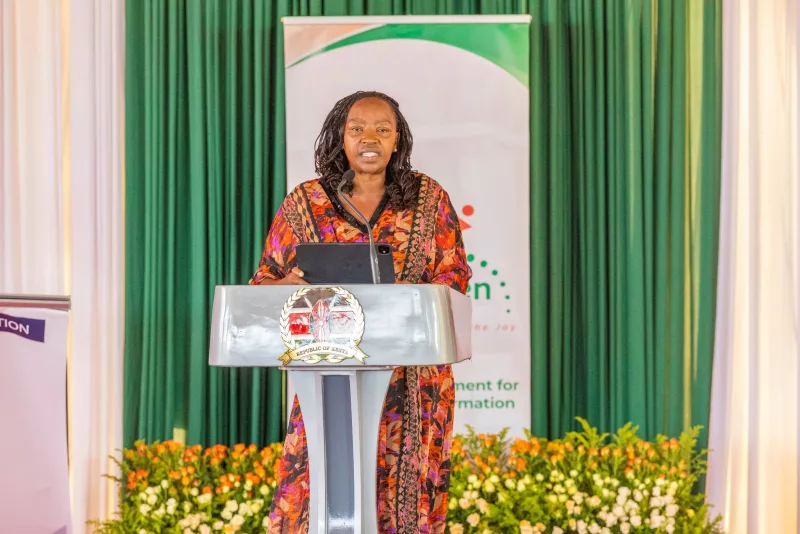
Former Law Society of Kenya (LSK) President Faith Odhiambo has warned that Kenya is facing a rule-of-law crisis.
It a statement, Odhiambo said growing political violence and the apparent failure of state institutions to prevent or punish abuses are undermining public confidence in the country’s justice system.
She said the decision by a local human rights organisation to appeal to the International Criminal Court (ICC) in The Hague for Kenya to be monitored was a troubling indication that domestic institutions were increasingly being viewed as incapable of dealing with political violence.
“When a local human rights group must write to The Hague to ask that Kenya be watched, that is not just advocacy. That is a confession of state failure,” Odhiambo said.
She argued that the appeal to the ICC Prosecutor under Article 15 of the Rome Statute demonstrated the level of concern over the ability of Kenyan institutions to protect citizens and hold perpetrators of political violence accountable.
“The very act of appealing to the ICC Prosecutor under Article 15 signals that our domestic institutions, including police, prosecutors, courts, and oversight agencies, are no longer trusted to prevent or punish political violence before it spirals,” she said.
Her remarks come amid heightened political activity and reports of violence at political gatherings in different parts of the country, with opposition leaders accusing security agencies of failing to adequately protect them and their supporters.
Odhiambo said the situation was particularly worrying because of what she described as the growing impunity with which organised groups were attacking civilians, journalists and protesters.
“This letter lands at a moment when organised goon squads are attacking civilians, journalists, and protesters with growing impunity, and when inflammatory rhetoric from political leaders is met with silence or selective enforcement,” she said.
Odhiambo said the move to seek international scrutiny should not necessarily be interpreted as a call for immediate ICC intervention but rather as a warning aimed at preventing further deterioration.
“The request is not for intervention. It is for observation, preservation of evidence and early warning to those who might order, finance or protect violence,” she said.
She argued that Kenya’s Constitution already places the responsibility of protecting citizens’ rights and democratic participation on domestic institutions.
“A Kenyan organisation is asking an international court to do what our own Constitution demands of our institutions: protect life, dignity, and democratic participation. That is the definition of a rule-of-law crisis,” she said.
Odhiambo warned against normalising political violence, saying failure by the state to act could have serious consequences for democracy and accountability.
“We cannot normalise this. If the price of sovereignty is silence while citizens are attacked and institutions look away, then we have already lost,” she said.
She urged the Government to demonstrate that it remains capable of enforcing the law impartially and protecting citizens, warning that failure to do so could invite greater international scrutiny and eventual accountability for those responsible for abuses.