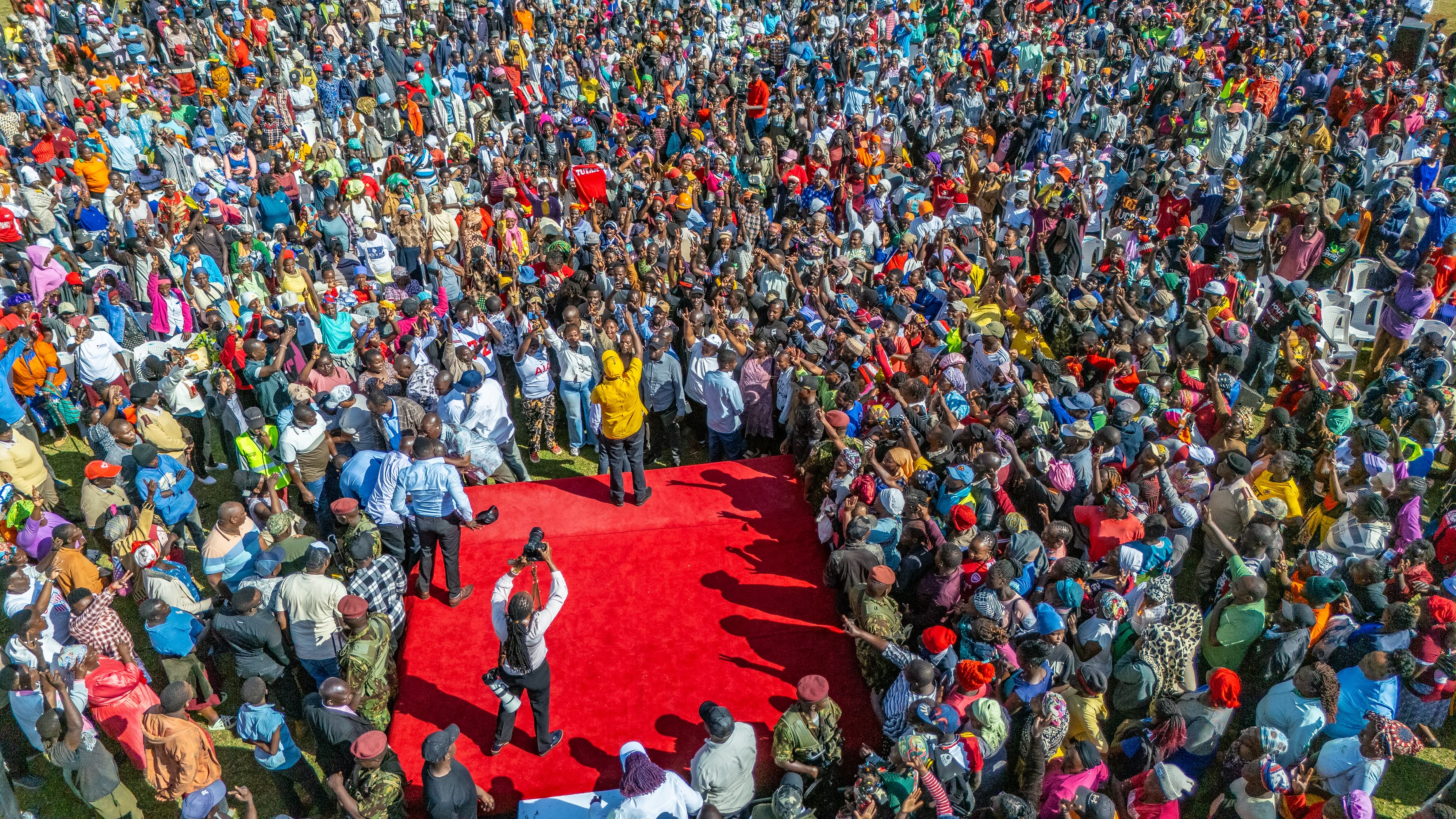
 The NYOTA Project launched its first Business Support cohort in Western Kenya on November 7, 2025, at the Mumias Sports Complex in Kakamega County, disbursing initial startup grants of Sh25,000 each to over 12,000 youth across Bungoma, Vihiga, Busia, and Kakamega counties/PCS
As President William Ruto marks four years in office, one of the central questions around his administration's record is whether billions of shillings committed to youth empowerment have translated into sustainable jobs, businesses and better livelihoods.
Ruto came to power in 2022 on a promise to transform the lives of ordinary Kenyans through the Bottom-Up Economic Transformation Agenda, with youth employment and access to affordable capital at the centre of the plan.
The Kenya Kwanza administration promised to create up to 1.5 million jobs annually, prioritising young people in agriculture, housing, manufacturing and other sectors.
It also pledged to make Sh50 billion available annually through the Hustler Fund and other financing mechanisms to support micro, small and medium enterprises.
Four years later, the government can point to several programmes that have reached millions of young people, although questions remain over the quality, sustainability and classification of the jobs created.
The Hustler Fund, officially known as the Financial Inclusion Fund, has emerged as one of the administration's flagship interventions. The programme has disbursed more than Sh90 billion to about 28 million digital borrowers, with roughly 60 per cent of users aged below 40.
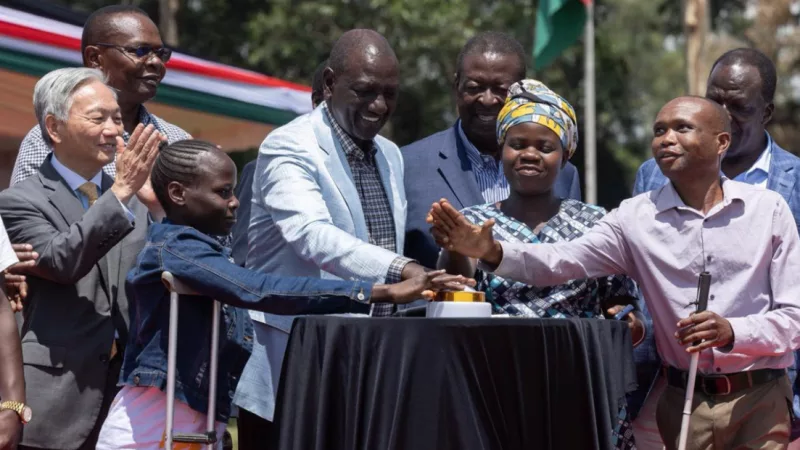
"The money that will be borrowed from the Hustlers Fund will strictly be used by small and medium enterprises to upgrade their businesses... If you borrow money, you'll plunge it into business, and refund the government,” Ruto said during the launch.
For many young people operating small businesses and working in the informal economy, the fund has provided access to credit without the conventional requirements associated with bank loans.
The programme has also been credited with helping repeat borrowers establish credit histories and improve their access to formal financial services.
However, the number of loans disbursed should not be confused with the number of permanent jobs created.
Much of the Hustler Fund is working capital for existing micro-businesses, meaning its impact is more appropriately measured through business survival, income growth and employment supported rather than headline loan numbers.
The government has also rolled out the National Youth Opportunities Towards Advancement (NYOTA) programme, targeting young people through entrepreneurship support, skills development, apprenticeships and access to finance.
At the core of the NYOTA Fund's business support strategy is a Sh5 billion allocation aimed at providing direct financial injection to start or expand small enterprises. Under this framework, the fund targets 100,000 young entrepreneurs countrywide, ensuring equity by distributing grants to 70 selected youth in each of Kenya's 1,450 wards.
Beneficiaries receive a total of Sh50,000 in seed capital, which is disbursed progressively in phases alongside mandatory business skills training and structured, two-month mentorship programs to ensure the long-term viability of their ventures
NYOTA is designed to move beyond credit by combining financial support with training and market linkages. Its significance therefore lies in whether beneficiaries can turn the assistance into viable enterprises that survive beyond the initial funding.
The government has simultaneously pursued employment opportunities outside Kenya through labour-mobility agreements, facilitating thousands of overseas placements.
The strategy is intended to expand employment opportunities for Kenyan workers while easing pressure on a domestic labour market that absorbs hundreds of thousands of new job seekers every year.
At home, the administration has promoted digital employment through ICT hubs, Jitume centres and other initiatives intended to prepare young people for online work and the wider digital economy.
In July 2026, Ruto launched another youth employment initiative, the Next Generation of Kenya Youth Employment Programme, in partnership with the United Nations Development Programme and the Kenya Private Sector Alliance.
The programme is expected to empower more than 100,000 young Kenyans over three years through structured private-sector internships, entrepreneurship and financial-literacy training, life skills and workplace-readiness programmes.
The government has committed Sh2 billion to the programme, with Ruto saying the allocation could rise to Sh5 billion next year.
But the bigger test of the President's four-year record is employment itself.
The 2022 promise of up to 1.5 million jobs annually set an ambitious benchmark. Measuring progress requires separating formal employment from informal work and underemployment.
A rise in the number of employed Kenyans does not necessarily mean that the economy has created 1.5 million decent, stable jobs each year. Many new entrants to the labour market find work in informal businesses, casual employment, self-employment or low-productivity activities.
Informal employment remains the dominant source of work in Kenya. It absorbs millions of people who might otherwise have no income, but often comes without predictable wages, job security, pensions or other protections associated with formal employment.
This distinction is particularly important for assessing youth programmes. A young person receiving a Hustler Fund loan and operating a small business may be counted as employed, but the more important questions are whether the enterprise has grown, whether it employs additional people and whether the income generated is sufficient to provide a decent livelihood.
Underemployment presents another challenge. Some young Kenyans are technically employed but work fewer hours than they would like or remain in jobs that do not adequately utilise their skills. Others combine several small income-generating activities to survive.
The result is an employment picture that is more complicated than the headline number of jobs created.
Ruto's youth agenda has therefore produced visible interventions in credit access, entrepreneurship, digital work, skills development and labour mobility. Millions have interacted with at least one of the programmes.
But four years into his presidency, the critical measure is increasingly shifting from how many people have been reached to what has changed in their lives.
For the Hustler Fund, that means asking how many borrowers have built sustainable businesses. For NYOTA, it means tracking how many beneficiaries remain economically active after receiving support. For digital employment programmes, it means establishing how many young people earn stable incomes rather than merely completing training.
And for the 1.5 million annual jobs pledge, it means examining the official employment data closely-particularly the split between formal jobs, informal employment and underemployment.
As Ruto enters the final stretch of his first term, his youth empowerment legacy will ultimately depend not only on the billions disbursed or the number of beneficiaries registered, but on whether those interventions have produced a generation of young Kenyans with sustainable incomes, growing enterprises and secure employment.