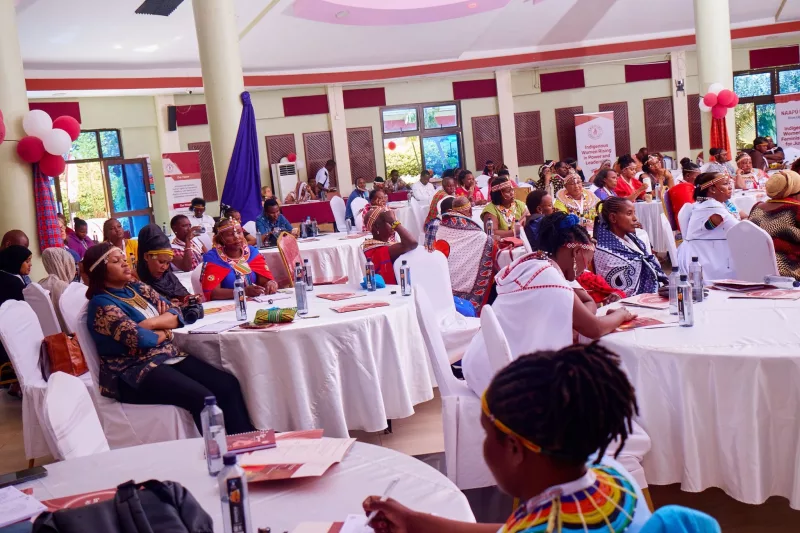
Indigenous women have called for formal recognition and support for traditional midwives, saying their knowledge remains critical to maternal healthcare and the survival of their communities.
The women, drawn from pastoralist, hunter-gatherer and fishing communities, as well as women living with disabilities, young women and adolescent girls, said traditional midwives had sustained generations through knowledge passed down by mothers, grandmothers and elders.
“We call for formal recognition and support for Indigenous traditional midwives and their contribution to maternal and reproductive health,” they said in a statement during the 12th Indigenous Women Council Convening in Isiolo county.
The meeting also marked the International Day of the World's Indigenous Peoples under the theme “Honouring Indigenous Midwives: Safeguarding Life and Well-being.”
The women called for stronger links between traditional midwives and formal health facilities, including referral systems that would enable women in remote communities to access appropriate maternal and newborn care.
The women also want the government to invest in maternal and newborn healthcare in remote indigenous communities while documenting and protecting indigenous midwifery knowledge.
The women said indigenous midwives were not only healthcare providers but also custodians of medicinal, spiritual, cultural and ecological knowledge.
“Indigenous midwives have sustained generations through knowledge passed from mothers, grandmothers and elders,” they said, adding that their contribution to maternal health, cultural continuity and community well-being should be recognised, respected and supported.
The declaration also raised broader concerns over access to healthcare for indigenous women and girls, particularly those living in remote and marginalised areas.
The women demanded quality, affordable, accessible and culturally appropriate reproductive, maternal, newborn and adolescent health services, saying geography, poverty, discrimination and cultural marginalisation should not determine access to healthcare.
“No woman or girl should be denied healthcare because of poverty, geography, discrimination [or] cultural marginalization,” they said.
The declaration comes as indigenous communities continue to face challenges over access to health services, land and natural resources, as well as the effects of climate change.
The women said they continue to experience systemic discrimination, exclusion from decision-making, insecure land and territorial rights, gender-based violence, poverty and climate-related impacts.
They called for indigenous women to be included as decision-makers in policies and programmes affecting their communities rather than being treated merely as beneficiaries.
“No dialogue, policy process, programme or decision concerning Indigenous peoples, their lands, territories and resources should take place without the meaningful participation and representation of Indigenous women,” the declaration says.
The women also demanded stronger protection of indigenous knowledge covering traditional medicine, food systems, livestock, forests, biodiversity, water management and climate adaptation.
They warned that such knowledge should not be appropriated, commercialised or exploited without the consent of indigenous communities and knowledge holders.
Additionally, the women called for recognition and protection of the collective land, territorial and resource rights of indigenous peoples, particularly where development, conservation, mining, infrastructure and investment projects affect their ancestral territories.
They demanded meaningful participation, transparency, fair benefit-sharing and respect for free, prior and informed consent in projects affecting indigenous territories.
They also rejected forced displacement and land dispossession, saying communities should not be excluded from decisions concerning their ancestral lands.
The declaration further called for protection of indigenous women who defend their land, communities, cultures and natural resources.
The women said human rights and environmental defenders should be protected from threats, violence, intimidation, criminalisation and retaliation.
“Indigenous women who defend their lands, territories, communities, cultures and natural resources must be protected,” they said.
Climate change was also highlighted, with the women calling for greater recognition of indigenous women's role in biodiversity conservation and environmental governance.
They said climate financing should support indigenous women-led solutions to drought resilience, sustainable livelihoods, ecosystem restoration, water security and food sovereignty.