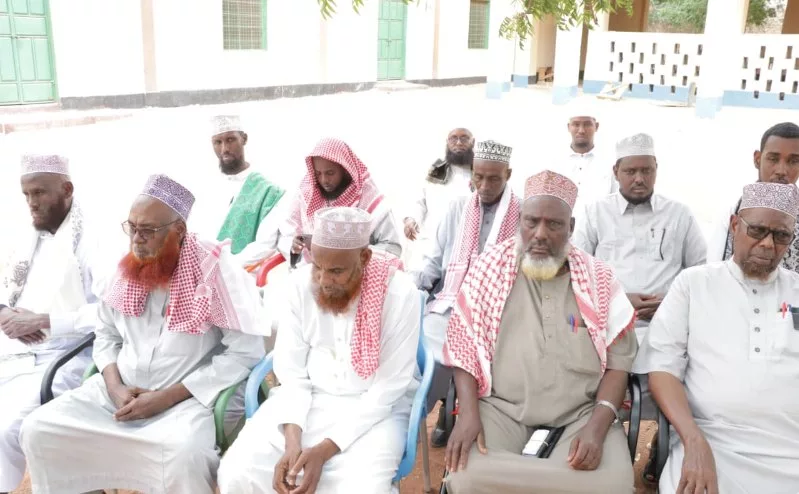
 Religious leaders from Wajir speaking to the press after the
meeting. /STEPHEN ASTARIKO
Religious leaders from Wajir speaking to the press after the
meeting. /STEPHEN ASTARIKO
Religious leaders in Wajir have cautioned politicians against using divisive rhetoric, hate speech and community mobilisation tactics that could exploit clan and sub-clan loyalties for political advantage.
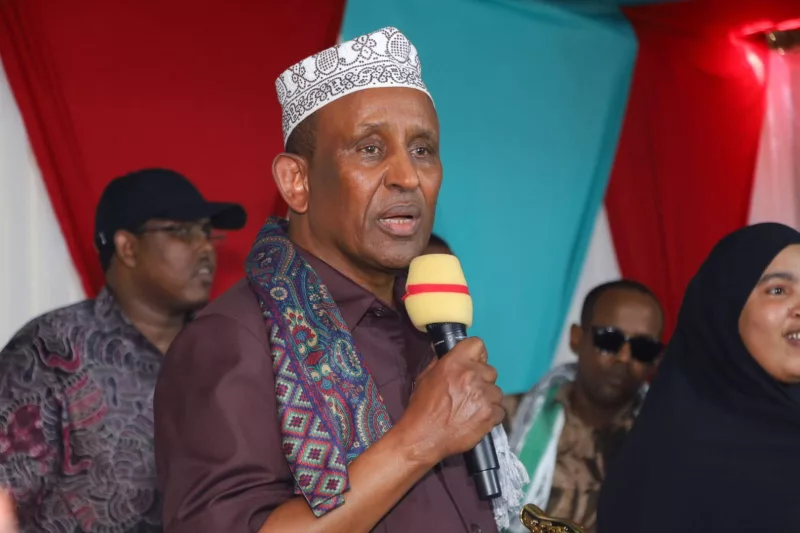
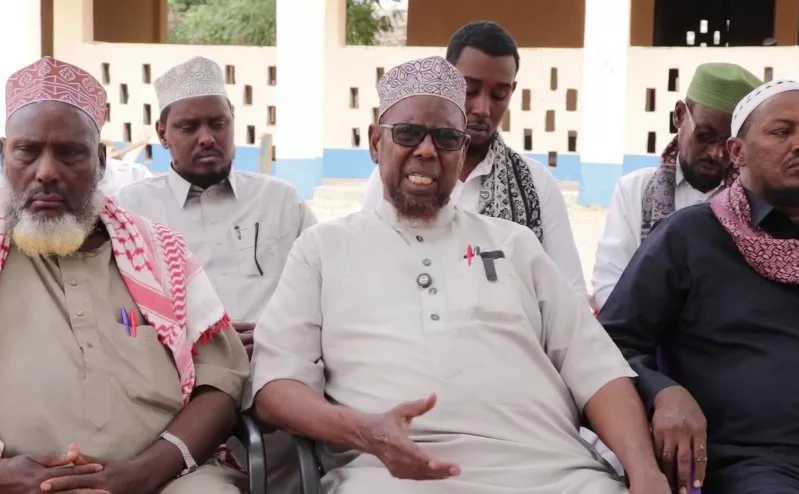
Speaking during a press briefing in Wajir town on Monday, the religious leaders, led by Northeastern Regional Coordinator of the Supreme Council of Kenya Muslims (SUPKEM) Sheikh Adan Yunis, said politicians seeking elective positions in Wajir, Garissa and Mandera should make peace and cohesion central to their campaigns.
They warned against tactics that could turn communities against each other. Sheikh Yunis urged both current office holders and those seeking political positions to exercise restraint in their public utterances.
“We are urging politicians, current and aspiring, to watch their tongue. Our first request is to ask politicians from the Northeastern to unite the communities through peaceful campaigns,” Yunis said.
“They should avoid bringing disunity among the community. They should use their platforms to promote peaceful coexistence and respect the values that hold communities together.”
Yunis also raised concerns over what he described as inappropriate conduct during some political endorsement ceremonies.
He specifically criticised the practice of men carrying female politicians during public political events, describing it as behaviour that goes against Islamic and social values.
“The other issue we are seeing is immoral campaign behaviours, especially during endorsement functions when men are seen holding and carrying women in an indecent manner,” he said.
Sheikh Hassan Ahmed said politicians had a legitimate right to seek elective office but must pursue their ambitions without undermining the unity of the communities they hope to lead.
“We do not want incitement against the unity of our people. Our people are one, with one religion, culture and tradition with strong and cohesive integration of mutual coexistence,” Ahmed said.
“You are allowed to seek leadership without inciting the people,” he added.
The clerics warned that as competition for positions such as governor, senator, woman representative, Member of Parliament and ward representative intensifies, politicians could be tempted to play the clan card more aggressively to mobilise voters.
They also shifted part of the responsibility to voters and residents, urging them not to allow themselves to be used as instruments of political confrontation.
The leaders called on residents to remain vigilant during campaign rallies and political gatherings.
They warned against politicians who may seek to provoke communities or manipulate emotions for electoral gain.
They urged residents to resist being drawn into political conflicts and instead take responsibility for protecting the security and stability of their communities.
The religious leaders said politicians would eventually move on after elections, while ordinary residents would be left to deal with the consequences of divisions, violence or the breakdown of social relations.
They further appealed to the public to avoid sharing inflammatory material on social media, saying digital platforms could easily be turned into channels for spreading hate speech and incitement.
The warning comes as political activity begins to intensify ahead of the 2027 elections, with prospective candidates increasingly holding consultations, endorsement meetings and community mobilisation events across the region.
In northeastern Kenya, where clan and sub-clan identities remain deeply embedded in the social and political organisation of the Somali community, religious leaders fear politicians could exploit these loyalties to consolidate support.
Political aspirants often invoke clan and sub-clan identities during campaigns and community meetings as they seek to persuade voters that one of their own should occupy a particular elective position.
The religious leaders said they would not remain silent if politicians resorted to inflammatory messages as the country moves closer to the election.
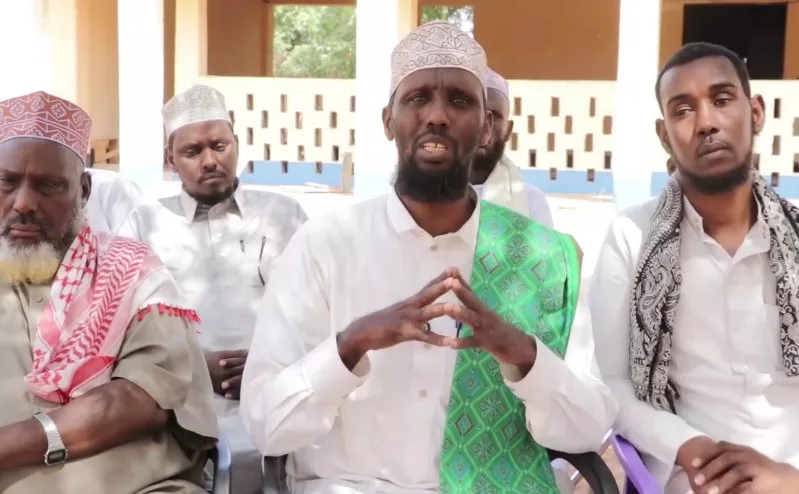 Northeastern Regional Coordinator of the Supreme Council
of Kenya Muslims (SUPKEM) Sheikh Adan Yunis speaking to the press in Wajir town./STEPHEN
ASTARIKO
Northeastern Regional Coordinator of the Supreme Council
of Kenya Muslims (SUPKEM) Sheikh Adan Yunis speaking to the press in Wajir town./STEPHEN
ASTARIKO
 Sheikh Hassan Ahmed speaking to the press. /STEPHEN
ASTARIKO
Sheikh Hassan Ahmed speaking to the press. /STEPHEN
ASTARIKO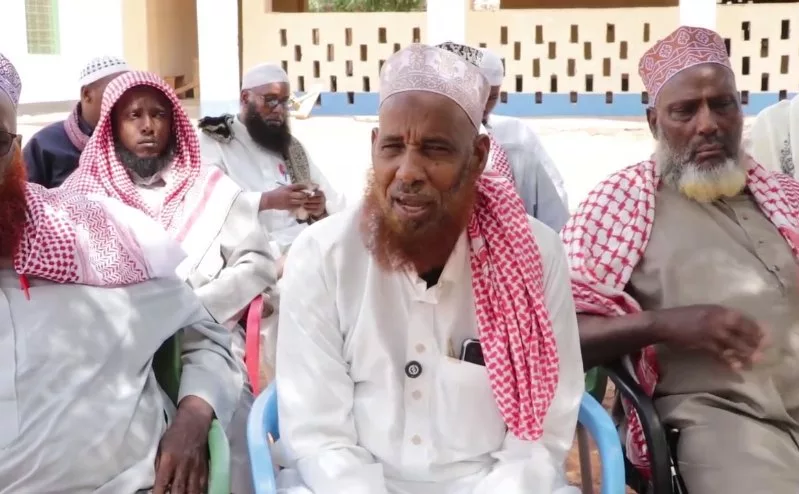 Sheikh Hussein Abdi speaking to the press. /STEPHEN
ASTARIKO
Sheikh Hussein Abdi speaking to the press. /STEPHEN
ASTARIKO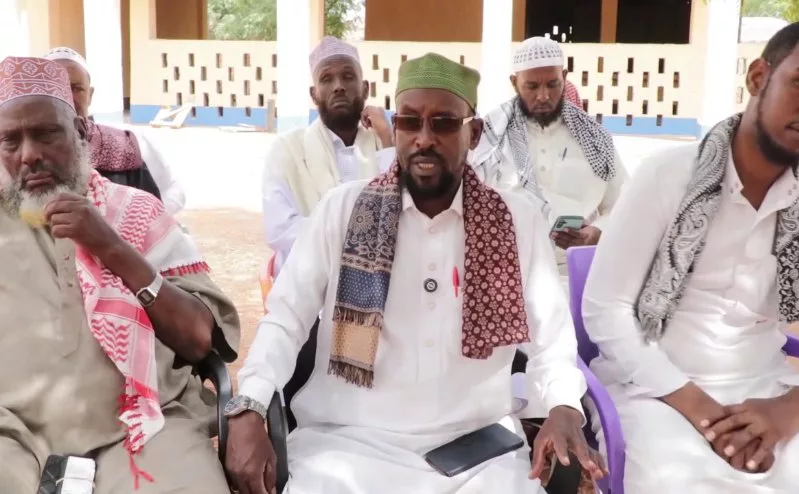 Sheikh Abdullahi Abdi speaking to the press./STEPHEN
ASTARIKO
Sheikh Abdullahi Abdi speaking to the press./STEPHEN
ASTARIKO