I flew 11,000 kilometres expecting advanced leadership theory.
What I got, on the first morning of the Byron Fellowship in the hills of upstate New York, was a whiteboard. Handwritten. Blue marker, slightly smudged. A list of ground rules the facilitators called "agreements".
I'll be honest. My first instinct was impatience. I head a surgical unit, run two businesses and keep a clinical practice. I did not cross the Atlantic for ground rules.
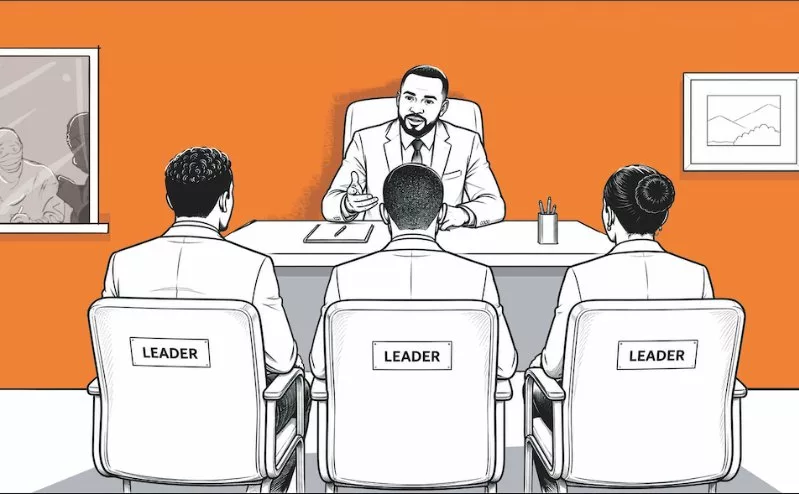
Then I read the first line: In every chair, a leader.
The phrase belongs to the First Alaskans Institute, an Alaska Native organisation whose dialogue practice rests on one belief: every person in the room carries experience that is valuable and true, and therefore every person carries responsibility for what the room produces.
I stood there, jetlagged, and my mind went somewhere very specific.
An operating theatre in Nairobi. A junior nurse notices something. She opens her mouth. She closes it again. Between her chair and mine sits a hierarchy so steep that speaking up feels like climbing.
I have watched that moment more times than I want to admit. Nothing bad happens, usually. But every senior surgeon knows the truth we rarely say out loud: the swab count, the mislabelled specimen, the wrong-side mark is often visible first from the most junior chair in the room.
The entire machinery of surgical safety, the checklists, the briefings, the deliberate pause before incision, exists mainly to flatten the hierarchy long enough for that chair to speak.
Organisations do not fail for lack of information. They fail because the information is sitting in a chair nobody treats as a leader's chair.
Your customer support agent hears the product breaking before you do. Your field officer sees the policy failing before the director does. Your registrar knows which ward process is fiction. The question is never whether the intelligence exists. It is whether your room lets it travel.
I thought I had the lesson. I was wrong. The whiteboard was only half of it.
Later, the facilitators put up a second sheet. Three questions. And where the agreement had pointed outward at how I treat every other chair in the room, these pointed straight at mine.
The first asked: what is it I want to create?
Not what problem am I solving. What am I building? I have spent my career solving problems. Tumours, budgets, broken systems. A problem-solver is finished when the problem goes away. A creator is finished when the thing exists. Sitting with that question, I realised how much of my week is spent making bad things stop rather than making good things exist. Those are not the same job.
The second went further: how do I expand my contribution?
It assumes your current contribution is not your ceiling, which is flattering for about 10 seconds. Then you see what it actually demands: letting go of work that others can now do, so you can take on work that only you can do. Every senior professional I know, myself included, is holding on to tasks that flatter us and starve our successors.
And the third, the one I am still chewing on: who do I need to be to create the world I yearn for?
It moves the audit from your task list to your character. I review my department's performance quarterly. I have never reviewed my own way of being with anything like that discipline. Have you?
By evening it clicked. The whiteboard and the sheet of questions are one teaching, split in two. The agreement tells you how to see everyone else: as a leader, whatever their chair. The questions tell you how to see yourself: as unfinished, whatever your title.
Most of us get this exactly backwards. We treat ourselves as the finished leader and everyone else as unfinished.
So here is what I am carrying home, and I hand it to you as it was handed to me. Pick one room you sit in every week. A ward round. A board meeting. Your dinner table. Walk in assuming every chair holds a leader, and answer the three questions before you do.
The steepest hierarchy you sit in is costing you information right now. Which room is it, and what do you suspect you are not hearing?