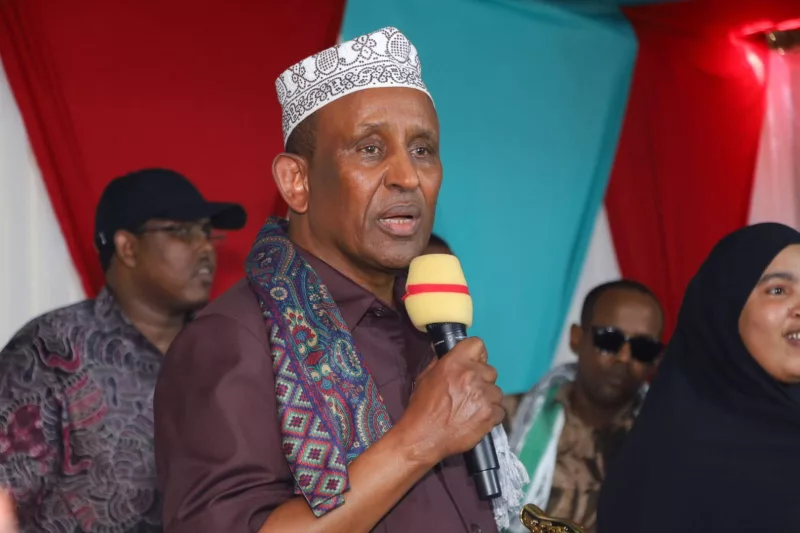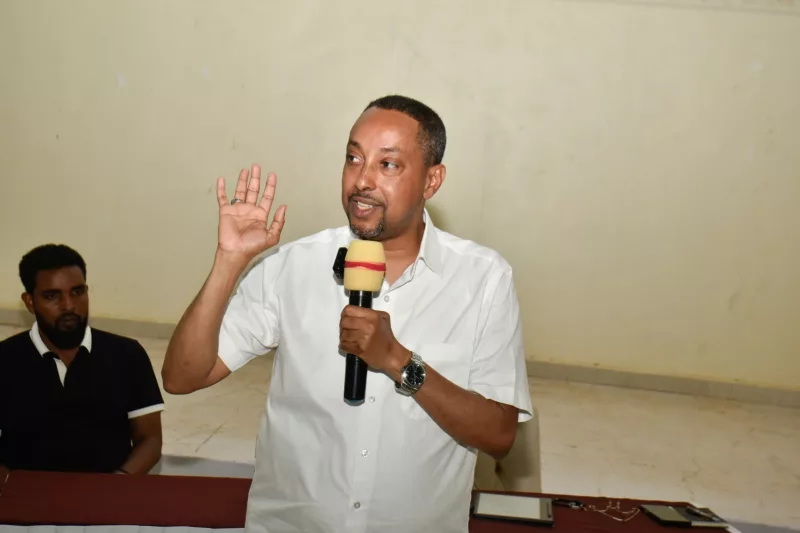
 Businessman and politician Abdikadir Doyo presided over the graduation ceremony for 132 youth in digital literacy
Some 132 youths from Saku constituency have been trained in digital skills to equip them with practical competencies and prepare them for opportunities in the growing digital economy.
The Ebisa Youth Empowerment Programme enables young people to leverage online opportunities to earn a sustainable income.
The training would enable them to leverage their digital skills to seek opportunities on the internet and pursue them depending on their passions and either establish digital careers or businesses.
Already 560 youth have benefitted from the digital skills training in the constituency.
Speaking during the graduation ceremony, Saku MP aspirant Abdikadir Doyo said he would continue investing in digital literacy initiatives to ensure more young people acquire practical competencies required in today's labour market.
" Digital literacy is an essential requirement in today's world. The knowledge you have acquired will open many opportunities," he said
He said the initiative forms part of his broader strategy to empower youth with market- driven competencies that will enable them to secure jobs, establish businesses, and contribute to digital transformation.
"Many young people assume they are digitally literate because they use social media platforms. This course goes beyond that by equipping them with practical competencies that can be applied in the workplace and converted into income through online opportunities," he said
Doyo said the initiative is helping bridge the digital divide by exposing youth from rural communities to practical digital competencies that prepare them for the rapidly evolving world of work.
" Empowering young people with digital skills is essential not only for their personal growth but also for creating a skilled workforce that will drive the constituency's economic development and enhance productivity," he said
He called on government agencies, political leaders, development partners, and the private sector to invest more in digital infrastructure and advanced training programmes to prepare young people for technology- driven opportunities.
"We now need to move beyond basic digital literacy by investing in computers, digital laboratories, and reliable internet connectivity. Young people already spend a significant amount of time online, and we should help them transform that engagement into productive employment and a sustainable source of income.
He expressed confidence that the graduates would apply the competencies acquired to improve their livelihoods, noting that digital technology continues to create new opportunities for skilled young people across the world.
He said the global economy is no longer driven by natural resources as it is increasingly powered by knowledge, innovation, and creativity, and the conversation has moved beyond providing internet access to embracing Artificial Intelligence, automation, biotechnology, and digital transformation."Our youth cannot remain spectators while the rest of the world advances. They must become innovators, software developers, entrepreneurs, data analysts, and digital marketers," he said.
Saku professional Abdikadir Abdirahman, who benefited from the Ebisa Youth Empowerment Programme in 2017, hailed the initiative, saying it would curb unemployment among the youth."This is a programme we shall embrace wholeheartedly as it will go a long way in addressing youth unemployment," he said
Graduates welcomed the training, terming it transformative. Abdirahman Abdinoor said the course had equipped him with skills that will support his future studies, adding, "the knowledge I have gained will help me going forward."
Qabale Malich said the programme had improved her computer literacy and opened new opportunities.
"Today the world does not favour someone who is computer illiterate," she said, urging other youth to enrol in similar courses.