Chinese watch manufacturers are targeting Kenya’s relatively low watch-wearing culture as an opportunity to grow sales and establish the country as a gateway to the wider East African market.
Manufacturers from Hunan province are seeking to deepen their presence in Kenya by moving beyond the supply of finished watches into distribution partnerships, private-label manufacturing, original equipment manufacturing (OEM), original design manufacturing (ODM) and other long-term supply arrangements.
The push comes as Chinese and Kenyan industry players seek to expand existing trade in watches while developing products and marketing strategies tailored to African consumers.
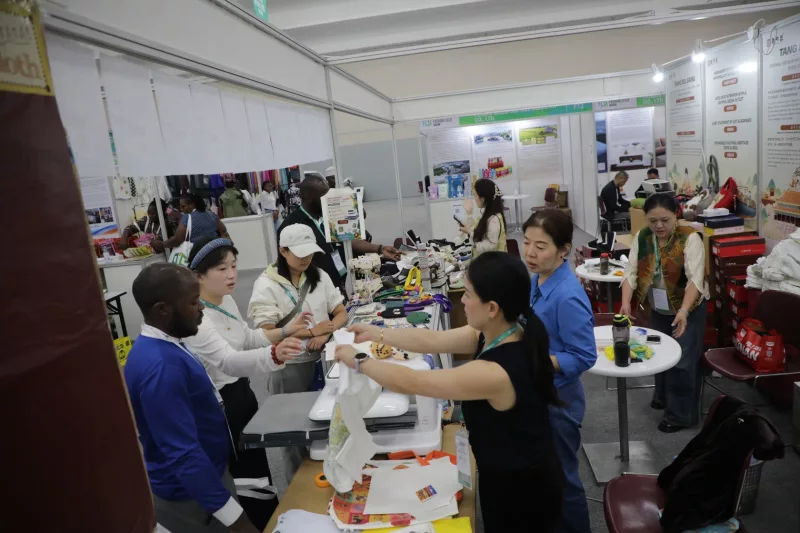
Stakeholders spoke during the Watch Industry Supply & Demand Matchmaking Conference held at the Sarit Expo Centre in Nairobi, bringing together Hunan-based watch manufacturers with Kenyan and East African importers, distributors, retailers and buyers.
China already supplies significant volumes of watches to Kenya, Tanzania and Uganda.
Manufacturers are now seeking to strengthen regional distribution networks and establish direct relationships with local businesses to increase market penetration.
Hunan-based LOOKWORLD sales manager Eric Liwai said Kenya presents an opportunity because its watch market is less crowded than some other African markets.
“I don’t see so many watch shoppers. Because the last two months I went to the Nigerian market, there were maybe 3,000 to 5,000 shoppers, and they are very competitive. But in Kenya it’s different. I don’t see so many watch shoppers, so they are not very competitive. And I’ve seen profitable markets here,” said Liwai.
He said Kenya’s transport and logistics infrastructure also gives it an advantage as a regional trading hub, allowing manufacturers and distributors to serve neighbouring markets.
“The transportation in Kenya, I think it’s going to be a great, very great advantage for the Kenya market. Because in Kenya, there are a lot of ports. This will help a lot of countries from Africa to move goods through the Kenya market to their own country,” he said.
For manufacturers, this makes Kenya more than just a consumer market, with its established trading networks and logistics infrastructure providing a potential distribution base for East Africa.
Faith Muturi, a Chinese watch importer, said the Kenyan market has room for growth but manufacturers and sellers need to create greater consumer interest in watches.
“The market is good. Also, if you ask me from a seller’s perspective, I think we need to do more campaigns on watch wearing. Not a lot of people have the watch-wearing culture, but we also need to do more campaigns on watch rebranding,” said Muturi.
She said local creativity could help turn watches from simple timekeeping devices into fashion and lifestyle products that appeal to a wider group of consumers.
“We need to have beaded watches. We need to have watch straps that are made from Maasai shukas coated with something. Creativity can improve the watch-wearing culture. But business is good,” she said.
The comments point to an opportunity for manufacturers and local businesses to develop products incorporating Kenyan and wider African design elements, potentially creating a distinct market for watches positioned as fashion accessories.
The conference features Tang Ling, Vice Chairman of the China Horologe Association, alongside Chinese manufacturers and African buyers. The discussions are focused on linking manufacturers with potential partners and identifying opportunities for sustained commercial cooperation.
Chinese manufacturers are seeking partnerships with Kenyan importers, retailers, distributors and wholesalers that can help expand the reach of their products across the domestic and regional markets.
The matchmaking event is also providing African businesses with direct access to manufacturers for product sourcing, customisation, private-label production and OEM/ODM arrangements.