Nairobi Senator Edwin Sifuna's rapid rise from a Raila Odinga lieutenant to a potential 2027 presidential candidate has disrupted the conversation around the opposition line-up.
Only months ago, Sifuna was largely known as ODM's combative secretary general and one of Raila's most vocal lieutenants.
Less than a year since the death of his political father, however, Sifuna’s name is being floated for the presidency and running mate post.
Supporters of the Linda Mwananchi leader argue that he offers the opposition something its established bigwigs have struggled to provide — a fresh face capable of connecting with a new generation of voters.
The speed of his national acceptance has rocked both the government and opposition camps.
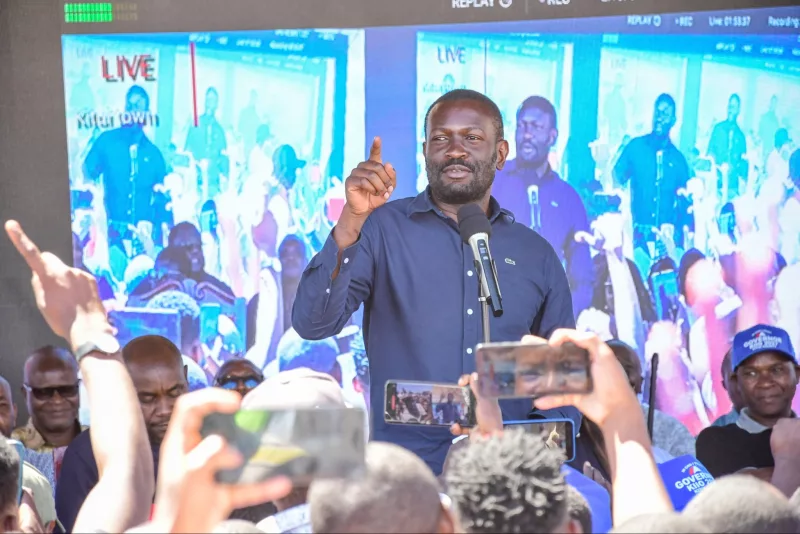
Sifuna has used the Linda Mwananchi movement to move beyond the traditional confines of party politics, taking his message into different parts of the country and building a direct relationship with voters, who have gone to the extent of contributing financially to his campaign.
The movement's rally in Homa Bay on Sunday is particularly significant. By venturing into one of Raila's strongest political bastions, Linda Mwananchi is testing whether Sifuna's growing appeal can travel into the heart of the late ODM leader's political backyard, political analysts say.
“Sifuna is way beyond ODM. He has achieved a new space, a new identity that is bigger than ODM,” political analyst Herman Manyora says, adding that Sifuna’s entry is “interrupting the political game”.
The development has also put Sifuna in an unusual position. While he has not formally presented himself as the inevitable opposition presidential candidate, politicians and supporters are increasingly making the case for him.
DCP deputy party leader Cleophas Malala has publicly argued that the opposition should back Sifuna, saying he has the potential to lead the country.
This is partly because Sifuna represents a generational proposition that the older opposition leadership cannot easily offer.
Kalonzo Musyoka, Martha Karua, Peter Munya, Eugene Wamalwa and other veterans come with decades of political experience. Others, such as Rigathi Gachagua and Fred Matiang'i, come with established networks and considerable name recognition. But they also carry the weight of long political careers, shifting alliances and accumulated baggage.
Sifuna’s political career, by comparison, is relatively short. He became ODM secretary general in 2018 and was elected Nairobi senator in 2022. His rise to the centre of the 2027 succession debate has, thus, happened remarkably quickly.
On the other hand, Kalonzo, Matiang'i and Gachagua have all accumulated records that President William Ruto has increasingly exploited to discredit their presidential ambitions. Kalonzo is widely seen as part of the old Kanu political establishment, and someone who has failed to convert his national profile into a winning coalition. Ruto has often challenged him for not doing anything for the last 40 years he has been in politics.
Matiang'i, meanwhile, carries the record of his years as Interior CS, including the docket's controversial handling of protests and allegations of heavy-handedness during the final years of the Jubilee administration. Ruto and his allies. have repeatedly sought to put the former CS on the defensive by questioning his record in government, with questions over the Ruaraka land scandal and River Yala killings. Matiang’i has denied any involvement.
Ruto has also attacked his former deputy, Gachagua, over alleged tribalism, poor performance and his record as a one-term MP.
Sifuna does not carry the same record of executive power.
Political commentator Karanja Njihia opines that Sifuna is receiving positive reception across the country, and emerged “second-most preferred opposition presidential flag bearer”.
Njihia further added that opinion polls are also placing him nicely.
His greatest asset may be his ability to communicate politics in a language that resonates with younger voters.
“He is energetic, combative, witty and comfortable with the theatre of political mobilisation,” Dennis Mwangi, a youth leader and political commentator, said.
At Linda Mwananchi rallies, he has also deliberately maintained a connection with Raila's political brand, including the use of Raila-branded T-shirts and the Sisi ni Wa Baba, Jeshi ya Baba song.
A May Tifa poll showed 73 per cent of ODM supporters surveyed backed the Linda Mwananchi position, compared with 24 per cent for the Linda Ground faction associated with Oburu Odinga.
The figures do not, by themselves, establish Sifuna as a national presidential frontrunner. But they illustrate why his rise can no longer be dismissed as merely a flash in the pan political phenomenon.
Sifuna's emergence comes at a time when the opposition is struggling to settle on a presidential formula.
The established leaders have struggled to resolve who should lead, while coalition calculations have often revolved around balancing regions and personalities.
Sifuna introduces a different proposition on generational change, communication and popular mobilisation.