The National Treasury is racing against time to deliver the country’s first Sh5 trillion-plus budget.
Treasury disclosures show that the entire 2027-28 financial year spending plan is being pushed through months before the general election.
The Draft 2026 Budget Review and Outlook Paper (BROP) has set the expenditure ceiling at a record Sh5.3 trillion.
This would be against projected revenue of Sh3.9 trillion, leaving the government with a Sh1.3 trillion financing gap.
Treasury says it is planning to raise Sh1.085 trillion locally and Sh235.9 billion externally to cater to the deficit.
The government’s timetable is designed to ensure the budget is approved before the 2027 elections disrupt the normal parliamentary calendar.
The BROP says the revised calendar is intended to facilitate completion of the budget process by ministries, departments and agencies with the set deadlines.
Under the timetable, the 2027 Budget Policy Statement is to reach Parliament by November 30, 2026, together with the Medium-Term Debt Management Strategy.
The instruments will be accompanied by the Division of Revenue Bill, a key revenue-sharing legislation.
The detailed Budget Estimates, Appropriation Bill and Finance Bill are scheduled for submission to Parliament by January 30, 2027.
Treasury has scheduled delivery of the Budget Statement for March 18, 2027, being three months earlier than the traditional timeline for the statement.
The questions abounding is whether the accelerate timelines could leave MPs with a narrow window to scrutinise the spending plan.
With the publication of the BROP, sector working groups are expected to begin preparing spending proposals, by October 2.
The timing means the Sh5.3 trillion plan will be prepared, debated and largely locked in while political parties are already positioning themselves for the August 2027 contest.
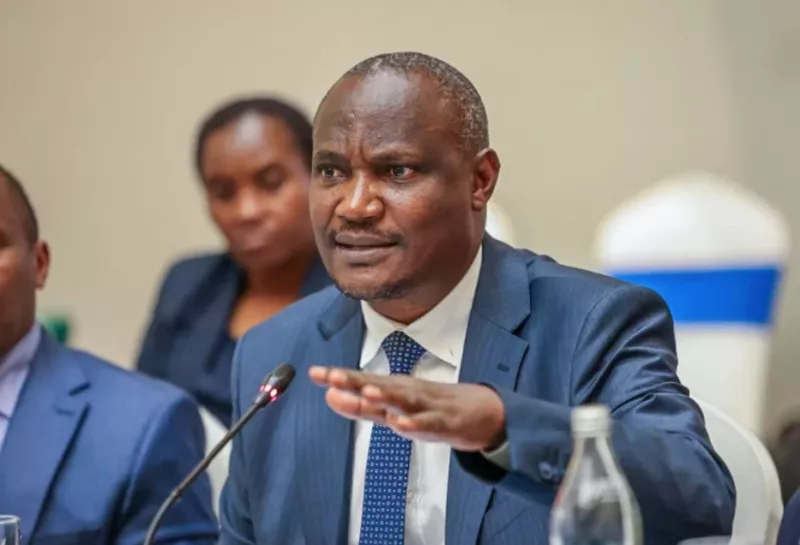
The proposed budget exposes the difficult choices facing the CS John Mbadi-led Treasury.
The government expects to collect Sh3.943 trillion in 2027-28, including Sh3.208 trillion in ordinary revenue against total expenditure and net lending of Sh5.323 trillion.
Recurrent spending will consume Sh3.887 trillion, while development expenditure is projected at Sh958 billion.
Counties are set to receive Sh472.8 billion with Sh5 billion projected to be set aside for the Contingency Fund.
Treasury says ministries and departments will be required to justify their expenditure proposals rather than automatically carry forward existing allocations.
Treasury disclosures further detail how debt remains a big constraint.
While the public debt is viewed as sustainable, Treasury itself admits that it carries a high risk of debt distress.
The incoming budget will also have to contend with a large stock of unpaid government obligations, or rather, pending bills.
The BROP puts outstanding national government pending bills at Sh465.9 billion as at June 30, 2026.
Of this, Sh271.2 billion comprised recurrent bills while Sh194.7 billion was development-related.
The bills include payments owed to contractors and suppliers, statutory deductions and pension arrears.
Treasury says verified pending bills are to be treated as a first charge in current-year budgets as part of its strategy to clear the backlog.
As such, the 2027-28 budget will have to balance new election-year priorities against old obligations, debt repayments and the ordinary cost of running government.
Treasury says in the dossier that it is also banking on stronger revenue collection to narrow the financing gap.
It emerged after revenue underperformed in 2025-26, which reported a shortfall of Sh60.2 billion. Ordinary revenue alone fell Sh52.2 billion below target.
The new projections therefore require the government to raise substantially more money while simultaneously pursuing budget cuts.