Apparel manufacturers, exporters and workers in the can breath a sigh of relief after the United States Senate further extended the African Growth and Opportunity Act by two years.
This secures duty-free access to the US market through December 31, 2028.
The extension is expected to provide much-needed certainty for Kenyan businesses that have faced prolonged uncertainty over the future of the preferential trade arrangement, which has been a key driver of exports, manufacturing investment and employment.
The Kenyan government yesterday welcomed the Senate approval, saying the extension would give manufacturers greater predictability and allow them to plan production and investment with greater confidence.
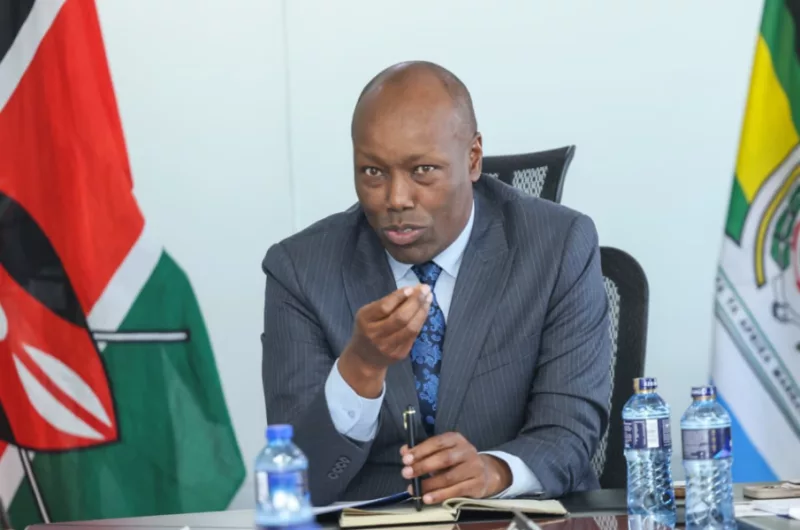
Investments, Trade and Industry Cabinet Secretary Lee Kinyanjui said the extension was particularly significant for Kenya's apparel industry, which accounts for about 70 per cent of the country's exports to the US.
“The extension of AGOA guarantees Kenyan enterprises continued exports of thousands of product lines to the US without the burden of tariff barriers,” Kinyanjui said.
The extension also retains the critical third-country fabric provision, which allows Kenyan firms operating in Export Processing Zones (EPZs) to source yarns and fabrics from countries outside the AGOA bloc, manufacture garments locally and export the finished products to the US duty-free.
The provision has been central to the competitiveness of Kenya's apparel industry, enabling manufacturers to access raw materials at competitive prices while adding value and creating jobs locally.
The government said the extension would also provide relief to exporters who continued shipping goods to the US after the previous AGOA programme expired on September 30, 2025.
Under the new legislation, eligible duties paid during the gap period will be refundable.
The ministry said it will work with exporters to facilitate applications to the US Customs and Border Protection (CBP), with refunds expected within 90 days as provided under the legislation.
US Senate's action follows an earlier one-year renewal signed in February 2026 by President Donald Trump, which had extended AGOA only until the end of this year.
The latest extension therefore removes another major source of uncertainty for businesses that had been reluctant to make long-term investments because of doubts over whether the preferential trade regime would survive beyond 2026.
Kenya has emerged as one of the major beneficiaries of AGOA, particularly through its garment industry.
According to the 2025 Kenya National Bureau of Statistics Economic Survey, apparel exports under AGOA rose 19 per cent to Sh60.6 billion in 2024, from Sh50.8 billion in 2023.
The sector supports more than 66,000 direct jobs, particularly in EPZs, making the US market a major source of employment and foreign exchange for Kenya.
Government said the extension would help protect investments already made in factories, machinery and worker training while giving manufacturers an opportunity to expand production.
Beyond apparel, Kenyan agricultural exporters also stand to benefit from continued preferential access to the US market.
Products including cut flowers, coffee, tea and macadamia nuts have gained access to the American market under AGOA, although apparel remains the dominant export category.
The government is now urging manufacturers and exporters to use the extended window to expand capacity and diversify the country's export base.
“The extension should be viewed not merely as a continuation of existing trade preferences but as an opportunity for Kenyan businesses to deepen their presence in the US market,” Kinyanjui said.
He urged the private sector to “accelerate production, invest boldly, and take full advantage” of preferential access to the world's largest consumer market.
The extension covers more than 1,800 products from eligible African countries and is expected to restore greater certainty to US-Africa trade relations after years of concerns over the future of the programme.
For Kenya, the challenge will now be to translate the additional two years of certainty into new investment, higher production, increased exports and more jobs rather than relying heavily on a narrow range of products.
The government said it would continue engaging Washington on longer-term bilateral trade and investment arrangements while supporting exporters to maximise the opportunities presented by AGOA.