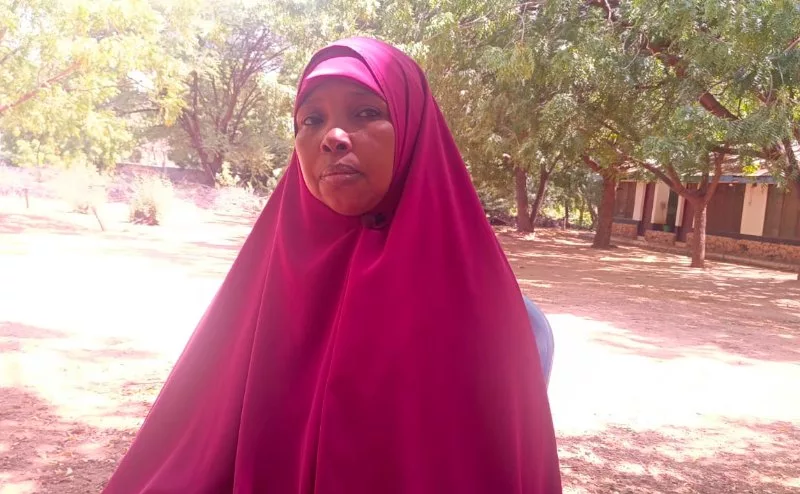
 Hodhan Omar, the mother of Abdighafar Hassan, speaking to the press /STEPHEN ASTARIKO
For Hodhan Omar, the joy of raising her children has been replaced by the anguish of not knowing when she will see her firstborn son again.
Her Grade 10 son, Abdighafar Hassan, disappeared in December 2025 while in Nairobi, where he had gone to spend the holidays with his aunt.
Months later, Hodhan discovered he had fallen into the hands of traffickers who demand huge ransoms from desperate families.
A struggling single mother, Hodhan had no idea where she would find the money being demanded for her son’s release.
“I was a struggling single mother trying to raise my children when my son went missing and eventually was being held for ransom. I was so overwhelmed because I didn’t know where I would get such kind of money,” she said in an interview at her home.
She turned to relatives, friends and social media sympathisers for help. After a frantic fundraising campaign, she managed to raise Sh2.25 million, which she paid in instalments through a network spanning different countries.
She sent $1,000 (Sh129,250) to Dubai, another $3,500 (Sh452,375) to Istanbul in Türkiye and some of the money through Somalia. The payments were made through a local forex transfer system known as Hawala.
Hodhan believes her son was initially held in Sudan. After the ransom was paid, he embarked on a journey towards Libya but ended up in Egypt, where a Somali family is hosting him.
Unlike other children still in the hands of traffickers locally known as Magafe, Abdighafar is free but stranded in Egypt. He has a go-home letter from authorities, but his mother cannot afford to bring him home safely.
His ordeal offers only a partial reprieve in a region where families are being pushed to the brink as traffickers prey on children with promises of a better life in Europe.
The syndicates operate through a long chain involving recruiters, transport agents and others who contact families to demand ransom. Their operations stretch across several countries, with families often instructed to send money to different destinations.
For families whose children remain captive, the demands are even more devastating.
At Iftin Primary School, three girls disappeared after allegedly being lured by the syndicate. Their families received identical distressing videos showing the children being tortured.
One of them, a 16-year-old girl referred to as Deka because she remains an active hostage, is shown lying on the ground with her hands tied behind her back and bound to her legs with heavy chains and padlocks. An unseen captor repeatedly whips her.
Deka disappeared after leaving her primary school. Her captors later contacted her family and demanded an $18,000, equivalent to about Sh2.3 million.
The girls are suspected to have been lured by a well-organised syndicate targeting schoolchildren with promises of a better life in Europe before smuggling them to Libya and holding them captive in harsh conditions.
One of Deka’s sisters said the police failed the family, arguing that an immediate response could have helped authorities intercept the children at the border.
The trafficking has taken a heavy financial and emotional toll on families in Garissa, many of whom have been forced to contribute money to secure the release of relatives.
“My mother is diabetic; we have been struggling with her medication. Where are we going to get the Sh2.5 million they are asking for?” the sister said amid sobs.
Halima Abdi, not her real name, is also living through the nightmare. Her younger brother disappeared from their grandmother’s house in Garissa town and is suspected of having fallen victim to recruiters targeting children for trafficking to Libya.
The Grade 10 student at County High School has become the subject of distressing videos sent to his sister.
“Per day they will send me two to three videos of him in very bad shape; in the video clips they torture him badly. At times they video call me showing him tied to a tree and whipping him while naked,” she said.
With relatives and friends contributing what they could, the family has managed to raise about Sh1 million but still needs another Sh1 million.
The 23-year-old sister said the family, together with her mother and grandmother, sold their last camel in an effort to raise the money. She appealed for government intervention to rescue her brother.
Many families whose children remain captive are reluctant to speak publicly, fearing that exposure could put their loved ones at greater risk.
Families also say traffickers warn them against revealing the purpose of the payments, instructing them to describe the money as “family support” rather than ransom for Magafe.
Sheikh Hassan Abdi, the Supkem secretary general in Garissa, said the situation was worrying, noting that families often approach mosques seeking help with fundraisers.
He described the traffickers as “child terrorists” and blamed parents for giving children unmonitored and unrestricted access to mobile phones, which he said recruiters exploit.
“I called them child terrorists because the way they trade those at their hands is appalling, degrading and inhuman; these are the future of this country. We need action to stop such syndicates from thriving,” he said.
Hassan called for parents, government departments and religious leaders to work together to address the problem, saying joblessness and desperation among youths had helped traffickers thrive.
He also questioned why police were not intercepting young people leaving through Kenya’s borders, saying the Directorate of Criminal Investigations had the machinery to dismantle the syndicate.
Garissa police declined to comment on the rising cases of child trafficking. However, Garissa chief principal Yussuf Ali said the local government was concerned and had put measures in place.
He said police manning various barriers along the Garissa-Nairobi highway had been instructed not to allow minors to pass without their parents or guardians.
“We have also asked our chiefs to start public barazas and sensitise communities across the county about these traffickers,” he said.
Yussuf also urged parents to take greater responsibility, saying they should report immediately when children disappear and monitor their friends and interactions.
“Why would you not monitor your child and whom they interact with, who are his or her friends in school, why would you give a Grade 10 child a mobile phone?” he asked.
Instant analysis
Garissa’s child trafficking crisis exposes a brutal intersection of poverty, desperation, technology and organised crime. Families are being forced to sell livestock, exhaust savings and seek community fundraisers to meet ransom demands, while children endure horrific captivity. The cases also reveal worrying gaps in early intervention, border surveillance and reporting of missing children. Parents and authorities clearly have roles to play, but the sophistication of the trafficking networks demands a coordinated response involving police, schools, communities and religious leaders. Beyond rescuing victims, authorities must dismantle the networks recruiting and transporting vulnerable children.
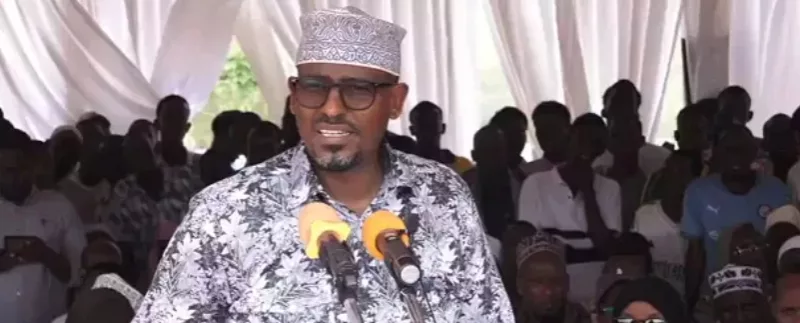
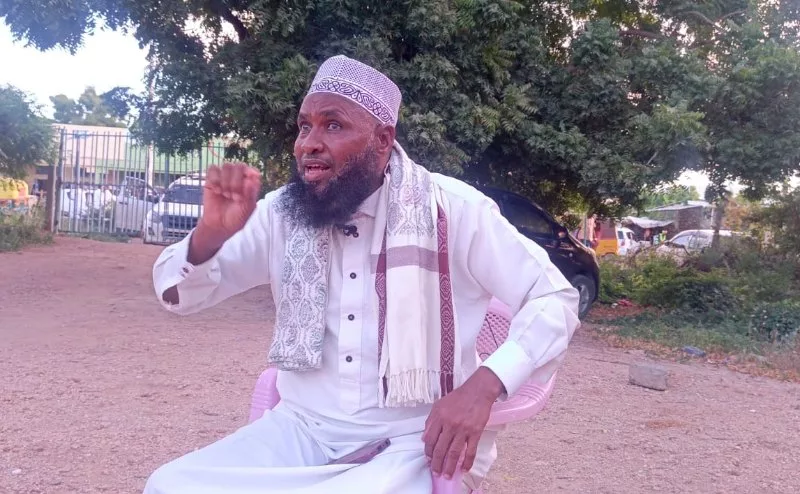 Sheikh Hassan Abdi, the secretary general of SUPKEM, Garissa, speaking to the press. /STEPHEN ASTARIKO
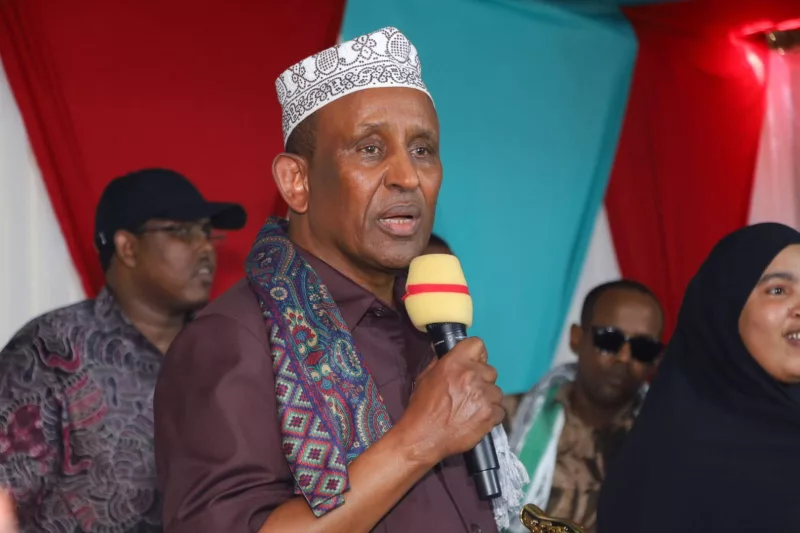
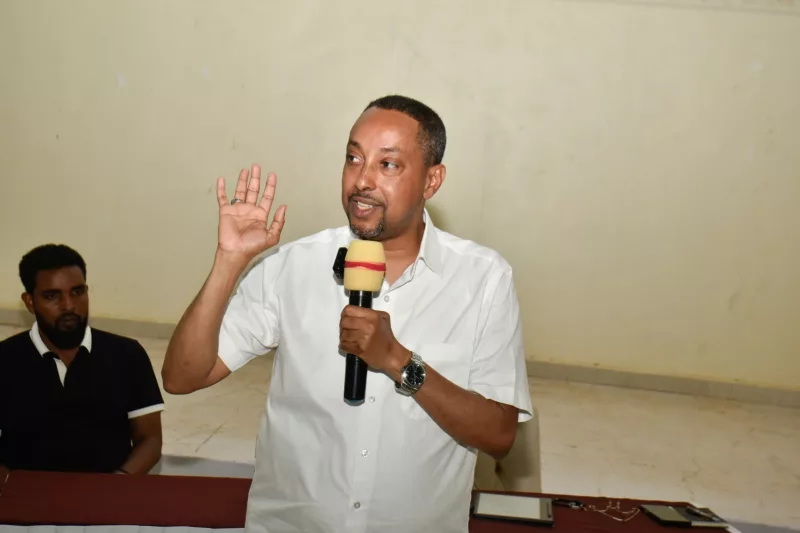
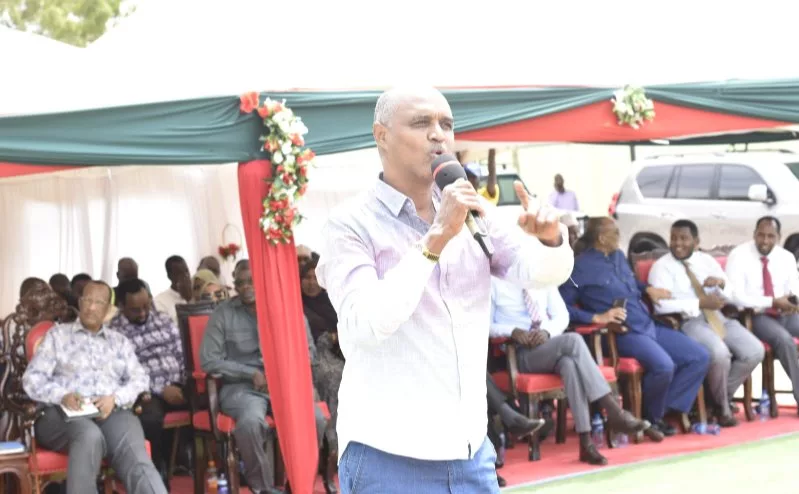 Garissa Chief Principal Yussuf Sheikh Ali speaking at a
recent function. /STEPHEN ASTARIKO
Garissa Chief Principal Yussuf Sheikh Ali speaking at a
recent function. /STEPHEN ASTARIKO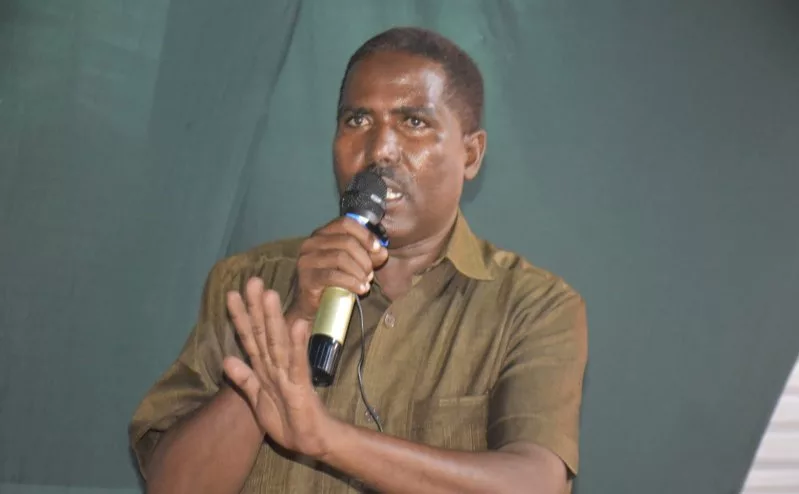 Garissa Chief Principal Yussuf Sheikh Ali speaking at a
recent function. /STEPHEN ASTARIKO
Garissa Chief Principal Yussuf Sheikh Ali speaking at a
recent function. /STEPHEN ASTARIKO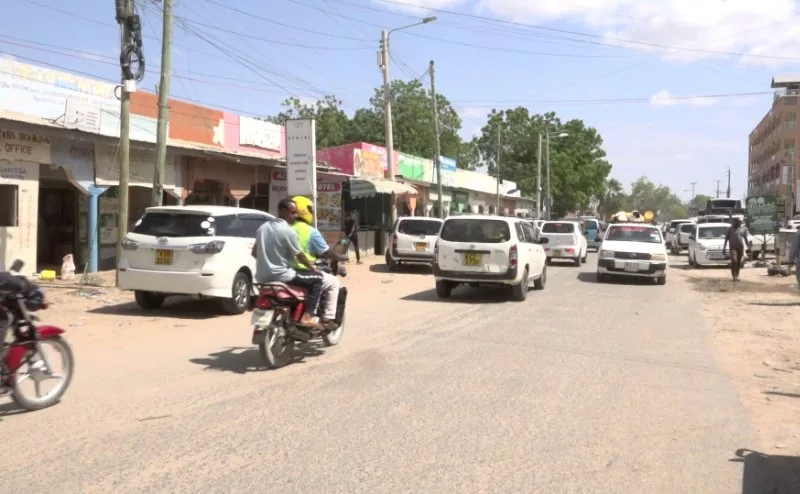 Residents of Garissa town going about their business. Cases of child trafficking have been on the rise in the town.