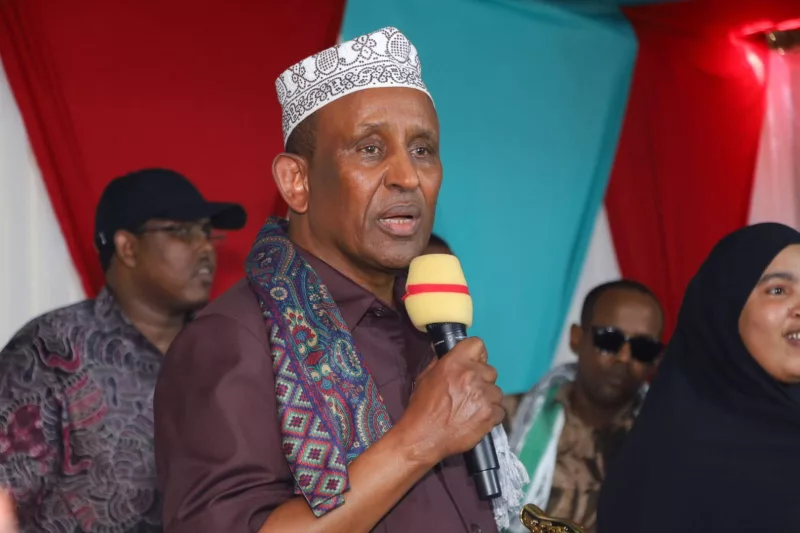
 Garissa governor aspirant Ali Korane speaking in Bura East
Sub county, Garissa. Looking on is Health CS Aden Duale/STEPHEN ASTARIKO
Garissa governor aspirant Ali Korane speaking in Bura East
Sub county, Garissa. Looking on is Health CS Aden Duale/STEPHEN ASTARIKOFormer Garissa Governor Ali Korane has called on the national government to establish more identification card and voter registration centres in pastoralist counties to ensure all eligible citizens are captured ahead of the 2027 General Election.
Korane, who is seeking to recapture the seat he lost in 2022, said the government, through the relevant agencies, should take registration services closer to the people, particularly in remote and hard-to-reach areas where residents face unique challenges accessing government services.
Two years ago, the government abolished the vetting process that for decades subjected applicants from Northeastern to additional scrutiny before they could obtain national identity cards.
Unlike applicants in other parts of the country, residents from the region were required to produce extensive family documentation and undergo lengthy verification processes, a practice that was widely criticised as discriminatory.
However, despite the policy change, registration numbers remain low.
Among the reasons cited for this is the lack of enough registration officers, especially in remote areas, who can facilitate the acquisition of the documents for pastoralists who keep moving with their animals in search of water and pasture.
According to Korane, the nomadic lifestyle of pastoralist communities has contributed to low registration levels, with residents often moving from one area to another in search of pasture and water.
He spoke on Friday during a visit to Bura East Sub-County headquarters, where he accompanied Health CS Aden Duale to launch and inspect the ongoing registration of identity cards and voter registration exercise.
Korane said the current registration infrastructure does not adequately take into account the lifestyle of pastoralist communities, whose livelihoods require them to move from one place to another in search of water and pasture for their livestock.
He urged the government to increase the number of registration centres and consider deploying mobile registration teams to reach remote settlements, livestock migration corridors and areas where pastoralist families are temporarily settled.
“We need massive mobilisation and mobile centres to facilitate high registration for identity cards and voters’ cards. We must take identification and voter registration services to the people. We cannot expect a pastoralist family that is constantly moving in search of water and pasture to travel long distances to access a registration centre,” Korane said.
He said such an approach would be more effective in ensuring that young people who have recently attained the age of majority are captured, while also enabling eligible voters who have not yet registered to do so.
He particularly emphasised the need to target remote areas of northern Kenya, where vast distances between settlements and registration centres, coupled with the nomadic nature of pastoralism, can make access to government services difficult.
Korane said the establishment of more registration centres would also reduce the cost and time residents incur when travelling long distances in search of identification and electoral services.
He urged political leaders from pastoralist counties, civil society organisations and community elders to support a coordinated campaign to encourage eligible citizens to acquire identity cards and register as voters.
He also called on young people who have attained the required age to take advantage of registration opportunities once they are brought closer to their communities.
Korane maintained that expanding registration infrastructure in pastoralist counties would not only support preparations for the 2027 elections but would also strengthen citizens’ access to other government services that require identification.
“The solution is simple: take the services closer to the people. Our people are mobile because of their livestock, and government services must be designed with this reality in mind,” Korane said.
He used the opportunity to ask members of the public to register in large numbers ahead of the 2027 General Election, saying participation in national programmes and the electoral process was important for the region’s development.
He also declared his support for President William Ruto’s re-election bid, saying political leaders from Northern Kenya could compete for elective positions among themselves but would remain united in supporting the President.
“We can compete for various elective positions among ourselves but remain united towards the re-election of President William Ruto,” he said.
He said the region’s leaders would back the President based on what he described as his development record in marginalised areas.
He welcomed the Ggovernment'sefforts to expand access to identity card registration, voter registration and the Social Health Authority (SHA), urging residents to take advantage of the ongoing exercises.
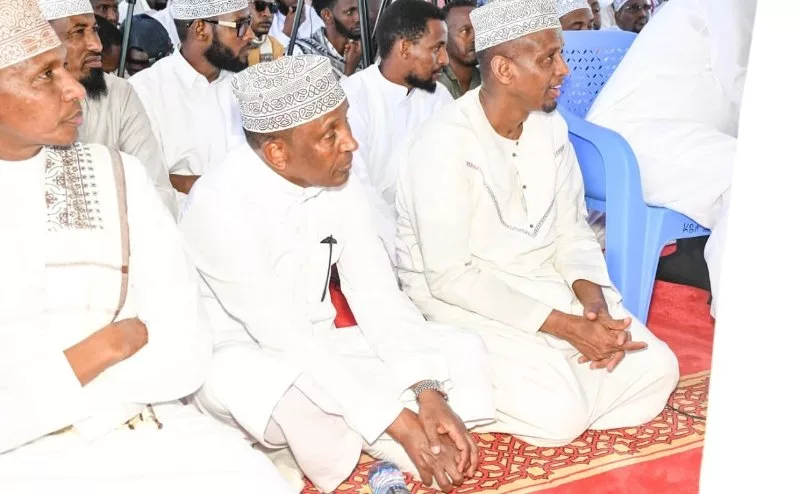
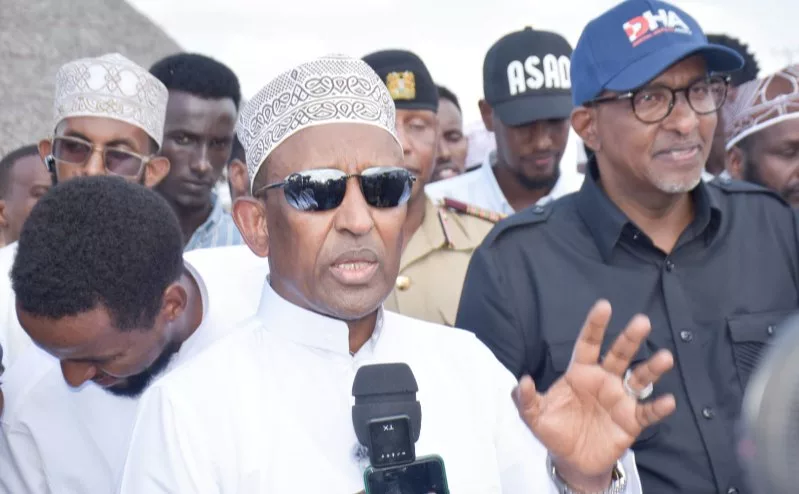
Garissa governor aspirant Ali Korane joins fellow Muslims faithfuls for prayers at the newly opened Bura Jamia Mosque. /STEPHEN ASTARIKO
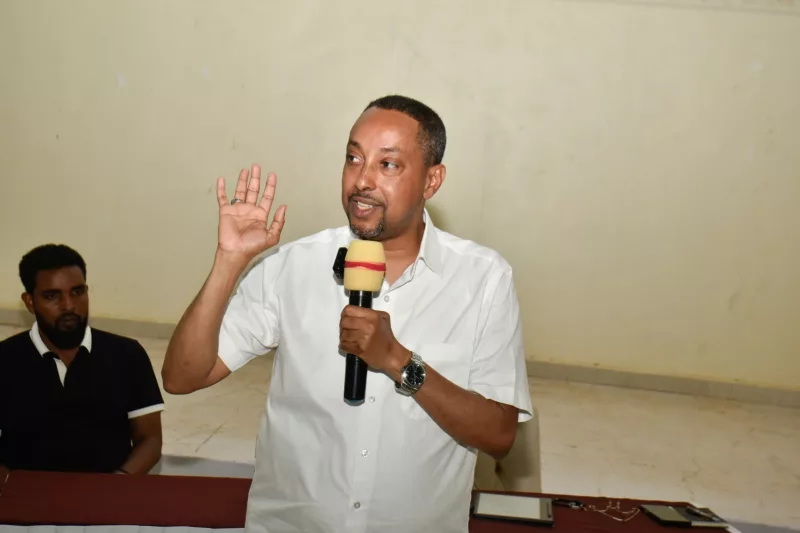
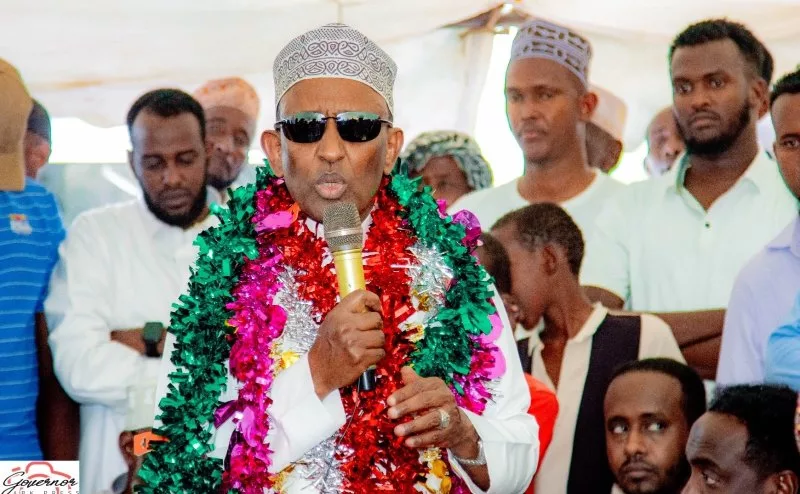 Garissa governor aspirant Ali Korane speaking in Bura East
Sub county, Garissa. /STEPHEN ASTARIKO
Garissa governor aspirant Ali Korane speaking in Bura East
Sub county, Garissa. /STEPHEN ASTARIKO