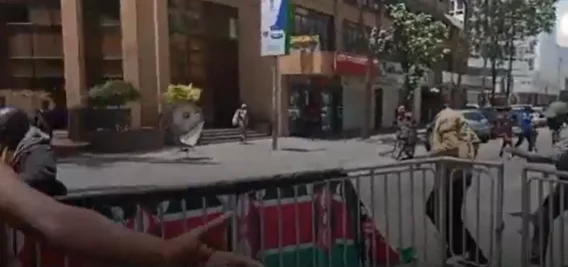
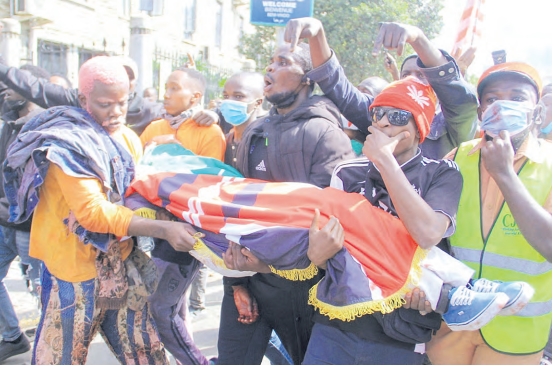
 A protester is carried away by colleagues after he was shot by police outside Parliament during Gen Z demos on June 25, 2024
At least 138 people were killed and 1,227 injured during protests in Kenya between 2020 and 2025, a new index shows.
Read Also
The Kenya Freedom Index, which tracks protests and their impact over a six-year period, also recorded 2,128 arrests, highlighting the high human cost of citizens taking to the streets to demand change.
The situation was particularly deadly in 2025, when 70 people were killed in protest-related incidents, making it the deadliest year in the period covered by the index.
This exceeded the 54 deaths recorded in June and July 2024 alone, during the height of the Gen Z-led protests.
The youth and ordinary residents bore much of the cost, each accounting for 40 per cent of recorded fatalities, according to the index by Odipo Dev and Amnesty International Kenya.
Beyond the deaths, the index records 1,227 injuries and 2,128 arrests between 2020 and 2025, pointing to an increasingly costly confrontation between protesters and the police.
The findings also provide a different perspective on the recent wave of protests, which have often been portrayed primarily as confrontations between political activists and demonstrators and security agencies.
The data shows that people living and working in areas where demonstrations take place also fell victim to police excesses.
Among those killed were bystanders, residents, shopkeepers, children and people going about their daily business.
The index cites the case of 22-year-old Boniface Mwangi Kariuki, a mask vendor in Nairobi’s CBD who was shot in the head by a police officer on June 17, 2025.
Kariuki was declared brain-dead at Kenyatta National Hospital and died on June 30.
It also records the death of Bridgit Njoki, 12, who was watching television at home during the July 7, 2025 Saba Saba protests when a bullet pierced the roof of her house, went through the ceiling and struck her in the head.
Security guard Fred Wamale Wanyonyi, who was on duty at a Nairobi mall, was also killed on June 25, 2025.
The index says bystanders, residents near protest routes, shopkeepers, children in their homes and passers-by have all been recorded among protest-related deaths.
The human cost has also been reflected in the injuries recorded during protests.
June 25, 2025, was the most physically harmful single protest day in the dataset, according to the index, while July 7 added further injuries.
Across the two protest periods, 58 gunshot wounds were recorded, making gunshot injuries the largest category.
Eight injuries were attributed to teargas canisters, another eight to physical assault and nine to other bodily injuries. Twenty-seven injuries had no specified type.
The figures once again point to the police, who have repeatedly been accused of using excessive force during demonstrations.
Additionally, pressure is mounting on the police, the ODPP and the Judiciary to ensure justice for the victims, even as the state moves to compensate some of those affected.
The Freedom Index uses Article 37 of the constitution, which provides for the right to peaceably and unarmed assemble, demonstrate, picket and petition public authorities, as part of its definition of a protest.
It covers marches, pickets, demonstrations, sit-ins, strikes, go-slows and other forms of collective public action.
The index also records a significant number of arrests. It identifies July 7, 2025, during the Saba Saba protests, as the peak arrest day for that year.
The index also documents attacks against people whose role is to assist, document or monitor demonstrations.
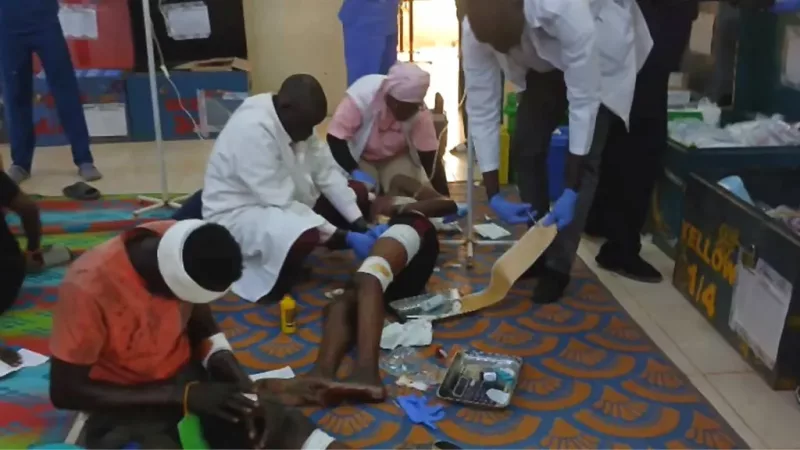
It says medics treating wounded protesters have been teargassed and shot at, while journalists covering protests have faced arrests, beatings and confiscation of equipment. Civil society workers monitoring human rights have also been detained and intimidated.
The Freedom Index cautions that its figures should be treated as “at least” counts rather than a comprehensive year-round tally.
Researchers drew the death, injury and arrest data from IPOA, KNCHR, Amnesty International Kenya and the Ministry of Interior, whose figures sometimes differ.
Where sources cover the same incident or period, the index uses the highest reported figure rather than adding competing figures together.