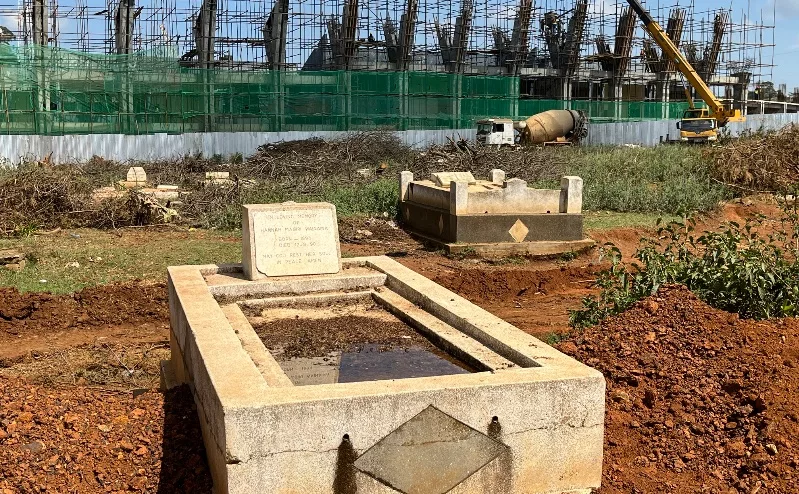
 Some of the graves at Eldoret Cemetery behind the Kipchoge Keino Stadium
The silence of the Old Eldoret Christian Cemetery has been broken by the rumble of construction machinery.
Behind the sprawling Kipchoge Keino Stadium on the Eldoret-Iten road, contractors working on the stadium’s expansion have dug a huge trench for a perimeter fence, leaving several graves damaged and forcing some families to exhume and relocate the remains of their loved ones.
For families whose relatives have rested at the cemetery for decades, the construction has brought fresh grief and anger.
On Tuesday, relatives gathered at the cemetery to protest what they described as interference with the graves without their involvement.
The families, led by Eldoret Christian Cemetery chairman Martin Njuguna, Catholic priest Father Fredrick Njoroge and Langas MCA Francis Muya, demanded that the county government explain why excavation works were allowed to proceed before consultations with those who have relatives buried at the site.
“This is our cemetery, although we had stopped using it, but hundreds of our relatives are buried here, and it is wrong to tamper with the graves without involving us,” Njuguna said.
The cemetery, which covers more than two acres, is more than 120 years old. Some of the people regarded as founders of Eldoret during the colonial period are buried there.
Njuguna said the families had previously received a letter from the Uasin Gishu government allowing them to beautify the cemetery. They were therefore shocked to find graves being damaged during the ongoing works.
The stadium is undergoing renovation and expansion ahead of the Mashujaa Day celebrations on October 20 and is expected to serve as an alternative venue for the Africa Cup of Nations (Afcon) games.
As part of the project, contractors are putting up a perimeter fence around the stadium for security purposes.
But the families fear the fence will cut them off from the cemetery, where they have continued to hold memorial services and prayers for their deceased relatives.
Njuguna said they had initially been informed that the graves would remain intact and that the area within the stadium grounds would be beautified by the county government.
However, he said no written undertaking had been provided by the administration of Governor Jonathan Bii to assure families the cemetery and graves would be protected.
“We need clear information and a written undertaking to ensure that our rights over the cemetery are respected,” Njuguna said.
For Father Njoroge, the damage has been deeply personal. His father is among those buried at the cemetery.
He said seeing graves disturbed had left families traumatised and questioned why those responsible for the project did not first engage relatives of the deceased.
“Those concerned should have taken the trouble to involve the families before taking any action in the cemetery area,” he said.
MCA Muya demanded an explanation from Governor Bii, saying the county government should clarify why affected families were not consulted before excavation began.
The families said they supported the expansion of the stadium and understood its importance to Eldoret, but insisted that development should not come at the expense of the cemetery.
They argued there was sufficient space between the cemetery and the stadium and questioned the need to undertake excavations that resulted in graves being damaged.
The families have threatened to move to court if the works affecting the cemetery are not stopped and meaningful consultations held.
For now, the disturbed earth and damaged graves have turned what was once a quiet resting place into a flashpoint between development ambitions and the families’ demand to protect the resting places of their loved ones.
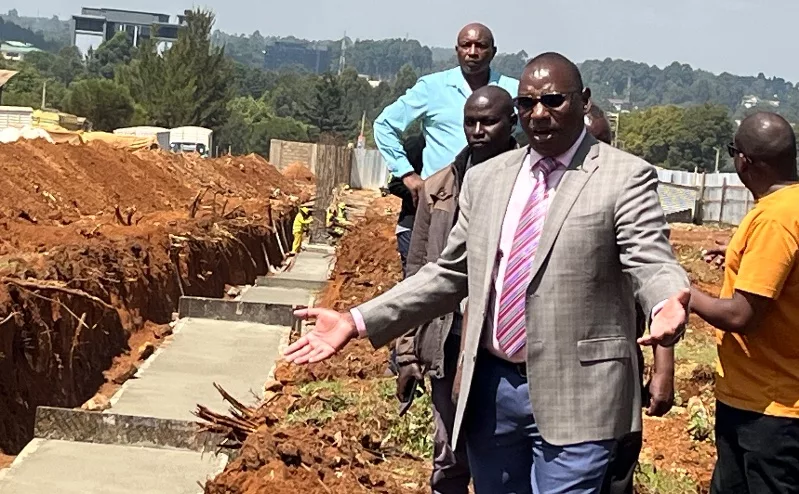 Langas MCA Francis Muya next to a trench dug within the Eldoret cemetery for construction of a perimeter wall for the Kipchoge Keino stadium.
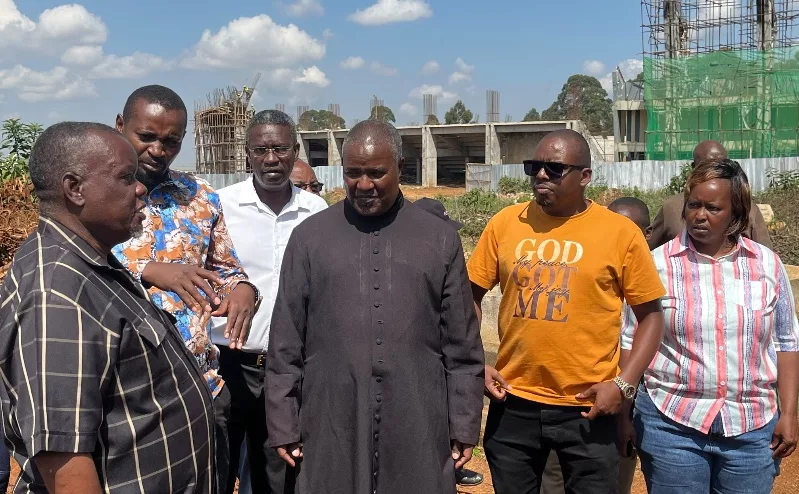 Some of the families who have their relatives buried at the Eldoret Cemetery near Kipchoge stadium.
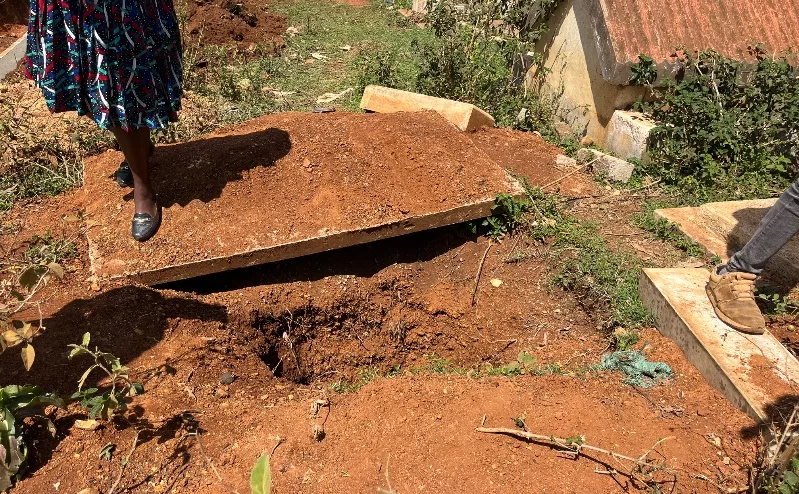 One of the graves where a family was forced to exhume the remains of their relatives for relocation.