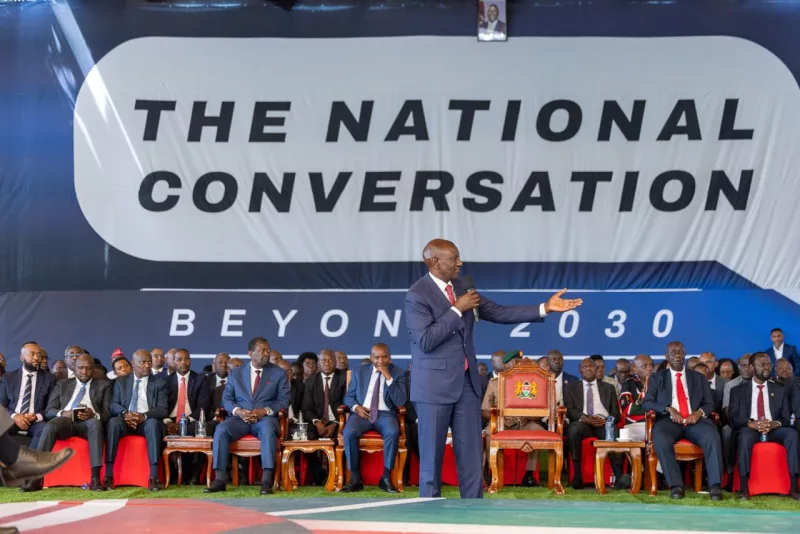
Kenya has launched a national conversation on Vision 2060, the socioeconomic blueprint expected to guide the country’s development beyond Vision 2030, whose lifespan ends in four years. The initiative is welcome. A long-term national vision can provide the direction, priorities and benchmarks needed to transform the economy and improve citizens’ lives.
But Kenya’s challenge has never been a shortage of good ideas or development blueprints. From the first Sessional Paper after Independence to subsequent national development plans and Vision 2030, successive governments have produced ambitious frameworks.
The problem has largely been implementation. Too many plans have ended up gathering dust on shelves, overtaken by political interests, weak institutions, corruption, wasteful expenditure and inadequate commitment. Others have been selectively implemented depending on the priorities of the government of the day.
Vision 2060 must therefore be approached differently. It must not become another grand document launched with pomp and forgotten when political priorities change. Its objectives must be translated into measurable programmes, properly costed, funded and subjected to regular public accountability.
Most importantly, implementation must survive changes of government. Parliament, the private sector, civil society, counties and citizens should have a stake in monitoring progress.
Kenya does not need another beautiful blueprint. It needs seriousness, discipline and political goodwill to deliver one. Vision 2060 must be judged not by the quality of its launch, but by the lives it changes and the development it delivers.
Quote of the Day: “The only true measure of success is the ratio between what we might have done and what we might have been on the one hand, and the thing we have made and the things we have made of ourselves on the other.” —English sci-fi author H G Wells died on August 13, 1946