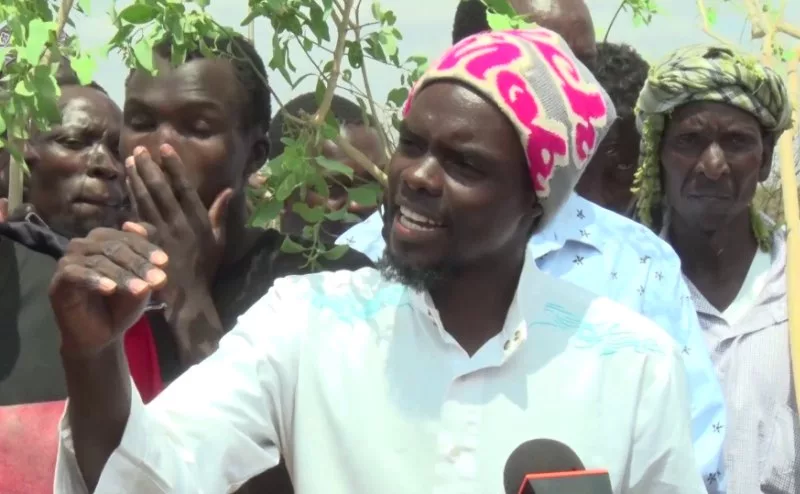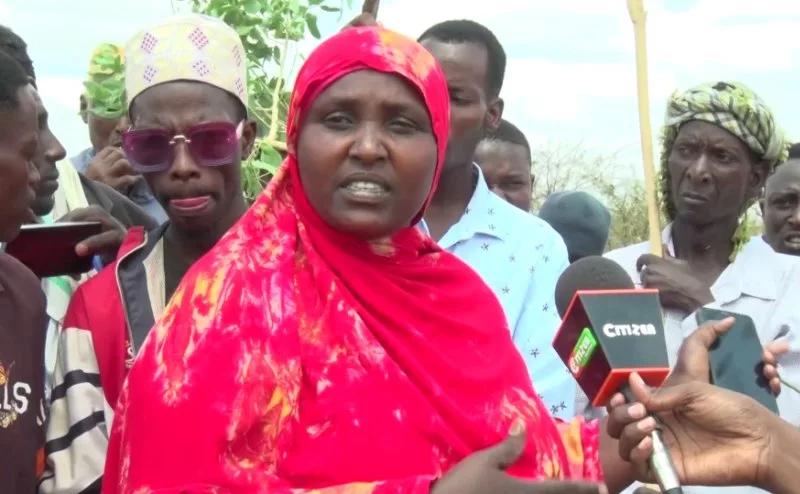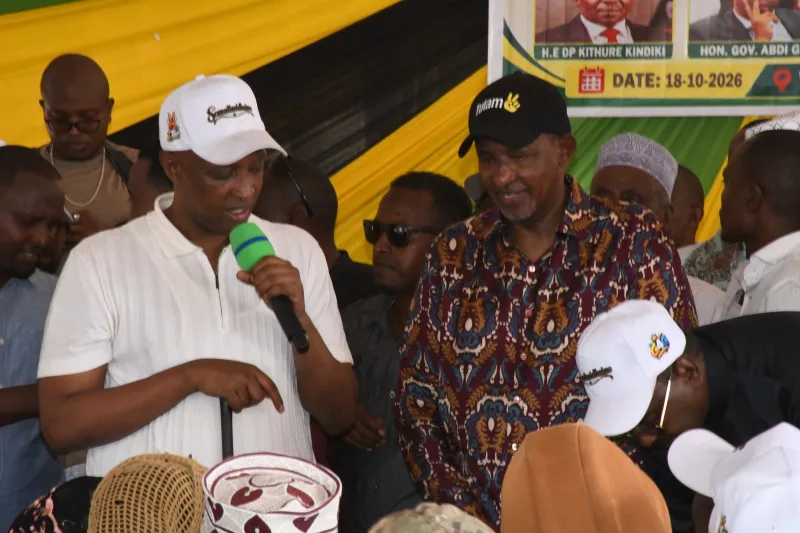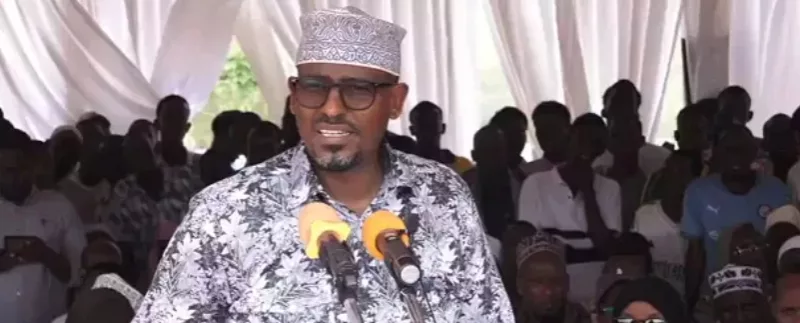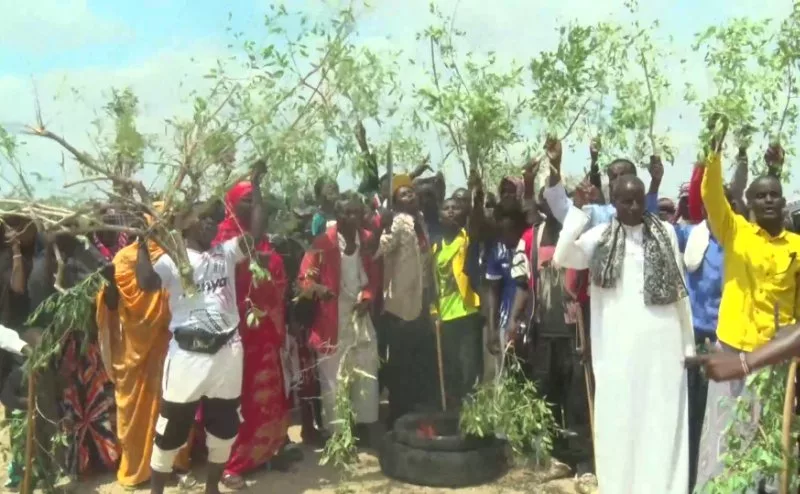
Residents of Chewele ward demonstrating /STEPHEN ASTARIKO
Residents of Chewele Ward in Bura, Tana River County, took to the streets on Tuesday to protest against a planned 40,000-acre sugar cane project.
They accused the government and the investor of proceeding without adequate and inclusive consultation with the community.
The residents said they were not opposed to development or investment but objected to what they described as the manner in which the project was being introduced.
They argued that an undertaking of such scale could have far-reaching implications for their land, livelihoods and traditional way of life.
The protest came barely a week after the investor conducted a public participation exercise with a section of residents before launching the sugar cane project.
The investor has started clearing bushes and establishing seed cane nurseries within the Bura Irrigation Scheme in preparation for large-scale commercial farming under a government-backed irrigation and agricultural investment programme.
However, the protesting residents said the public participation exercise did not adequately capture the views of the wider community and insisted they had not endorsed the project.
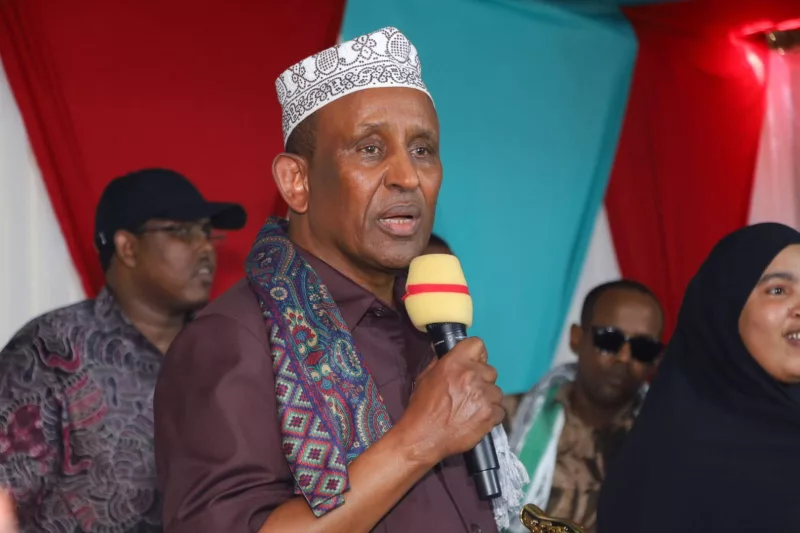
Islam Jillo, a Chewele resident, said people whose livelihoods would be directly affected had largely been excluded from discussions.
“We are the people who live here and whose lives and livelihoods will be directly affected by this project, yet we have not been properly involved. You cannot simply come, hold a meeting with a few individuals purporting to represent the residents and then use that meeting to justify a major project,” he said.
Jillo said the amount of land earmarked for sugar cane farming was a major concern for a community that largely depends on pastoralism.
“We largely depend on pastoralism for our livelihoods. The amount of land that has been set aside for the sugar cane project is huge," he said.
"They are taking up a large portion of our grazing land without telling us where we will get alternative pasture. This puts our livestock and livelihoods at risk.”
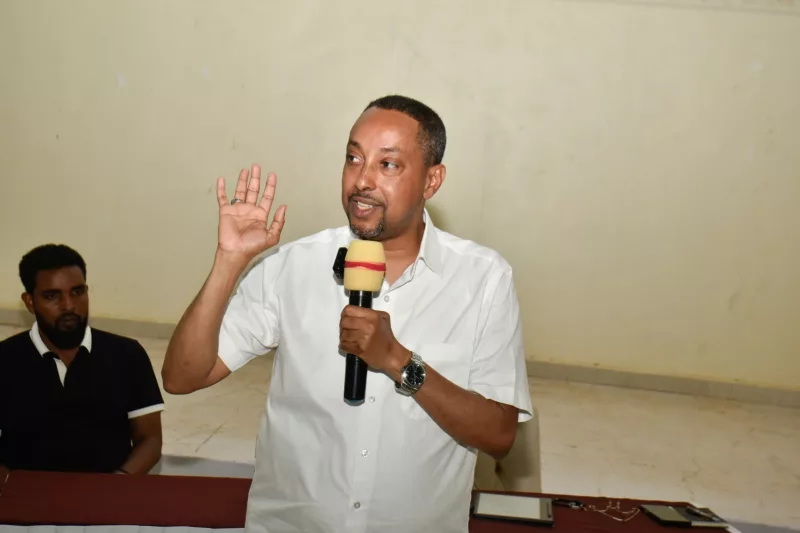
Mohammed Kassim said land was central to the survival of pastoralist communities and called for alternatives to be provided if grazing areas were affected.
“We are pastoralists. Our livestock depend on this land for grazing and nobody has told us where we will take our animals once a huge portion of our grazing land is occupied by sugar cane. For us, land is not just a place to live; it is the foundation of our livelihood,” Kassim said.
Faizun Islam said the government should also address basic services affecting residents.
“We have pressing needs that have remained unresolved for years. Our people need water, good roads and health facilities. These are the issues the government should be prioritising because they directly affect our daily lives,” she said.
Nuh Issack said residents were not against investment but wanted projects introduced in their area to be inclusive and transparent.
He urged the government and the investor to return to the community, conduct a fresh and comprehensive public participation exercise and listen to all affected residents before proceeding.
“We do not want a situation where people simply come here, hold a meeting with a few individuals, call them residents and then proceed with a major project that will have far-reaching consequences for our lives and livelihoods," Issack said.
"We deserve to be heard, and our concerns must be addressed before any project proceeds.”
The investment gained momentum earlier this year following President William Ruto’s commissioning of the 26-kilometre Bura Gravity Canal, designed to replace the costly diesel-powered pumping system with a gravity-fed water supply from Kora Kora.
The canal is expected to improve the reliability of water supply to the irrigation scheme and support large-scale agricultural production.
Improved water infrastructure subsequently paved the way for the leasing of about 100,000 acres to private investors as part of efforts to revive and expand agricultural production within the Bura Irrigation Scheme.
The investor is among the companies allocated land under the programme, with the planned project expected to contribute to large-scale sugar cane production and the expansion of agricultural activity in the scheme.
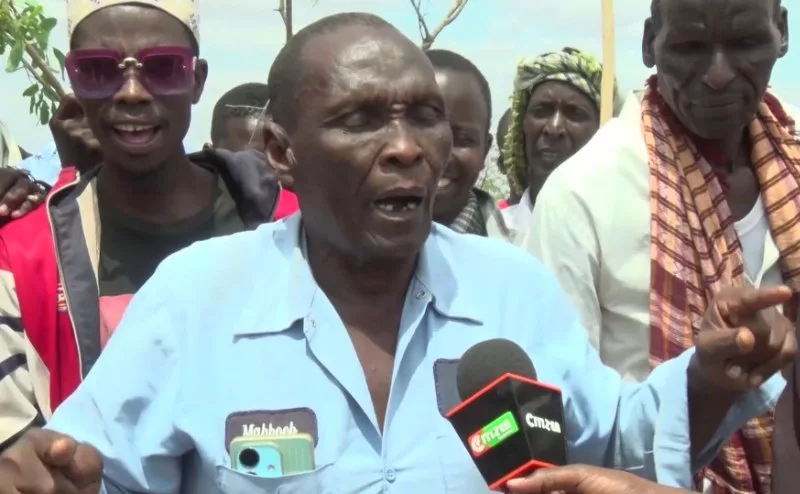
Islam Jillo, a resident of Chelewele speaking to the press./STEPHEN ASTARIKO
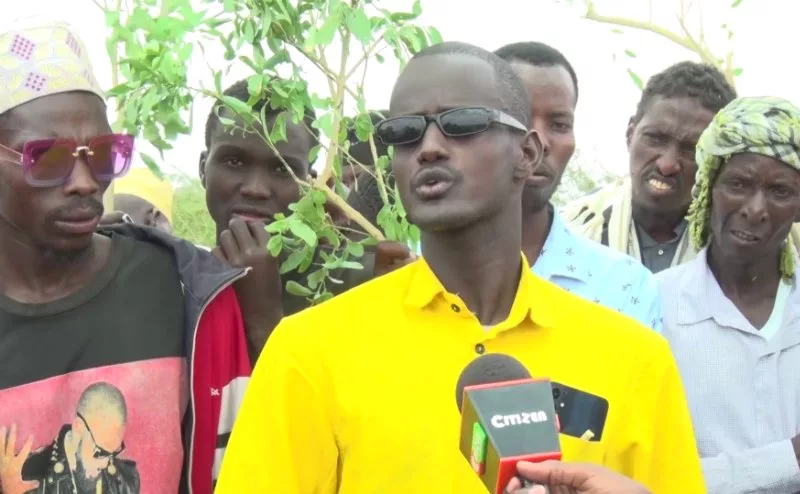
Mohammed Kassim, a resident speaking to the press. /STEPHEN ASTARIKO