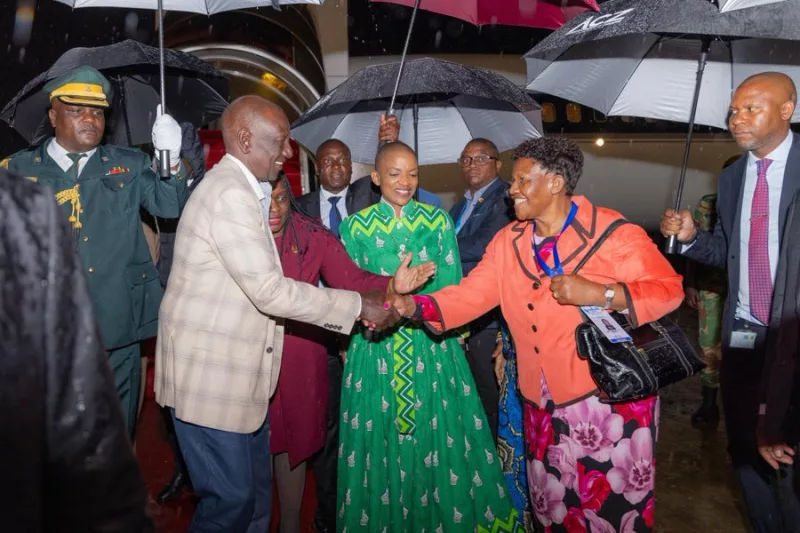
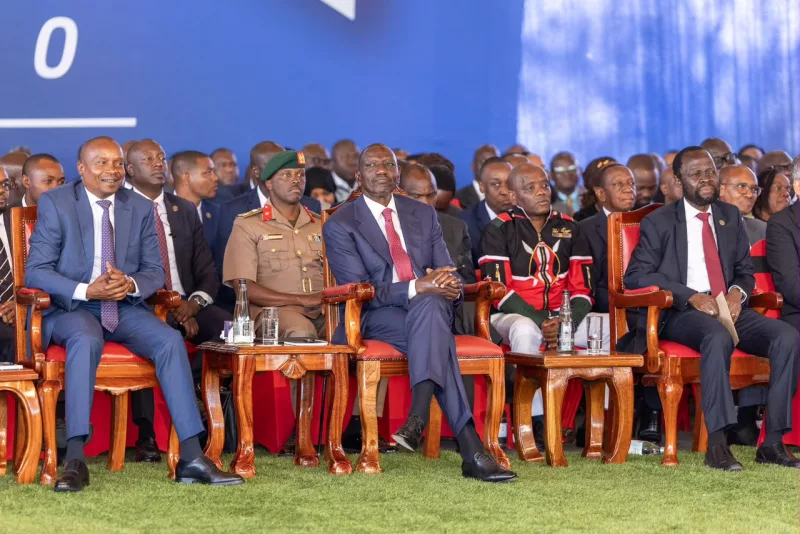
 Deputy President Kithure Kindiki, President William Ruto and Kisumu Governor Prof Anyang’ Nyong’o at the launch of nationwide public consultations on the proposed Vision 2060/PCS
Kisumu Governor Prof Anyang’ Nyong’o has outlined key lessons Kenya has learnt from the implementation of Vision 2030, saying the experiences should inform the development and execution of the proposed Vision 2060.
Nyong’o, who was among the architects of Kenya’s original Vision 2030 and is now leading the strategic working group designing Vision 2060, said the country had made notable progress but still had significant ground to cover.
He spoke on Wednesday, August 12, 2026, during the launch of nationwide public consultations on Vision 2060.
“We have learnt valuable lessons in the implementation of Vision 2030 that we need to apply in developing and implementing Vision 2060,” Nyong’o said.
He said Vision 2030 had helped Kenya make progress towards industrialisation, political stability and the development of modern infrastructure.
“Vision 2030 has guided us to some measure of industrialization, political stability, modern infrastructure,” he said.
However, Nyong’o cautioned that the progress made under the long-term development blueprint should not obscure the challenges that remain.
“There is more to be done to transition to a high-income, resilient economy whose wealth is broadly shared among citizens,” he said.
Vision 2030, launched in 2008, was designed to transform Kenya into an industrialised middle-income country providing a high quality of life to all citizens in a clean and secure environment.
The blueprint has been implemented through successive five-year medium-term plans, with various programmes and flagship projects rolled out across the country.
Nyong’o said both State and non-State actors have undertaken assessments of the implementation of Vision 2030, providing important lessons on what worked and what hindered the achievement of some of its targets.
“There have been fair assessments of the successes and challenges of implementation of Vision 2030 done by State and non-State actors,” he said.
According to Nyong’o, some of the assessments have linked the limited achievements in certain areas to inadequate financial resources and weaknesses in the coordination and supervision of implementation.
“Some of these assessments have gone further to attribute the limited achievements of Vision 2030 to certain explanatory factors, including inadequate financial resources and a weak capacity for coordination and supervision of implementation,” he said.
He said these shortcomings must be addressed as Kenya develops the next long-term development framework to ensure that Vision 2060 does not face similar implementation challenges.
The proposed Vision 2060 is being positioned as the successor to Vision 2030 and is expected to provide Kenya with a long-term economic and infrastructure roadmap extending beyond the current development blueprint.
The new framework is also expected to incorporate lessons from the past while responding to emerging economic, social, environmental and technological challenges facing the country.
The nationwide consultations are expected to give citizens an opportunity to shape the country's long-term development priorities through a people-driven National Development Charter.