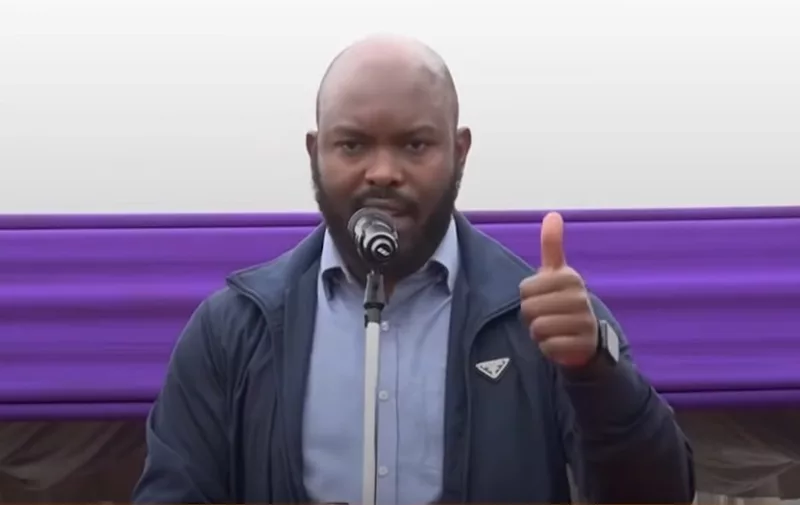
Gatundu South MP Gabriel Kagombe has announced his exit from the United Democratic Alliance (UDA).
Speaking on Tuesday, Kagombe cited what he described as the government’s failure to deliver on key promises made to his constituents during the campaign period.
He was speaking during a burial at Karangi village in Gatundu South, Kiambu county.
The legislator claimed his constituents had received little from the current regime in terms of development, citing stalled roads as some of the reasons for changing his political stance.
"After talking to my people who voted me in Gatundu South, I have quit the UDA party and follow Mulima's voice," he said.
Kagombe won the Gatundu South seat on a UDA ticket in 2022.
He said he could no longer back an administration he believes has failed to deliver significant development to his constituents despite their strong support for Kenya Kwanza.
He further claimed the government had failed to consider the tea sector.
Kagombe has yet to reveal which political party he will seek to retain his Gatundu South seat during in the 2027 General Election.
Mt Kenya was instrumental in delivering votes for President William Ruto in the 2022 election, forming the backbone of UDA’s national coalition.
However, the impeachment of Gachagua and his sustained anti-government campaigns have eroded the President’s support in the region.
Several Mt Kenya politicians have in recent months adopted a cautious stance, avoiding outright defence of UDA while also steering clear of openly aligning with Gachagua.
Others have maintained working relations with the national government, largely to secure development for their constituencies.
Many leaders are balancing two competing pressures: maintaining access to national resources and political goodwill, while responding to shifting voter sentiment back home.
In May, Murang’a Governor Irungu Kang'ata decamped from UDA party, a move that was seen as a potential trigger for a wider political shift in Mt Kenya.
Kang’ata’s move comes amid growing unease among leaders in the region over their political positioning, particularly following the emergence of Gachagua’s DCP party.