Kenya is officially one year away from the August 10, 2027 General Election, marking the start of the final stretch towards another fiercely contested electoral cycle in a country where political campaigns have barely stopped since the 2022 polls.
With politicians already traversing the country, parties realigning and potential presidential candidates positioning themselves, attention is increasingly turning to the Independent Electoral and Boundaries Commission (IEBC) and its preparedness to deliver a credible election.
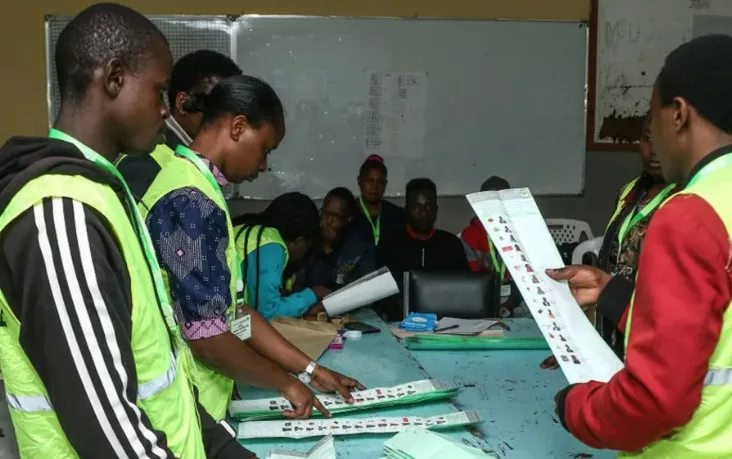
The electoral agency faces a number of critical challenges, chief among them funding, voter registration, technology, polling infrastructure and the recruitment and payment of election officials.
One of the biggest concerns is whether the IEBC will have sufficient resources to conduct the 2027 elections.
One year to the polls, the IEBC is facing a multibillion-shilling funding shortfall that could affect key aspects of election preparation, including payment of election officials, acquisition of technology and expansion of polling infrastructure.
Documents presented by the IEBC show that the commission has sought billions of shillings to finance activities across the electoral cycle, with a significant portion of the requested funds yet to be secured.
Documents submitted to Parliament by the Independent Electoral and Boundaries Commission (IEBC), chaired by Erastus Ethekon, show that the Commission is seeking Sh74.8 billion over the three-year electoral cycle but has been allocated only Sh41.3 billion.
The IEBC has also accumulated pending bills, including legal fees arising from previous electoral processes, further putting pressure on its finances.
The National Assembly's Justice and Legal Affairs Committee has warned that inadequate funding could undermine the Commission's ability to discharge its constitutional mandate.
At the same time, the IEBC is racing to register millions of new voters before the election.
The Commission is targeting at least 6.5 million additional voters through enhanced voter registration, with the exercise expected to raise the total number of registered voters to about 28.5 million from the 22.1 million registered for the 2022 election.
The success of the registration drive will be particularly important among young Kenyans who have attained voting age since the last General Election.
The Commission has been appealing to eligible Kenyans to take advantage of the registration exercise and secure their place in the 2027 electoral process.
The challenge is not only registering new voters but also ensuring that the new voters are distributed across polling stations that have adequate infrastructure and election materials.
The IEBC is also planning a major expansion of polling infrastructure.
The commission projects that it will gazette 55,393 polling stations for the 2027 election, up from 46,229 used in 2022.
The increase is expected to respond to population growth and the anticipated rise in the number of registered voters.
Technology is another major issue as the IEBC prepares for the polls.
The commission plans to acquire new Kenya Integrated Election Management System (KIEMS) kits at a cost of about Sh7 billion.
The move is intended to replace older equipment currently in use, much of which was acquired ahead of the 2017 General Election.
IEBC Deputy Commission Secretary for Support Services Obadiah Keitany told Parliament that the older KIEMS equipment had been in use for about a decade and needed to be replaced as technology evolves.
“The KIEMS have been used for 10 years and can be formatted and donated to another government institution for use. Technology has changed fast and we can rely on them now,” Keitany said.
The commission plans to retain about 14,000 KIEMS kits purchased in 2022 while replacing older equipment.
The technology will be central to voter identification and other aspects of election administration, making timely procurement and testing critical to the credibility of the process.
As politicians intensify their mobilisation activities, campaign financing is also coming under greater scrutiny.
The IEBC has published campaign financing regulations and spending limits for the 2027 election, placing candidates and political parties under a framework governing how much they can spend and how campaign resources are managed.
The maximum expenditure for a presidential campaign has been placed at Sh6.11 billion.
The limits take into account population and geographical area, with population carrying a 70 per cent weighting and land area accounting for 30 per cent.
At the county level, the limits vary depending on the size and geographical characteristics of each county.
Nairobi has the highest county-level spending limit at Sh181.31 million, followed by Turkana at Sh142.07 million and Marsabit at Sh127.02 million.
Lamu has the lowest county-level spending limit at Sh28.69 million.
For constituency contests, the highest spending limit is Sh123 million, while ward-level contests have a maximum limit of Sh20 million.
The new limits come as political parties and aspirants increasingly pour resources into early mobilisation, with many politicians already holding meetings, visiting constituencies and building campaign networks despite the formal campaign period being months away.
With one year remaining, the election calendar is now becoming increasingly important for politicians.
IEBC's roadmap has already set out key activities leading to the election, including voter registration, party nomination preparations, campaign financing, candidate nominations and the final campaign period.
The Commission's plan provides for the publication of guidelines on political party candidate nominations from August 2026, followed by certification and submission of party nomination rules later in the year.
For political parties, the coming months will be crucial as they attempt to identify candidates, settle internal disputes and build coalitions ahead of the nomination season.