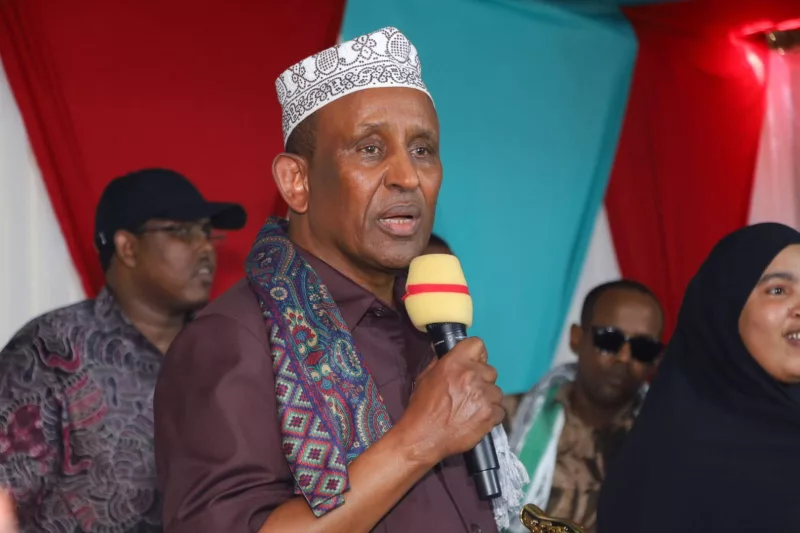
 Wajir County governor aspirant Yahya Mohamed Dahiye is
carried shoulder high by youth from his Matan sub-clan of the Degodia clan
after they endorsed him. /STEPHEN ASTARIKO
Wajir County governor aspirant Yahya Mohamed Dahiye is
carried shoulder high by youth from his Matan sub-clan of the Degodia clan
after they endorsed him. /STEPHEN ASTARIKOWajir County Chief Officer Yahya Mohamed Dahiye has stepped up his campaign to secure the endorsement of the Matan sub-clan of the larger Degodia community as the race to succeed Governor Ahmed Abdullahi gathers momentum.
Dahiye, one of three candidates seeking to carry the Matan community’s flag in the 2027 gubernatorial contest, appears to have gained an early advantage after receiving overwhelming backing from women, youth and professionals within the sub-clan.
His rivals in the Matan contest are former Wajir West MP Ahmed Kolosh and former Ewaso Nyiro South Development Authority Managing Director Omar Sheikh.
The youthful Dahiye has in recent days intensified his grassroots mobilisation, targeting women, young people, professionals and other influential groups as he seeks to consolidate support ahead of the much-anticipated endorsement process, which elders from the community will ultimately determine.
His campaign has received a major boost after women from the Matan sub-clan unanimously endorsed his gubernatorial bid, coming just two days after a similar endorsement by youth and professionals.
Speaking on Monday after the women’s endorsement, Dahiye, the current Wajir County chief officer, said he was deeply humbled and honoured by the confidence they had placed in his leadership.
“I sincerely thank them for the confidence, trust and faith they have demonstrated in my leadership and in the vision we share for the future of our county. This endorsement means a great deal to me because I recognise the immense role women play in shaping the social, economic and political direction of our communities,” he said.
Dahiye said women should not be viewed merely as supporters in political contests, noting that they play a central role as decision-makers, mobilisers, peace-builders and pillars of families and communities.
“Women are not merely supporters in our political processes; they are decision-makers, mobilisers, peace-builders and the backbone of our families and communities,” he said.
He added that collective decisions made by women carried considerable weight because they were often arrived at after extensive consultation and careful consideration.
“When women come together and make a collective decision, their position is often firm, clear and unshaken. Their support is not given lightly. It is built on careful consideration, consultation and a desire to see leadership that responds to the needs and aspirations of the people. I therefore do not take this endorsement for granted,” Dahiye said.
The Chief Officer, however, acknowledged that the endorsements from different groups came with a significant responsibility, saying he understood that their support was based on expectations of accountable, inclusive and development-oriented leadership.
“I understand that all these groups have placed their confidence in me because they expect leadership that is accountable, inclusive and committed to development. I therefore accept their support with humility and pledge to work even harder to justify the confidence you have placed in my leadership,” he said.
Dahiye also used the occasion to call on residents to register as voters in large numbers, arguing that voter registration would be critical in determining the political future of the region in next year’s elections.
“There are those mocking us over our low voter registration numbers. Let us shame them by registering more people and voting in next year’s polls. We have to show the naysayers that we, the Somali community, have the numbers that will decide the coming election,” he said.
Speaking on behalf of the women, Katra Adan said their decision to back Dahiye followed extensive consideration of the candidates in the race.
She cited his leadership qualities, integrity, humility and ability to bring people together as some of the factors that influenced their decision.
“We want to make it very clear that our endorsement was not made lightly but followed careful consideration of the candidates seeking the community’s support. Dahiye stood out because of his accessibility and willingness to listen to the concerns of ordinary people, particularly women, youth and other groups that have often felt left out of decision-making processes,” Katra said.
The unfolding contest is being closely watched because of the considerable political and numerical influence of the Matan community in Wajir, particularly in Wajir West Constituency.
The community has produced two of Wajir County’s three governors since the advent of devolution, with the incumbent Governor Ahmed Abdullahi also coming from the Matan community.
Matan is widely regarded as one of the politically organised communities in the county and is known for rallying behind a common candidate once a decision has been reached. This makes the forthcoming elders’ endorsement particularly significant for the three aspirants.
Among Somali and other pastoralist communities in northern Kenya, elders continue to wield considerable influence in determining the political direction of their communities. Their decisions are often taken with great seriousness, with candidates who secure an elders’ endorsement enjoying a considerable head start in electoral contests.
Unlike in many other parts of the country, where political parties, opinion polls and campaign machinery can play a dominant role in shaping electoral outcomes, politics in North Eastern Kenya is often heavily influenced by negotiated clan consensus and decisions reached by elders.
In many instances, an elders’ endorsement is treated as the final word, particularly where a community agrees to rally behind a single candidate. The current Matan contest is therefore expected to intensify as the three aspirants seek to convince influential members of the community that they are best placed to carry its political ambitions.
The Matan race is unfolding against the backdrop of similar efforts by other Degodia sub-clans to position themselves ahead of the 2027 gubernatorial contest.
The Fai sub-clan of the Degodia recently became the first of the competing groups to formally settle on a gubernatorial candidate when it endorsed businessman Dr Hassan Mohamed Adan, setting the stage for a broader contest involving candidates from different sections of the Degodia community.
Wajir County is largely dominated by three major communities—the Degodia, Ogaden and Ajuran—whose political calculations are expected to play a crucial role in determining the county’s next governor.
Degodia is made up of the Fai, who are dominant in Tarbaj; Matan in Wajir West; and Jibrail, who are dominant in Eldas.
 Wajir County governor aspirant Yahya Mohamed Dahiye
interacts with the youth from his Matan
sub-clan of the Degodia clan after they endorsed him. /STEPHEN ASTARIKO
Wajir County governor aspirant Yahya Mohamed Dahiye
interacts with the youth from his Matan
sub-clan of the Degodia clan after they endorsed him. /STEPHEN ASTARIKO
 Wajir County governor aspirant Yahya Mohamed Dahiye addressing
the youth from the Matan sub clan of the Degodia clan after they endorsed him. /STEPHEN
ASTARIKO
Wajir County governor aspirant Yahya Mohamed Dahiye addressing
the youth from the Matan sub clan of the Degodia clan after they endorsed him. /STEPHEN
ASTARIKO
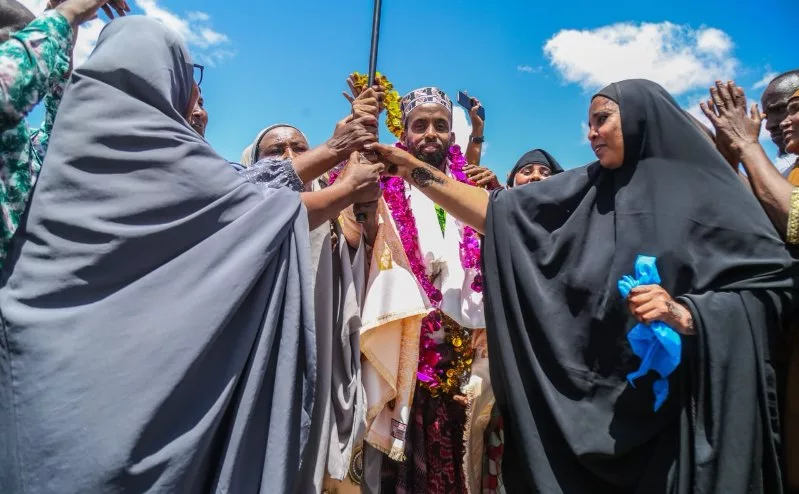 Wajir County governor aspirant Yahya Mohamed Dahiye interacts
with women from his Matan sub clan of the Degodia clan after they endorsed him./STEPHEN
ASTARIKO
Wajir County governor aspirant Yahya Mohamed Dahiye interacts
with women from his Matan sub clan of the Degodia clan after they endorsed him./STEPHEN
ASTARIKO
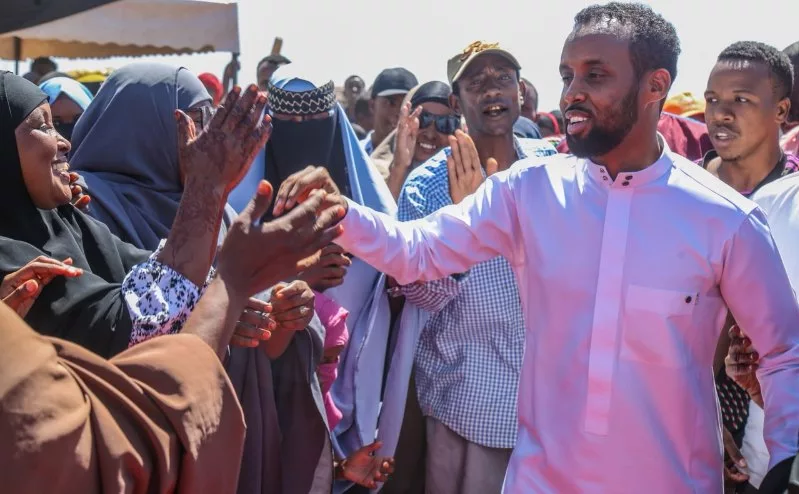 Wajir County governor aspirant Yahya Mohamed Dahiye interacts
with women from his Matan sub clan of the Degodia clan after they endorsed him./STEPHEN
ASTARIKO
Wajir County governor aspirant Yahya Mohamed Dahiye interacts
with women from his Matan sub clan of the Degodia clan after they endorsed him./STEPHEN
ASTARIKO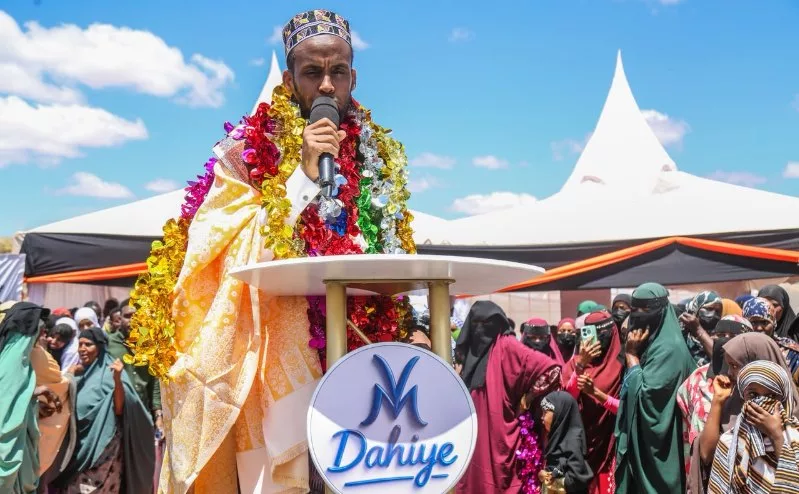 Wajir County governor aspirant Yahya Mohamed Dahiye addressing
women from his Matan sub clan of the Degodia clan after they endorsed him./STEPHEN
ASTARIKO
Wajir County governor aspirant Yahya Mohamed Dahiye addressing
women from his Matan sub clan of the Degodia clan after they endorsed him./STEPHEN
ASTARIKO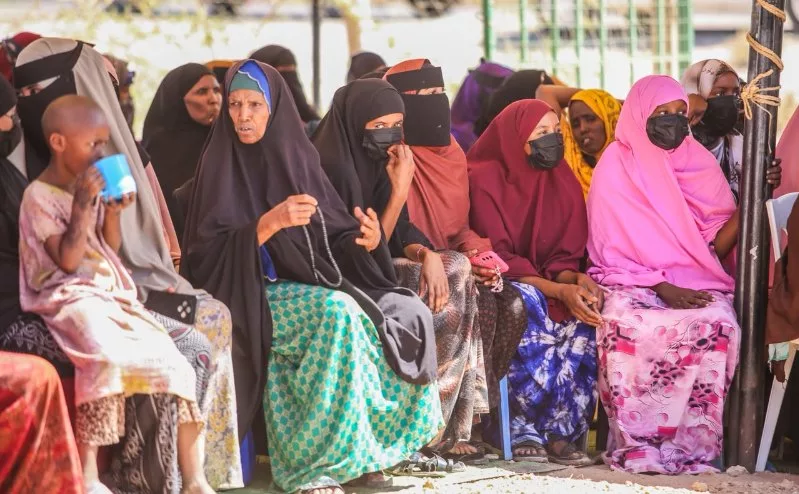 Women from the Matan sub-clan. They endorsed Yahya Dahiye
as their sole candidate for the governor seat. /STEPHEN ASTARIKO
Women from the Matan sub-clan. They endorsed Yahya Dahiye
as their sole candidate for the governor seat. /STEPHEN ASTARIKO