The renewal of the Kenya-UK defence pact remains in limbo,
with the National Assembly maintaining that Britain must first accept
accountability measures before the agreement can take effect.
National Assembly Departmental Committee on Defence, Intelligence and Foreign Relations chairman Nelson Koech on Thursday stood firm on what he described as key conditions that must be met before lawmakers ratify the long-pending Defence Cooperation Agreement (DCA).
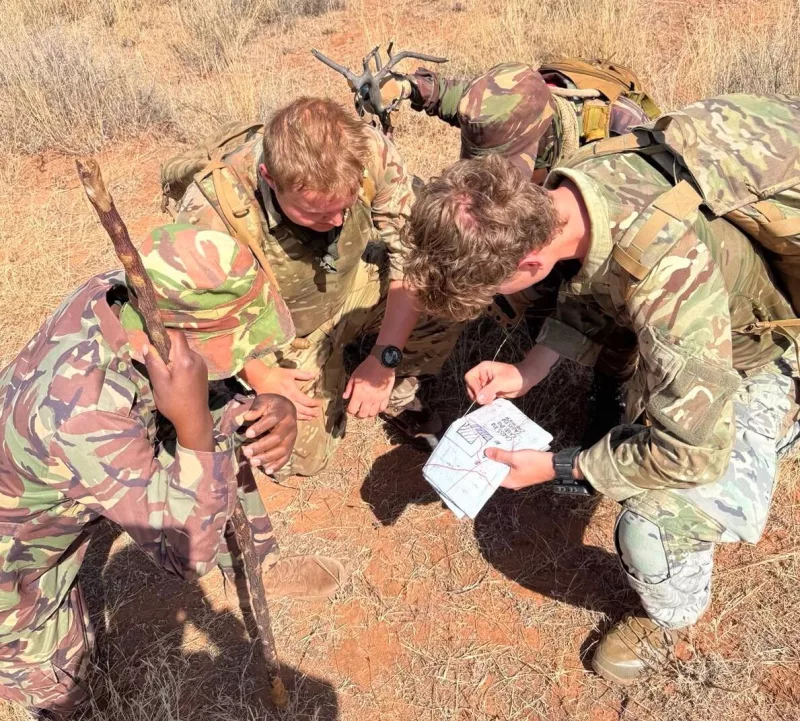
The DCA governs the operations of the British Army Training Unit Kenya (BATUK).
In a statement on the floor of the House, Koech said despite several meetings and diplomatic exchanges between Nairobi and London, the UK has yet to commit in writing to Parliament's resolutions.
The resolutions are contained in the Report of the Departmental Committee on Defence, Intelligence and Foreign Relations on the Inquiry into the Conduct of BATUK in Kenya.
The report was tabled before the National Assembly on November 25, 2025, and adopted on December 4, 2025.
Among the resolutions are proposals to expand Kenya's jurisdiction over serious crimes committed by visiting British soldiers and strengthen protections for host communities.
According to Koech, the UK has maintained that the agreement should first come into force before discussions on amendments begin.
Parliament, however, insists on the opposite.
"It is worth noting that, as of today, concerns raised by this House regarding BATUK under the conditions attached to the commencement of this agreement are yet to be fully addressed by the UK authorities. Ratification of this agreement therefore remains in abeyance," Koech told the House, adding that the matter now requires resolution through established diplomatic channels.
Koech told MPs that, based on the information obtained so far, the UK is yet to commit in writing to the resolutions passed by the House and "has consistently urged that it shall only consider the amendments after the agreement has commenced".
"The position of the National Assembly, therefore, remains that this treaty cannot be used to sanitise the commission of grave criminal offences or the lack of community engagement by visiting forces."
The standoff came into sharp focus last month after the UK Ministry of Defence cancelled a planned military exercise in Laikipia, saying the Kenyan government had not issued the licences required for the training.
The cancellation triggered speculation that the wider Kenya-UK defence partnership was under threat, prompting Foreign Affairs Cabinet Secretary Musalia Mudavadi to issue a clarification.
Mudavadi said the bilateral defence relationship remained intact and that the DCA was still undergoing parliamentary processes.
"Kenya remains committed to working closely with the United Kingdom to deepen our longstanding defence cooperation and advance our shared commitment to peace, security and regional stability," he said.
Days later, the government announced that joint military training would resume, signalling that both countries remained committed to resolving the dispute.
However, Koech's statement suggests the licensing dispute was only one aspect of a much deeper disagreement over the legal and accountability framework governing British troops in Kenya.
The committee chairman listed demands that appear to be non-negotiable conditions for renewing the agreement.
The National Assembly wants Article 6(5) of the agreement amended to ensure that murder committed by visiting soldiers falls under Kenyan jurisdiction.
It has also demanded stronger accountability for serious crimes, including sexual offences, mandatory community engagement and corporate social responsibility obligations under Article 23, as well as mechanisms to ensure justice for affected communities.
The demands stem largely from years of complaints surrounding BATUK's operations in Laikipia and Samburu counties.
These include the 2012 murder of Agnes Wanjiru, allegations of rape and gang rape involving visiting soldiers, the abandonment of children allegedly fathered by foreign troops, injuries linked to unexploded military ordnance, and complaints that host communities have received little benefit from the British military presence.
Koech reminded MPs that Parliament had already examined many of these concerns through its 2025 inquiry.
Its recommendations included stronger accountability mechanisms for visiting soldiers, investigations into murder and sexual offences, child support enforcement and the extradition of British soldier Robert Purkiss in connection with the Agnes Wanjiru case.
He also cited a recent report submitted to Parliament by the National Police Service, indicating that investigators are currently handling one defilement case, 20 rape cases and 37 gang rape cases allegedly involving members of visiting forces.
Koech argued that Parliament could not ignore such concerns in the interest of expediting renewal of the agreement.
"Any murder committed by a foreign soldier on Kenyan soil cannot be considered as something arising from official duty," he said, insisting that the rights of Kenyans could not be compromised in pursuit of defence cooperation.
He also condemned remarks by former Deputy President Rigathi Gachagua, who has recently criticised the handling of the BATUK agreement and alleged impropriety in its consideration by Parliament.
Koech dismissed the bribery claims, arguing that Parliament's constitutional role is limited to scrutinising and approving treaties, while negotiations are undertaken by the Executive through diplomatic channels.
He urged political leaders to refrain from making statements that could undermine ongoing diplomatic efforts to resolve the impasse.