
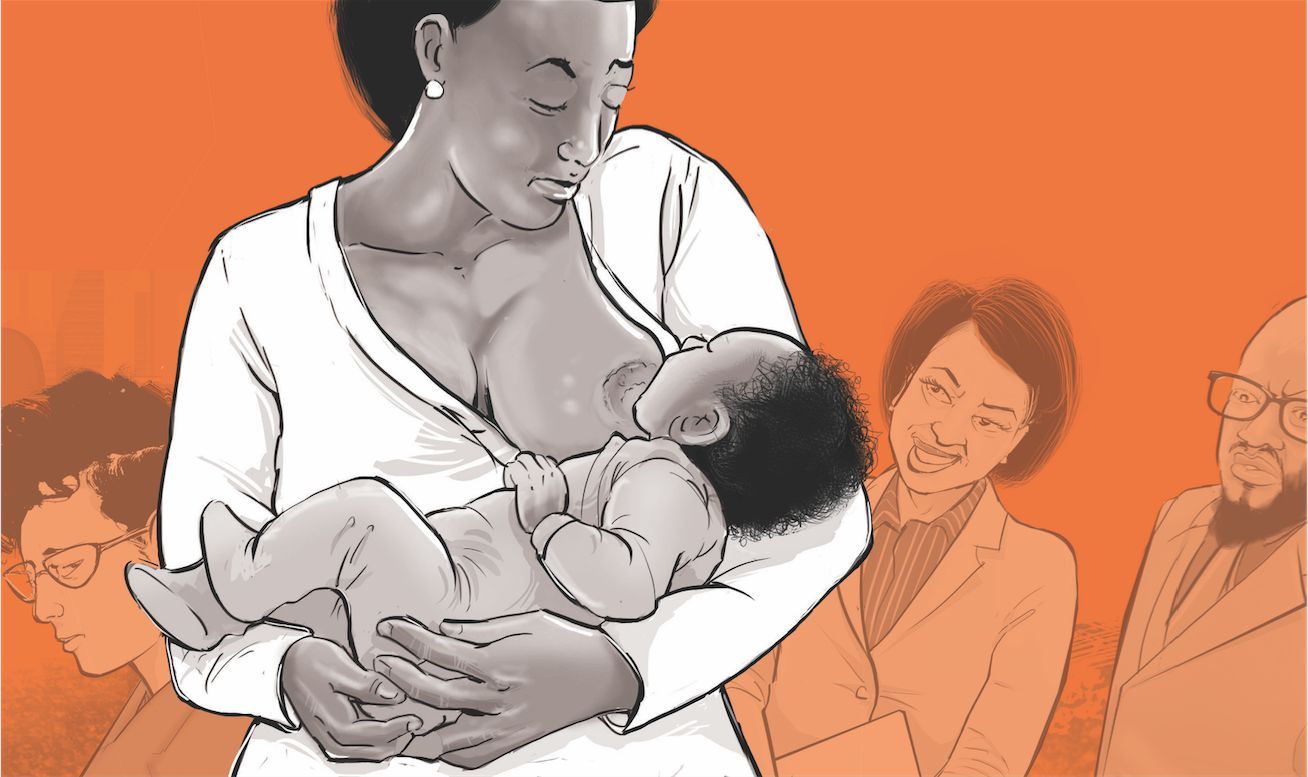
 Breastfeeding
Kenya has surpassed the global average for exclusive breastfeeding, with six in every 10 babies now fed only breast milk during their first six months of life, the Ministry of Health has said.
This places Kenya among the countries that have surpassed the World Health Organization (WHO) and Unicef target for exclusive breastfeeding.
Read Also
The global exclusive breastfeeding rate now stands at just over 47 per cent, meaning Kenya's 60 per cent rate is well above the worldwide average and has achieved the global nutrition target that countries are striving to reach, Unicef said.
WHO Director General Dr Tedros Adhanom Ghebreyesus and Unicef Executive Director Catherine Russell called on governments to strengthen health systems, protect mothers from aggressive marketing of breast milk substitutes and expand workplace support for breastfeeding women.
"Too many mothers and families around the world still lack access to services and interventions that enable and support breastfeeding," the two leaders said in a joint statement.
"Yet breastfeeding is one of the simplest and most powerful ways to protect a child's health. It provides infants and young children with essential nutrition, strengthens immunity, helps protect against serious illness and supports cognitive development."
The UN agencies noted that breastfeeding also benefits mothers by reducing their risk of breast and ovarian cancers and type 2 diabetes.
The statement comes as Kenya celebrates steady progress in breastfeeding over the past two decades.
Unicef said exclusive breastfeeding in the country has risen dramatically from just 13.2 per cent in 2003 to 60 per cent today, helping reduce infant deaths.
Health officials, however, cautioned that the national average masks significant inequalities across counties, with nearly four in every 10 Kenyan babies still missing the full benefits of exclusive breastfeeding.
Speaking during the national launch of World Breastfeeding Week in Murang'a county, Assistant Director of Primary Healthcare Norbert Abuya, representing Public Health and Professional Standards Principal Secretary Mary Muthoni, said Kenya must now focus on mothers and babies who continue to be left behind.
"The figures are encouraging, but what happens to the child who is left behind? Statistics alone cannot improve the life of a baby who is not breastfed," Abuya said.
He noted that while 89 per cent of births in Kenya are attended by skilled health workers, only 60 per cent of newborns are put to the breast within the first hour after birth.
Early initiation of breastfeeding is critical because it helps protect babies from infections and improves survival.
Abuya said counties such as Murang'a have already exceeded the national average, recording an exclusive breastfeeding rate of 68 per cent.
This demonstrates that better outcomes are achievable through stronger local investment and community support.
WHO and Unicef said global progress shows that investments in breastfeeding programmes are paying off.
Worldwide, exclusive breastfeeding during the first six months has increased from about 37 per cent in 2012 to more than 47 per cent today.
Continued breastfeeding up to two years of age has also risen from 38 per cent to 50 per cent over the past five years.
"These gains show that sustained investments in policies and programmes for mothers and families are working," the agencies said.
However, they warned that progress remains uneven because many countries still lack quality breastfeeding services, enforce policies inconsistently or fail to protect mothers from commercial pressures.
The agencies said proven interventions include skilled breastfeeding counselling in health facilities, community support programmes, paid maternity leave and full enforcement of the International Code of Marketing of Breast-milk Substitutes.
According to WHO and Unicef, scaling up breastfeeding worldwide could prevent nearly 400,000 child deaths and about 140,000 maternal deaths every year.
The agencies also said every dollar invested in breastfeeding promotion generates an estimated 59 dollars in economic returns through lower healthcare costs, better educational outcomes and higher lifetime earnings.
"This World Breastfeeding Week, under the theme 'Breastfeeding for a Sustainable Start in Life: Strengthen What Works', we are calling on countries to strengthen health systems, expand community-based counselling, fully implement the International Code of Marketing of Breast-milk Substitutes and invest in paid maternity leave and supportive workplace policies," the statement said.
Kenya's challenge now is to sustain these gains while closing the remaining gaps.
Nutrition International Kenya Country Director Martha Nyagaya said the country already has strong legal protections, including the Breastfeeding Act of 2012, but enforcement remains inconsistent.
She said workplace demands, cultural practices, the early introduction of other foods and continued violations of breast milk substitute marketing rules mean nearly four in every 10 Kenyan infants are still not exclusively breastfed.
"We have the laws and we have the evidence. What we need now is consistent implementation and adequate financing because policies alone cannot change children's lives," Nyagaya said.
She urged employers to establish breastfeeding-friendly workplaces and called on county governments to increase funding for nutrition programmes.
Nyagaya cited Murang'a county as an example, saying its nutrition budget had grown from Sh3 million to Sh123.7 million within three years.
"Without funding, nutrition policies remain books gathering dust on shelves. Every county must invest if we are serious about improving child nutrition," she said.
Health experts estimate that child undernutrition costs Kenya about Sh373 billion annually through lost productivity, poor educational outcomes and increased healthcare costs.
WHO recommends that babies begin breastfeeding within one hour of birth, receive only breast milk for the first six months of life and continue breastfeeding alongside appropriate complementary foods until at least two years of age or beyond. The agency says breast milk provides all the nutrients infants need during the first six months while protecting them against diarrhoea, pneumonia and other life-threatening illnesses.